The latest political outreach by the Kuki-Zo Council (KZC) and the Kuki Inpi Manipur (KIM) to New Delhi and Aizawl marks an important moment in the evolving politics of the Manipur conflict. Their appeals for humanitarian intervention, restoration of essential supplies, equal justice, dialogue with the Nagas, and constitutional protection draw careful attention. Every civilian population caught in armed conflict has the right to security, food, healthcare, and justice irrespective of ethnicity.
Yet these appeals also expose a deeper political contradiction that has increasingly defined the trajectory of the conflict since May 3, 2023. The question is not whether the Kuki-Zomi civilian population is suffering – it undoubtedly is. The question is whether the political leadership of the “Kuki-Zo” movement has applied the same humanitarian principles consistently when other communities have experienced similar or even prolonged hardships.
This contradiction goes to the heart of the crisis.
A Different Language When Others Suffered
For more than three years, Manipur has remained physically and psychologically divided. Buffer zones enforced by Central Security Forces, combined with repeated restrictions on civilian movement, have transformed what were once ordinary roads and lifelines into ethnic frontiers.
Among the most significant consequences has been the fragmentation of Manipur’s highway network. While different actors have contributed to insecurity on these routes, “Kuki-Zo” civil society organisations have repeatedly maintained that unrestricted movement through Kuki-dominated areas cannot resume until there is a political settlement and adequate security guarantees.
The consequences have extended far beyond one community. Meitei civilians have effectively been unable to travel freely through large parts of the hill districts and along the stretches of National Highway 2 (Imphal-Dimapur) and National Highway 37 (Imphal-Jiribam) passing through Kuki-dominated areas. Commercial transport has depended on heavily escorted convoys, alternative routes, or prolonged disruptions.
The ongoing Kuki-Naga conflict has now produced a parallel reality for the Nagas. Violence and insecurity have disrupted movement along National Highway 202 (Imphal-Ukhrul) and sections of National Highway 2 traversing Kuki-inhabited areas. The abduction and killing of six Liangmai Naga civilians, repeated armed attacks, and fears of ambush have severely curtailed the free movement of Naga civilians as well. Roads that once connected communities have increasingly become contested spaces where ordinary citizens travel at considerable personal risk or avoid travelling altogether.
In effect, every major ethnic community in Manipur is now experiencing restrictions on movement, though in different geographical settings and for different immediate reasons. What began as a conflict affecting Meitei access to highways has expanded into a wider breakdown of the constitutional guarantee that every citizen should be able to move freely within the territory of the State.
Yet throughout most of this prolonged period, the dominant discourse of major “Kuki-Zo” organisations was not centred on reopening highways for all communities. Instead, the political emphasis remained on territorial separation, buffer zones, and the demand for a separate administrative arrangement.
There were comparatively few public campaigns insisting that all the ethnic groups of Manipur such as Tangkhul, Mao, Maram, Poumai, Rongmei/Kabui, Inpui, Liangmai, Zeme, Thangal, Aimol, Anal, Chiru, Chothe, Kharam, Khoibu, Koirao, Kom, Lamkang, Maring, Monsang, Moyon, Purum, Tarao, Thadou, Paite, Gangte, Simte, Sukte, Vaiphei, Zou, Mate, Ralte, Lushai/Mizo, Hmar, Pangal, Meitei, and other communities should enjoy equal freedom of movement.
The Sudden Centrality of Humanitarian Language
The recent confrontation between the Kukis and Nagas has dramatically altered the political vocabulary.
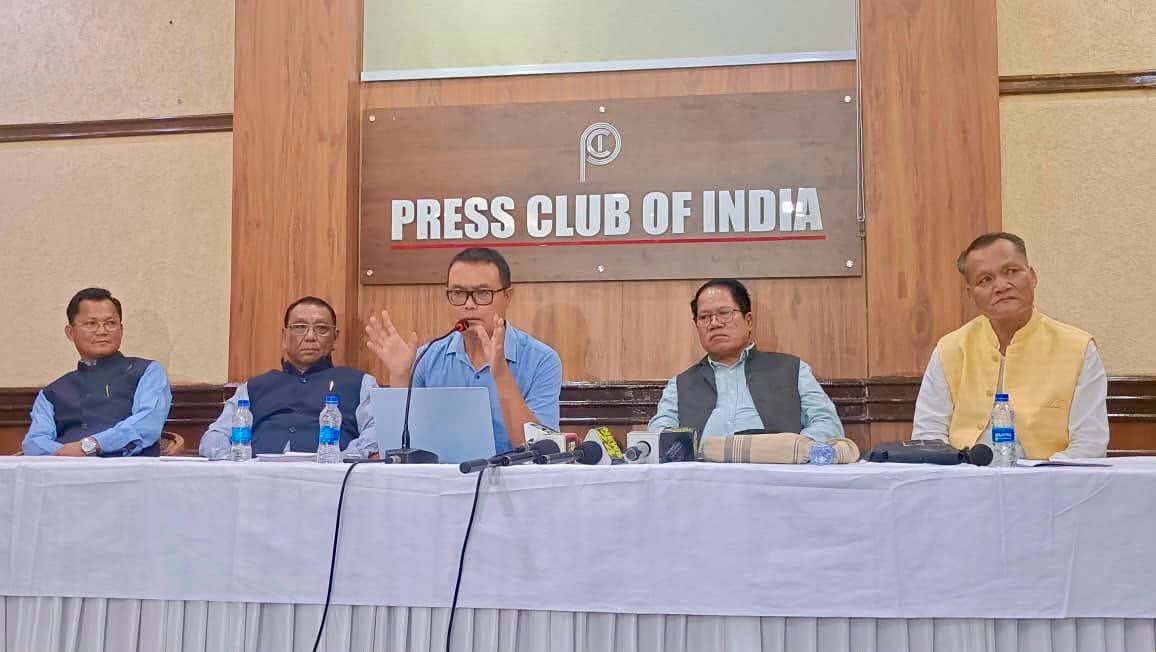
Following attacks on villages, killings, disruption of supply routes, and reports of shortages in Kuki-dominated areas, the KZC has approached the Government of India demanding –uninterrupted movement of essential commodities; restoration of healthcare access; equal justice; protection of civilians; humanitarian intervention; and dialogue facilitated through church organisations.
None of these demands is unreasonable.
Indeed, they are precisely the obligations that flow from Articles 14 and 21 of the Constitution of India. The State has a constitutional duty to protect life and ensure equal protection of the laws.
However, the obvious question follows naturally.
If uninterrupted movement of food and medicine is now described as a fundamental humanitarian necessity, why was the same principle not advocated with equal consistency when the entire Meitei population experienced comparable restrictions for over three years? And what about the justice of the six Liangmai Nagas who were abducted, killed and left their mutilated bodies in the forest for weeks?
A constitutional principle and international humanitarian law cannot become valid only when one’s own community suffers.
The State’s Uneven Humanitarian Response
The KZC’s appeal has also elicited a rapid administrative response. Reports indicate that the Government and the security establishment have begun exploring measures to restore the movement of essential commodities, improve humanitarian access, and prevent shortages in Kuki-dominated areas affected by the ongoing Kuki-Naga conflict. From a humanitarian perspective, such intervention is entirely appropriate. No civilian population should be denied access to food, medicines, fuel, or healthcare because of a violent conflict.
The larger constitutional question, however, is whether the same sense of urgency has been consistently applied throughout the broader Manipur crisis since May 3, 2023.
For more than three years, restrictions on civilian movement, disruptions to transport and the fragmentation of the State’s highway network have profoundly affected the entire Meitei population. National Highways 2 and 37 – the principal lifelines connecting the Imphal Valley with the rest of India – have remained subject to severe restrictions, requiring heavily escorted convoys, limiting the normal commercial transport, and restricting the normal movement of civilians. More recently, the escalation of the Kuki-Naga conflict has likewise disrupted movement along National Highway 202 and parts of National Highway 2, imposing similar hardships on Naga communities.
The constitutional obligation of the State is not merely to respond to humanitarian crises after they emerge. It is to prevent such crises from developing in the first place by ensuring that public highways remain open, civilian movement is protected, and essential supplies reach every part of the State regardless of the ethnicity of those who reside there.
If emergency intervention is now considered necessary to ensure food, medicines, and fuel reach Kuki-dominated areas, an equally important question arises – why were similarly robust and sustained efforts not undertaken to restore normal civilian movement and guarantee uninterrupted access along Manipur’s principal highways for all communities during the preceding three years?
This is not an argument against assisting Kuki-Zomi civilians. On the contrary, humanitarian assistance should be immediate and unconditional. The concern is whether the State has applied the same constitutional standard of urgency and equal protection to every community affected by the conflict. Equality before the law, guaranteed under Article 14 of the Constitution, requires not selective responsiveness but consistent protection. Humanitarian intervention acquires its fullest legitimacy only when it is guided by universal constitutional principles rather than by the identity of those who happen to be suffering at a particular moment.
The Politics of Selective Victimhood
Political movements often derive legitimacy by presenting themselves as victims of historical injustice.
There is nothing inherently illegitimate about documenting genuine suffering. The Kuki-Zomi civilian population also has undoubtedly experienced displacement, killings, attacks on villages, and humanitarian hardship.
The problem arises when victimhood becomes selective.
Selective victimhood occurs when a political organisation acknowledges violence against others as normal while placing exclusive emphasis on its own suffering.
The KZC’s recent statements illustrate this tension.
Its spokesperson rightly observed that justice should be equal, and admitted the killing of six abducted Liangmai Nagas by the members of their community.
But equality cannot operate only at the level of rhetoric.
For equality to possess moral credibility, the same organisations must acknowledge with equal force the suffering experienced by Meitei civilians since May 2023, killing of hundreds, abductions and missing, the displacement of thousands, restrictions on movement, attacks on villages, flattening of villages, and the humanitarian consequences of prolonged territorial segregation.
Without such consistency, appeals for “equal justice” risk appearing politically instrumental rather than ethically universal.
The Changing Politics of the Kuki-Zo Council
Recent developments suggest that the KZC itself has undergone an important political recalibration.
As previously discussed in analyses of the Kuki-Zo Council’s changing political posture, the organisation has gradually moved from categorical denial of violence occurring within Kuki-controlled territories to acknowledging certain incidents, expressing regrets, and seeking broader political engagement.
Its regret following the killing of the six Liangmai Naga hostages represented an unusual departure from earlier patterns of public communication.
Likewise, after Kuki hostages released safely through church interventions, its current effort to seek mediation through church institutions in Mizoram indicates recognition that prolonged confrontation with the Nagas carries enormous political costs.
This reflects a significant strategic adjustment.
However, acknowledging responsibility after tragic events is only the first step.
A more meaningful recalibration would involve rethinking the broader political logic that has sustained ethnic segregation across Manipur.
Humanitarian Principles Cannot Be Ethnically Conditional
One of the strongest arguments advanced by the KZC concerns shortages of food, fuel, medicines, and healthcare in Kuki-dominated areas caused by disruption of supply routes during the present Kuki-Naga conflict. If reports of inflated prices and restricted access are accurate, they deserve immediate governmental attention. No civilian population should be subjected to humanitarian deprivation.
Yet the current situation also illustrates a broader constitutional failure. Different highways across Manipur have become inaccessible to different communities – Meiteis have long faced restrictions along National Highways 2 and 37; Nagas are now experiencing insecurity and disrupted movement along National Highway 202 and parts of National Highway 2 because of the Kuki-Naga conflict; and Kuki villages are reporting shortages caused by the disruption of routes through Naga-dominated areas.
This demonstrates that once roads become instruments of ethnic contestation, no community ultimately remains immune. The erosion of one group’s freedom of movement eventually undermines the security and mobility of others.
Humanitarian principles are therefore indivisible. The right to access food cannot depend upon ethnicity. The right to travel cannot depend upon ethnicity. The right to healthcare cannot depend upon ethnicity. The right to transport essential commodities cannot depend upon ethnicity. These rights belong equally to all the ethnic groups loosely categorised as Meiteis, Nagas, Kukis, Pangals and every other citizen of Manipur.
If these rights are invoked today on behalf of “Kuki-Zo” civilians, they must also be recognised for the Meiteis who have endured prolonged restrictions since May 2023 and for the Nagas whose mobility has now been curtailed by the ongoing Kuki-Naga conflict since February 2026. Constitutional guarantees cannot acquire force only when one’s own community becomes the victim.
Dialogue Must Extend Beyond Immediate Crisis Management
The KZC now seeks dialogue with Naga organisations through church mediation.
Dialogue is undoubtedly preferable to continued violence.
Yet the logic of dialogue should not stop there.
If the KZC sincerely believes dialogue is indispensable for resolving conflicts with the Nagas, the same principle necessarily applies to the larger conflict involving the Meiteis.
Meaningful reconciliation cannot coexist with permanent ethnic separation.
Nor can constitutional democracy function if different communities enjoy different levels of mobility within the same state.
The longer such arrangements persist, the more deeply they institutionalise partition without formally declaring it.
A Test of Political Credibility
The present moment offers the Kuki-Zo Council an opportunity to redefine its political identity.
It can continue to frame humanitarian principles primarily through the lens of “Kuki-Zo” suffering.
Or it can adopt a genuinely universal position.
Such a position would include unequivocal support for – unhindered civilian movement for every community; reopening of all public highways under constitutional guarantees; protection of every civilian irrespective of ethnicity; impartial investigation of all killings and village burnings; rejection of retaliatory violence; coexistence of ethnic groups; and political dialogue without preconditions.
That would represent not merely a tactical adjustment but a moral transformation.
Beyond Competing Victimhood
Perhaps the greatest tragedy of Manipur today is that every community possesses authentic experiences of suffering.
Nagas mourn the killing of hostages.
Kuki-Zo families mourn their dead and displaced.
Meitei families mourn the killings, waiting for the missing persons; continue to live with prolonged displacement, restricted movement, insecurity, and the consequences of a conflict now extending into its fourth year.
No political organisation strengthens its moral standing by treating only its own suffering as politically significant.
The politics of selective victimhood inevitably deepens mistrust because each community comes to believe that only its pain is recognised while the suffering of others is ignored.
If the Kuki-Zo Council genuinely seeks a new political beginning, its advocacy must move beyond demanding humanitarian protection only when Kuki civilians are affected. It must affirm the same constitutional freedoms for every citizen of Manipur that it now rightly claims for its own people.
For peace in Manipur will not emerge from competing narratives of victimhood. It will emerge only when every political actor accepts a simple constitutional truth – rights are universal, humanitarian principles are indivisible, and justice loses legitimacy the moment it becomes selective.
The present humanitarian crisis affecting Kuki-dominated areas should therefore serve as a lesson for the Government as much as for the Kuki-Zo Council. Roads cannot be treated as instruments of conflict management. Once a State permits highways to become ethnic frontiers, every community eventually becomes vulnerable. The Government’s duty is not simply to deliver relief after shortages emerge, but to ensure that no citizen – Meitei, Naga, Kuki, Pangal, or any other community – is ever placed in a position where access to food, medicine, education, healthcare, or freedom of movement depends upon ethnic identity or the shifting geography of violent conflict.
The tragedy of Manipur is not merely that different communities suffer at different moments; it is that constitutional rights themselves have become contingent upon geography and ethnicity. Once humanitarian principles become selective and highways become ethnic frontiers, no community ultimately remains secure. The fragmentation that began by restricting one community eventually engulfs them all.

Senior Editor: Imphal Review of Arts and Politics