
It is a strange thing to realise that something you were given before you could speak, something chosen for you by people who probably thought more about how it sounded than about the weight it might one day carry, can follow you through an entire life, gathering along the way pieces of family, place, memory and history, until the name that once seemed so small becomes capable of holding far more than the person who first received it could ever have imagined.
Someone chooses a name for you before you have any idea what a name is, and you grow into it slowly, hearing it first from your mother in another room, from your father when he wants your attention, from a teacher reading it out during attendance, and later from friends who shorten it, mispronounce it, tease you with it or turn it into something that belongs only to you, until one day you realise that this sound which once meant nothing to you has become one of the most familiar things in your life.
For most of our lives, we hardly think about our names because they are simply ours, as ordinary and as intimate as our faces and our voices, and we may laugh when we hear an unusual name, struggle when we cannot pronounce one, ask someone where theirs came from or who they were named after, or discover that two people we know happen to share the same name, but we rarely imagine that a name could become anything more than a way of calling someone.
Sometimes a name carries a grandparent, sometimes a favourite author, sometimes a place or a tradition, and sometimes simply a little hope that a parent had when they first held their child, and perhaps that is why names have always seemed such harmless things to me, because whatever else they may carry, they have generally been things that bring people closer rather than things that stand between them.
In fact, we have been remarkably generous with names.
Take Diesel, for instance.
Most of us have probably stopped at a petrol pump and asked for diesel without ever wondering who Diesel was, but Rudolf Diesel was a real person, an engineer who developed the engine that eventually carried his name, and somewhere along the way his name escaped the man himself and became part of the ordinary vocabulary of the world, attached to engines and vehicles and fuel, so completely absorbed into everyday life that we can use the word without remembering that, once, it belonged to a person.
There are so many names like that, names that have survived the people who first carried them and travelled across countries and centuries, becoming medical procedures, inventions, foods and processes, so that we speak of a Caesarean section, Pasteurisation, Braille or a Sandwich without needing to know the entire story of the person whose name we have borrowed, because language has a strange generosity about it, taking something that once belonged to one person and making it available to everyone.
Names travel very well.
They cross countries and centuries, survive the people who first carried them and enter languages that their owners may never have spoken, and nobody stops us at a border and asks whether we are entitled to use them, because a name, once it becomes part of our common language, seems to belong to all of us.
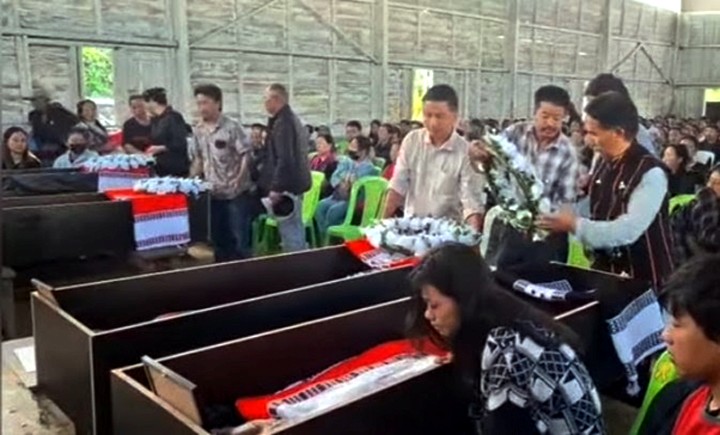
Perhaps that is why I have found it difficult to forget something that happened here after the violence began.
There were roads where people could no longer simply travel, roads that had once been ordinary parts of the landscape but had somehow acquired new meanings, where before continuing a person first had to establish who they were, and what stays with me is not only that movement had become difficult or that familiar places had become unfamiliar, but that something as ordinary as a name, something we normally offer at the beginning of a conversation, could become part of the decision about whether a person could proceed.
I don’t want to dwell on the details because they belong to a much larger and more painful story than this essay can hold, and because it would be easy for this to become another essay about the things that have divided us, when what I keep returning to is something much smaller and, perhaps for that reason, much more difficult to explain: the thought that a name could arrive at a road before the person carrying it did.
It is difficult to explain why that thought feels so sad to me, except perhaps because a name is supposed to tell us who to call, to give us a way to begin a conversation, to let one person introduce themselves to another, and it was never meant to tell us where we could go.
For most of my life, I have thought of names as invitations, because when someone tells me their name I know what to call them, and from there I can ask where they are from, who they were named after, whether their name has a story behind it, or sometimes nothing at all, because there are occasions when a name is simply a name and a conversation does not need to become anything more complicated than two people getting to know one another.
But what happens when we begin to believe that a name tells us more than that, when a name becomes a shortcut to everything we think we know about a person, and when we hear it and immediately begin filling in the spaces around the person before they have had a chance to tell us anything about themselves?
We do this more easily than we like to admit, sometimes without malice and sometimes without even realising we are doing it, because we hear a surname and make an assumption, hear a particular name and imagine a place, hear an accent and think we know something about the person speaking, and we place people into little categories because categories are easier than people and because it takes time to discover the complicated, contradictory and usually surprising person who exists beyond the category.
A name can become a kind of shorthand, and perhaps that is harmless when the shorthand is only a curiosity, when we are simply wondering where someone comes from or what their name means, but it becomes something else when the name becomes a boundary, when something that was given to us before we could speak begins to determine how someone else sees us before they have even met us.
That is the part I keep returning to.
There is something deeply unsettling about a person arriving at a road and having their name considered before they are considered, because the person is still the same person, carrying the same face, the same hands, the same memories and the same reason for travelling, whether they are going to see a friend, visit a relative, take someone to a hospital, return home or simply go somewhere they have gone many times before, and yet suddenly the name arrives first, carrying a history the person may never have chosen.
That, perhaps, is the greatest weight of a name, not what it tells us about ourselves but what others decide it tells them about us.
We inherit our names, and with them we inherit histories, languages, places and memories, many of which existed before we were born, and there are things about our names that we are proud of, things we barely understand, and perhaps things we sometimes wish we could leave behind, but none of us chose the circumstances into which we were born and none of us chose all the stories that would eventually be attached to our names, and yet sometimes we are asked to carry them as though we did.
Perhaps this is what happens when fear becomes stronger than curiosity, when we stop asking who this person is and begin asking instead what their name means, because the first question leaves room for a human being while the second can leave only a category.
I don’t think names themselves are the problem, and in fact I have come to value mine more as I have grown older because it connects me to people I have known and people I never knew, carries pieces of a family and a place, and reminds me that I came from somewhere and that I did not begin with myself, and there is comfort in that, in knowing that something of us has been carried forward from people whose lives we can only partly imagine.
But there should also be freedom in a name, the freedom to be more than what it suggests, the freedom to surprise the assumptions that come with it, and perhaps most importantly, the freedom to meet someone who knows nothing about you and simply begin again.
Perhaps that is what we need to recover, not a world without names, because names are part of what makes us human and there is nothing wrong with carrying the history that comes with them, but a world in which a name can once again be allowed to remain a name, something we give each other when we meet, something we remember when we part, something that can make us curious rather than afraid, something that opens a door rather than closes one.
And perhaps one day, when someone asks, “What is your name?”, the answer will once again be only the beginning of a conversation.
Not the end of a road.
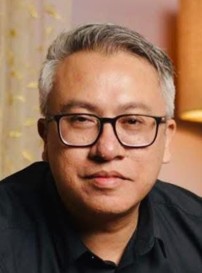
Sam Khumanthem writes about home, identity, and the quiet complexities of life in Manipur. His work reflects a deep connection to place, shaped by both love and uncertainty.