
When I was in school, many of our mornings began with the Lord’s Prayer, and in those schools run by Catholic missions, it was simply part of the rhythm of the day, something we did before the lessons began, standing in rows with our hands folded or held quietly in front of us, some of us still thinking about breakfast, some already wondering what the day might bring, and perhaps none of us paying much attention to the words because they were words we had been saying for so long that they had become almost like the school bell, familiar and unquestioned.
There was a line about forgiveness.
Forgive us our trespasses, as we forgive those who trespass against us.
I don’t remember ever stopping to think about what we were actually asking for, and perhaps that is the privilege of being young, that we can say words whose meaning is far greater than our capacity to understand them, believing that understanding will come later, when life has given those words faces and names and consequences.
Many years later, I find myself thinking about that prayer again.
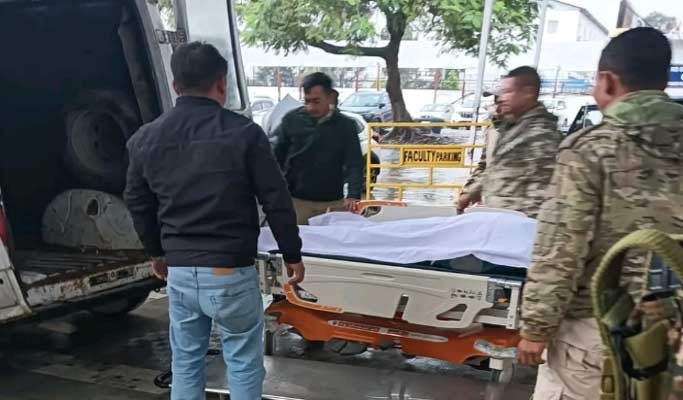
A young woman recently died in a freak accident at a car wash, and despite the efforts to save her, she could not be saved, leaving behind the kind of silence that comes when a life disappears suddenly, without warning and without giving a family the time even to imagine that such a thing could happen; yet what stayed with me, even more than the terrible news itself, was what I witnessed afterwards, because the family, in the middle of a grief that I can only imagine, chose not to put the young man whose actions had accidentally caused the mishap at the centre of their anger, and instead, somehow, found within themselves the ability to forgive him.
I say somehow because I don’t know how such forgiveness is found.
I don’t know what happened inside that family in those first hours and days, whether there was anger, disbelief, helplessness, questions, or even moments when forgiveness seemed impossible, and I would not presume to know what they felt simply because of what they chose to do, but what I saw was that they refused to turn their loss into another person’s destruction, and in doing so they seemed to understand something about forgiveness that I have often struggled to understand myself.
We speak about forgiveness so easily, almost as though it were a small act of decency that we can perform when someone has hurt us, something we are expected to do because we are good people, and yet I wonder if we understand how much weight there can be in the decision to forgive, because before we can put down the hurt, we often have to put down the desire to make someone pay for it, the belief that another person’s suffering might somehow balance our own, and the deeply human feeling that because we have been wounded we have earned the right to wound someone else.
Perhaps the hardest thing we have to put down is the hope that punishment can somehow repair the past.
It cannot.
No punishment could have brought that young woman back, no amount of suffering imposed on the young man could have reversed those terrible moments, and no sentence could have made the family whole again, because some things happen only once and cannot be undone, and perhaps that is one of the most difficult truths about loss, that there is no action we can take afterwards that will make the world as it was before.
Maybe that is why blame can feel so comforting in the aftermath of tragedy, because blame gives chaos a shape, gives grief somewhere to go, and gives us a person upon whom we can place the terrible weight of what has happened, and perhaps when we blame someone we feel, even briefly, that the world has become understandable again, that something happened because someone did something, and therefore someone can be made to pay.
Forgiveness asks something much harder of us.
It asks us to accept that there may be no punishment capable of repairing what has been lost, and that while we cannot change what happened, we can still decide what happens next, which is perhaps why the forgiveness shown by that family has stayed with me, because they did not have the power to change the past, but they had the power to decide whether another life would be destroyed by it.
That is not weakness.
I think it may be one of the hardest forms of strength we know.
The Lord’s Prayer seems different to me now than it did when I was a child, because those words about forgiveness, repeated so casually in school assemblies by children who had barely begun to understand hurt, seem to carry a very different weight when we have lived long enough to know what betrayal feels like, what disappointment does to us, what anger can become when it is kept for too long, and how easily an old wound can become part of the story we tell ourselves about who we are.
We carry old arguments and betrayals, words spoken years ago that we have replayed so many times that we can still hear the tone in which they were said, people who disappointed us, people who left us, people who never apologised, and sometimes we carry these things for so long that we begin to mistake the weight of them for a part of who we are.
There are things we hold on to because letting them go feels almost like admitting that they did not matter, as though forgiveness somehow diminishes the wound or dishonours the person we once were when we were hurt, and perhaps that is why forgiveness can be so difficult, because we sometimes confuse remembering with carrying, and we think that if we stop being angry we are somehow saying that what happened was acceptable.
But forgiveness does not require us to say that.
It does not mean that what happened was right, or that justice no longer matters, or that consequences should disappear, or that every broken relationship must be restored to what it once was, and it certainly does not mean that we forget, because there are some things that should never be forgotten, but perhaps forgiveness means that we stop allowing what happened to have an unlimited claim on what remains of our lives.
There are people I have found difficult to forgive, and there are things I have carried longer than I should have, sometimes because I believed that holding on to the hurt was the only way to honour the fact that I had been hurt, and sometimes because anger gives us a strange sense of control, allowing us to return to the same conversation, the same betrayal, the same question of why, long after the other person has moved on, or perhaps long after they have even forgotten what they did.
And that is the strange thing about carrying a grievance for too long.
The person who hurt us may have gone on with their life, while we continue carrying the weight of what they did.
Perhaps forgiveness begins when we realise that.
Perhaps it begins when we understand that we can acknowledge that something mattered, that it hurt, that it changed us, and still decide that it will not be allowed to own us forever.
I think again of that family, and of the young man whose mistake brought such terrible consequences, and I find myself wondering whether they understood something that I am still learning, that sometimes forgiveness is not about releasing the other person from the consequences of what happened but about refusing to allow the consequences to multiply, refusing to let one terrible moment take another life with it, and refusing to let grief become a reason for creating more grief.
I don’t know if I could have done what they did.
Perhaps none of us really knows what we would do until life places us in a moment for which there is no preparation, no rehearsal, and no adequate language, but what they did has made me think differently about the words we once recited without understanding.
Forgive us our trespasses, as we forgive those who trespass against us.
Perhaps we grow into that prayer slowly, discovering over the years that forgiveness is not something we offer from a position of strength, but something we sometimes have to learn while we ourselves are still wounded, still confused, still carrying questions that may never be answered.
Perhaps forgiveness is not the removal of the wound, because some wounds remain with us for a very long time, but the decision not to let the wound determine the shape of the rest of our lives.
And perhaps that is what it means to shed a weight, not to pretend that it was never heavy, not to deny that it changed us, and not to tell ourselves that we should have been strong enough never to feel it, but simply to recognise that there comes a time when carrying it any further serves no one, least of all ourselves.
Maybe forgiveness is not about becoming lighter.
Maybe it is about finally deciding which weight we no longer need to carry.

Sam Khumanthem writes about home, identity, and the quiet complexities of life in Manipur. His work reflects a deep connection to place, shaped by both love and uncertainty.