Communal violence is commonly explained in terms of religious hatred, ethnic antagonism, historical grievances, cultural differences, or competition over resources. These explanations are important, but they do not fully account for why communal identities become politically intensified at particular moments or why conflicts that begin as local disputes sometimes develop into wider struggles between communities. A political reading of communal violence suggests that another factor deserves greater attention: the competition for power. The argument of this essay is not that communal hatred is fabricated by political actors or that religious and ethnic differences are insignificant. Rather, it is that communal differences acquire greater political significance when they become connected to struggles over representation, territory, institutional control, resources, recognition, and political authority. In this sense, Machiavelli remains relevant to the study of communal conflict because his analysis directs attention to the practical operation of power rather than to the stated moral language through which political action is justified.
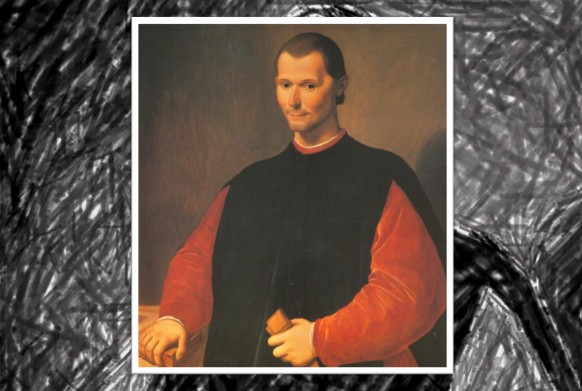
Machiavelli’s political thought is usually associated with the manipulation of power, the strategic use of force, the management of appearances, and the preservation of political authority. Such an interpretation is often reduced to the familiar idea that political actors will employ whatever means are necessary to achieve their ends. A more useful reading, however, is to understand Machiavelli as a theorist of political competition under conditions of uncertainty. His political actors must assess threats, build alliances, anticipate opponents, maintain legitimacy, and secure their position in an unstable environment. Political action therefore involves calculation. The significance of this perspective extends beyond rulers. Once political life is understood as competition for influence and authority, the same logic can operate through parties, social organisations, communities and individuals.
Communal politics provides an especially revealing context in which to examine this process. Religious or ethnic identity does not automatically produce political conflict. Millions of people live with significant differences in religion, language, ethnicity and culture without engaging in violence. The political question is therefore not simply why differences exist but why certain differences become politically decisive. One explanation is that identity becomes consequential when political actors connect it to the distribution of power. A religious identity may become an electoral constituency; an ethnic identity may become a basis for political representation; a territorial identity may become an argument for control over land; and a historical grievance may become a basis for political mobilisation. Identity then ceases to be merely a description of social belonging and becomes a political resource.
This transformation is central to understanding communal violence. A community that believes its political position is declining may interpret demographic change, administrative decisions, economic competition or cultural change as evidence of an emerging threat. Political organisations can reinforce such perceptions by presenting them as collective problems requiring collective action. The opposing community may respond in precisely the same way. Each side begins to interpret the political advancement of the other as a potential loss for itself. The resulting competition produces what may be described as a race for power: a situation in which political security is increasingly understood in relative terms. If the other community becomes stronger, one’s own community is assumed to become weaker.
This is where communal politics acquires a distinctly Machiavellian character. The issue is not that every political participant is consciously manipulating others. Most participants may regard themselves as defending legitimate interests. The more important point is that a political environment organised around competition can reward strategic behaviour. Leaders may emphasise issues that strengthen group solidarity; political organisations may frame elections as contests between communities; citizens may support candidates whom they regard as protectors of collective interests; and competing groups may interpret political compromise as a possible loss of influence. Machiavellianism, in this sense, need not be a psychological characteristic. It can be a feature of the political environment.
This distinction between individual intention and political function is essential. Communal hatred may be entirely genuine. People can inherit memories of violence, experience discrimination, fear political marginalisation, or develop deep resentment toward another group. To describe the political usefulness of hatred does not require us to deny its emotional reality. A person can sincerely believe that another community constitutes a threat while simultaneously participating in a political process in which that perception strengthens particular political interests. Genuine emotion and political calculation can therefore coexist.
The political usefulness of communal division becomes particularly visible during periods of electoral competition. Elections create incentives for political actors to mobilise constituencies, and communal identities can provide relatively stable bases for mobilisation. This does not mean that politicians invariably create communal divisions for electoral purposes. It means that where social divisions already exist, political competition can give them greater significance. Research on communal violence in India has examined precisely this relationship between ethnic identity, political competition and mobilisation. The relevant point is therefore not that every instance of violence is politically engineered but that communal identity can become an instrument within broader struggles for political power.
The relationship between violence and power also deserves closer examination. Violence does more than produce physical destruction. In certain political contexts it can alter the behaviour of communities, affect electoral participation, produce displacement, intimidate opponents, demonstrate organisational capacity, and change perceptions of territorial control. Research on electoral violence in India, for instance, has examined how violence can affect political competition and voter behaviour. Other research has explored how local economic relationships and political competition interact in producing ethnic violence. These findings suggest that communal violence cannot always be adequately explained as spontaneous emotional disorder. Violence may have political consequences even when the individuals participating in it do not consciously calculate those consequences.
This is particularly important because communal conflict often involves competing claims of self-defence. Each community may regard its own actions as responses to an earlier threat. One group sees itself as retaliating; the other sees the retaliation as aggression; the second response then becomes justification for another response. The result is a cumulative process in which violence becomes embedded in a cycle of reciprocal insecurity. Each side believes that political weakness will expose it to further danger. Consequently, demonstrating strength becomes a form of protection. The distinction between defence and domination becomes increasingly difficult to maintain.
The politics of communal violence is therefore not simply a politics of hatred. It is also a politics of insecurity. Groups that fear losing political influence are more likely to interpret political developments through the question of collective survival. Under such circumstances, compromise can become politically costly. A leader who advocates accommodation may be accused of weakening the community, while a leader who adopts a confrontational position can present himself as its defender. Political competition consequently creates incentives for actors to demonstrate their commitment to the group.
This mechanism also helps explain why communal identities can become stronger during political crises. Political uncertainty creates demand for political certainty, and communal identity provides a relatively clear distinction between insiders and outsiders. Once political competition is organised around this distinction, the opposing group becomes more than a political competitor. It can be represented as a threat to the community itself. At that stage, ordinary political disagreement begins to acquire existential meaning.
The role of historical memory further complicates this process. Communities rarely enter political conflict without narratives about their past. Memories of previous violence, discrimination, political exclusion or territorial loss can remain politically significant long after the original circumstances have changed. Historical memory can provide legitimate grounds for understanding contemporary grievances, but it can also become a resource for mobilisation. Political actors can select particular episodes from the past, give them contemporary significance, and use them to explain why the community must remain politically vigilant. The past thereby becomes part of the competition over the present.
Digital media has intensified this process. Political communication is no longer controlled primarily by political parties, newspapers, religious institutions or other established organisations. Individuals can now produce and circulate political narratives on a large scale. Images, rumours, historical accounts and allegations can move rapidly across networks, often without adequate verification or contextualisation. The significance of social media is therefore not simply that it spreads false information. More fundamentally, it allows ordinary citizens to participate directly in the production and circulation of political narratives. The mobilisation of communal identity has consequently become more decentralised.
This development introduces another dimension to the question of Machiavellianism. Political calculation is no longer restricted to formal political institutions. Individuals themselves participate in the construction of political narratives. They decide which events to circulate, which grievances to emphasise, which historical episodes to remember, and which political actors to support. Most do so without regarding themselves as political manipulators. They may simply believe that they are informing or defending their community. Nevertheless, the cumulative effect can contribute to the consolidation of communal political identities.
The crucial issue, therefore, is not whether communal hatred is artificial or genuine. The distinction is insufficient. Hatred can be genuine and politically useful at the same time. A historical grievance can be legitimate and politically instrumentalised simultaneously. A community can face real discrimination and still have its suffering used strategically by political actors. Recognising the political function of communal identity does not invalidate the underlying experience of the community. It allows us instead to examine how experience becomes organised into political power.
This leads back to the central question: Is everyone Machiavellian? If Machiavellianism means conscious manipulation, the answer is clearly not. Most participants in communal politics are not professional strategists seeking personal domination. But if Machiavellianism refers more broadly to the tendency to understand political relationships in terms of power, threat, strategic advantage and collective survival, then its logic can become widely distributed. Individuals and communities can adopt strategic forms of behaviour without consciously subscribing to a Machiavellian philosophy.
The more important conclusion is consequently structural rather than psychological. Communal violence does not require every individual to be cynical. It requires a political environment in which communal divisions can be converted into political advantage. Once political power is organised around communal competition, identity becomes a political resource, fear becomes a means of mobilisation, and historical memory becomes a source of legitimacy. Violence can then become one of the extreme mechanisms through which power is demonstrated and contested.
This perspective also challenges the tendency to regard communal violence exclusively as a problem of prejudice. Prejudice certainly matters, but prejudice alone does not explain the political organisation of violence. Nor is communal violence adequately explained by poverty, misinformation, or historical grievance considered separately. The distinctive political problem arises when these factors become connected to competition for power. Communal hatred may provide the emotional energy; political competition gives it direction.
The bitter truth is therefore more complicated than the claim that politicians simply manufacture communal hatred. Political actors do not always create the divisions upon which they subsequently capitalise. In many cases, the identities, grievances and memories already exist. What political competition can do is change their political value. An identity that was previously one among several dimensions of social life can become the principal basis of political mobilisation. A grievance that was once local can become collective. A historical memory can become a contemporary political argument. A fear can become a demand for political power.
Once this process takes hold, the race for power becomes self-reinforcing. Each community observes the political mobilisation of the other and responds by strengthening its own mobilisation. Each side can therefore claim that its actions are defensive. The resulting competition does not require a single mastermind. It can be produced through the interaction of many actors pursuing what they perceive to be their own interests. This is precisely why communal conflict can persist even when no single actor appears capable of controlling it.
The significance of Machiavelli in this context is consequently not that he provides a formula for understanding every communal conflict. His importance lies in directing attention toward the relationship between moral language and political power. Communities may speak in the language of justice, security, honour and historical memory, but political analysis must also ask what forms of power those claims seek to establish or preserve. This does not make moral claims irrelevant. It makes their political consequences part of the analysis.
Communal violence should therefore be examined not only through the question of what communities believe, but also through the question of what political arrangements those beliefs produce. Who gains authority? Who loses representation? Who acquires greater bargaining power? Who becomes politically indispensable? Who can claim to speak on behalf of the community? Who benefits when political identities become more sharply divided?
These questions do not eliminate the importance of religion, ethnicity, history or identity. They place them within a broader political framework.
The core point can finally be stated in relatively simple terms: communal hatred becomes most politically dangerous when it enters the race for power. The hatred may be sincere, the grievances may be genuine, and the identities may be historically deep. But once political competition begins to depend upon the mobilisation of those identities, communal difference can become a mechanism for acquiring and preserving power.
The Machiavellian problem, therefore, is not that everyone is secretly manipulative. It is that political competition can make strategic behaviour appear necessary even to people who understand themselves primarily as victims, defenders, or members of a threatened community. The race for power does not require everyone to become a Machiavellian thinker. It requires only that enough political actors discover that communal division can strengthen their position.
That is perhaps the more uncomfortable reality behind communal conflict: hatred does not have to be invented to become politically useful. It only has to enter the competition for power.

The writer is Assistant Professor, Imphal College