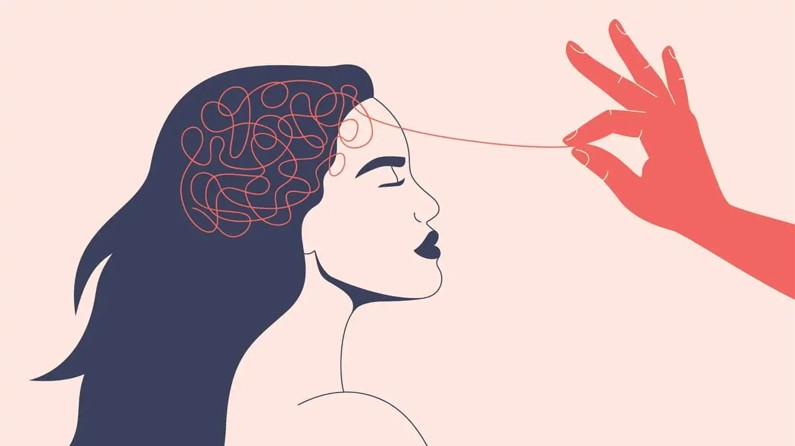
We can hold on to something for so long that we eventually forget to ask why we are holding on to it in the first place. What began as a way of preserving something precious becomes a habit, the habit becomes an attachment, and the attachment becomes a conviction that what we have known must remain as we have known it. By then, the memory itself may have changed very little, but our relationship with it has changed considerably. We no longer simply remember the past; we begin to expect the present and the future to answer to it.
Perhaps this is where the problem begins.
Memory is among the things that make us human. It gives us a sense of where we have come from, connects us to people and places, and allows us to carry experiences beyond the moment in which they occurred. Without memory, we would lose much of what makes a life meaningful, and a community would struggle to understand the experiences that shaped it. We remember what was beautiful, what was lost, what was done to us and what we have done to others. Some memories deserve to be protected, some need to be examined, and some may take generations to understand fully. The trouble begins when we assume that remembering something faithfully means that we have understood it completely.
Memory is not history, although the two are often treated as though they are the same. Memory is personal, selective and shaped by the life through which it is carried. History asks us to look beyond our own recollections, to examine evidence, listen to other accounts and reconsider what we thought we knew. A memory can be entirely sincere and still be incomplete. An injury can be real without every conclusion drawn from it being correct. And a story repeated across generations can become central to a community’s understanding of itself without ever being subjected to the difficult questions that might complicate it.
Yet we often find it easier to defend our memories than to examine them. To question a familiar account can feel like questioning the people who entrusted it to us, or diminishing the experiences of those who suffered before us. So we preserve not only the memory but also the conclusions that have gathered around it, until the two become difficult to separate. What happened becomes inseparable from what we believe it means, and what we believe it means becomes the basis on which we judge everything that happens afterwards.
We see this in the way individuals carry old grievances into new relationships, in the way families preserve practices they no longer understand, and in the way institutions continue doing things simply because they have always done them that way. We see it when we judge a person by who they were rather than who they have become, or when an old disagreement becomes the explanation for every new one. The past begins to do more than inform the present. It starts deciding what the present is allowed to become.
A similar attachment can be seen in the way we relate to the places around us. The buildings, streets, markets, monuments and public spaces we inherit were not always old. At some point, they were new ideas, built to meet the needs of people who were living in a world different from the one their parents had known. Some have been preserved because their history matters; others have been adapted to serve new purposes, and still others have made way for things that a changing society needed. There is no single rule for deciding what should remain and what should change. But a living place cannot be sustained by the belief that everything must remain untouched simply because it once belonged to another time.
The same is true of our customs, institutions, relationships and ways of thinking. What served one generation may not be sufficient for the next. What once brought a community together may, under different circumstances, begin to exclude others. A belief that gave us security may eventually prevent us from recognising a new possibility. None of this means that everything old is wrong or that everything new is better. It means only that we must retain the ability to distinguish what deserves to be carried forward from what we have continued to carry merely because we are accustomed to its weight.
This distinction becomes particularly important when we begin to think about what it means to belong to a place. We grow up with an understanding of what is ours: our homes, our land, our customs, our histories, our institutions and our ways of life. There is nothing inherently wrong with this attachment. People need a sense of belonging, and the desire to protect what matters to us is entirely understandable. But somewhere along the way, the desire to preserve what is ours can become the insistence that it must remain exactly as we remember it, beyond question, beyond change and sometimes beyond the presence or participation of others.
We begin to treat the past as a kind of permanent deed to the future. Because something has been ours, we assume that we alone should determine what happens to it. Because we remember a place in a particular way, we find it difficult to accept that others may also have memories, relationships or legitimate aspirations connected to it. We may recognise that the world is changing and still insist that the changes must stop at the boundaries of what we believe belongs to us.
But the world does not stand still to accommodate our memories. People move, circumstances change, generations grow up with experiences different from those of their parents, and the needs of a society evolve. Even the traditions we regard as ancient have histories of their own. They have been shaped by choices, encounters, adaptations and changes that people living before us were willing, or sometimes compelled, to make. What we now regard as familiar was once unfamiliar to someone. What we consider established was, at some point, new.
If our predecessors had insisted that nothing should change, we would not have inherited the world we know. They did not simply preserve what they received; they also made things, altered things and sometimes abandoned things so that life could continue. We remember what they left behind, but we do not always remember how much of their lives was spent making room for what had not existed before.
This is a difficult question for Manipur, where our memories of belonging, our understandings of the past and our anxieties about what might be lost can carry enormous weight. Different people and communities hold different accounts of the places they inhabit, the histories that have shaped them and the things they believe must be protected. These memories cannot simply be dismissed, nor can the real questions of rights, justice and security be brushed aside in the name of moving forward. But neither can every question about the present be settled by insisting that our own recollection of the past must prevail.
When belonging becomes a contest in which every claim must be defended against every other claim, it becomes difficult to imagine a future that is not merely an extension of the contest itself. What one person regards as preservation may be experienced by another as exclusion. What one side remembers as a rightful claim may be understood by another as a denial of its own place. Each becomes more determined to protect what it believes is already settled, and each new development is measured against the memories and apprehensions that came before it. In time, the past begins to dictate the terms on which the present can be lived.
We must ask ourselves what happens when every attempt to change something is treated as a threat, when every new possibility is judged by whether it agrees with an old understanding, and when the very idea of doing things differently is seen as a surrender of what we have always believed to be ours. If everyone must remain faithful to their own version of the past before anything can be built in the present, what space is left for a future that belongs to those who have not yet arrived?
We cannot build a new Manipur simply by rearranging the arguments of the old one. We cannot prepare our children for a world that is changing around them if we teach them only how to defend the world as we remember it. They will need new skills, new ways of thinking, institutions capable of adapting, and the ability to live and work with people whose experiences and understandings may differ from their own. They will need to know their history, but they will also need the confidence to question it, learn from it and recognise that knowing where they have come from does not automatically tell them where they should go.
To become future-ready is not to abandon our past, nor is it to embrace every change that comes our way. It is to develop the judgement to know what must be preserved, what must be reconsidered and what must be created anew. It is to accept that a community can remain connected to its history without requiring every generation to live by the same assumptions. It is to recognise that protecting what matters to us does not always require keeping it beyond the reach of change, and that sometimes the most faithful thing we can do with what we have inherited is to make it meaningful for a world our predecessors could not have anticipated.
We owe the past our remembrance, but we owe the future our preparation.
Perhaps this is the distinction we have yet to make. Memory can tell us why something matters, but it cannot, on its own, decide what should happen next. It can remind us of an injustice, but it cannot relieve us of the responsibility to examine what justice requires in the present. It can explain our attachment to a place, a belief or a way of life, but it cannot settle every question about how that place, belief or way of life must evolve. For that, we need judgement, conversation, evidence and a willingness to accept that our understanding may not be complete.
A society that cannot question its memories risks turning them into instructions. A society that treats every inherited understanding as final leaves little room for learning, and one that spends all its energy defending what it has been may discover, too late, that it has not prepared itself for what it could become.
The question, then, is not whether we should remember. We must. Nor is it whether we should preserve everything that connects us to the past. Some things are too precious to lose, and some injustices are too important to leave unexamined. The question is whether we can remember without allowing memory to become a verdict on the future, whether we can honour what came before us without demanding that everything after us remain the same.
Manipur’s future cannot be built by forgetting what has happened, but neither can it be built by requiring the future to answer indefinitely for everything we remember. At some point, we must move beyond the question of whose memory will prevail and begin asking what kind of place we are prepared to make possible for those who come after us.
Our memories may explain why we have arrived where we are. They cannot be the only reason we remain here.
Sam Khumanthem writes about home, identity, and the quiet complexities of life in Manipur. His work reflects a deep connection to place, shaped by both love and uncertainty.