Author’s Note
The first-person narrative presented in this essay is an illustrative literary construction intended to articulate a possible psychological and emotional predicament arising from the intersection of economic deprivation and socially prescribed expectations surrounding Ningol Chakkouba. The narrator, his circumstances and the experiences attributed to him should not be construed as a documented individual case or as empirically established facts. The references to daily earnings and financial circumstances serve as a narrative framework through which the broader social and moral questions are examined. This account does not presume that every economically disadvantaged person experiences the celebration in the manner depicted, nor does it attribute such expectations uniformly to every family or participant. Its purpose is to invite critical reflection on the social pressures, economic inequalities and moral assumptions that may accompany the celebration in its prevailing form.
I earn ₹200 a day. This is the monetary valuation of my labour, the price at which my time, physical exertion and capacity to work are negotiated in the marketplace. I have gradually accustomed myself to the limitations imposed by this income. My existence is governed by an almost incessant arithmetic of necessity: the provisions required to sustain my household, the obligations that cannot be deferred, the expenses that must be anticipated and the modest remainder that, if fortune permits, might be preserved against an unforeseen contingency. Mine is a life in which financial calculation is not an exercise in prudence but a condition of survival. An unexpected expenditure, however insignificant it might appear to someone more comfortably situated, can unsettle the precarious equilibrium of an entire month.
Yet there is one occasion in the annual calendar that renders even these calculations inadequate. It is Ningol Chakkouba.
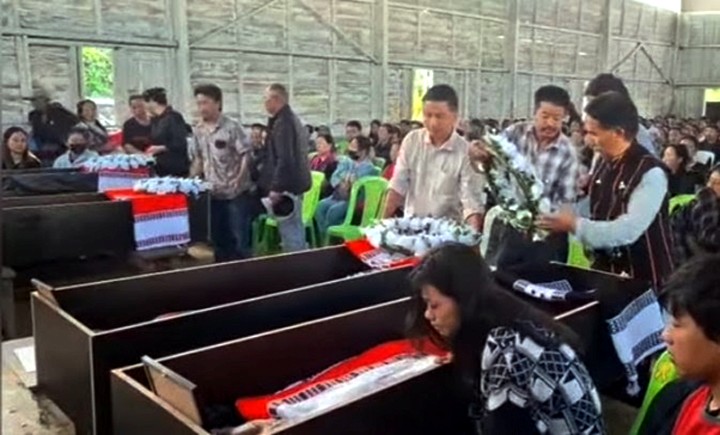
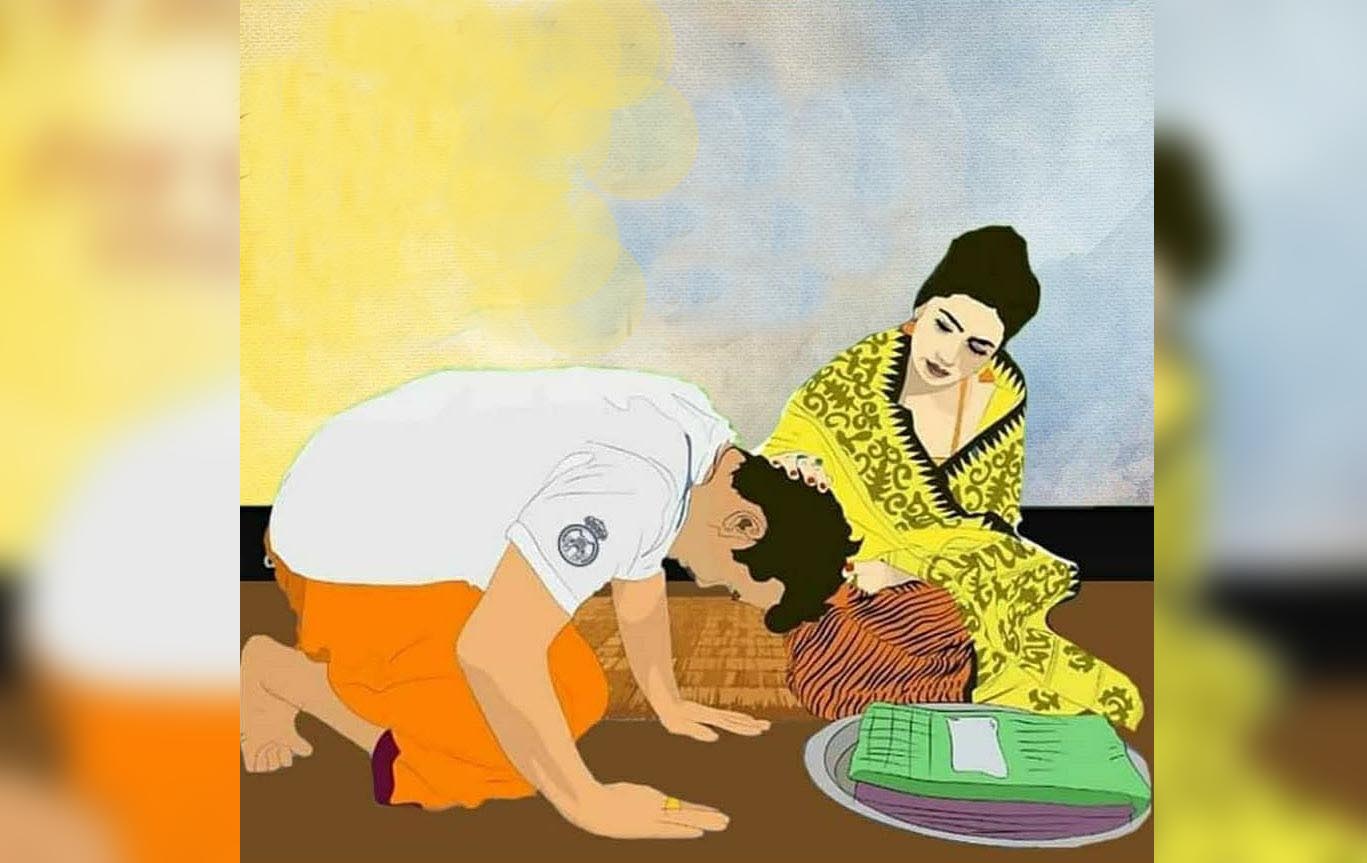
I understand the sentiments traditionally associated with the occasion. It is presented as an affirmation of the fraternal bond, or rather an opportunity for sisters to revisit their parental homes and for families to renew the intimacies of kinship. I have neither an aversion to such reunions nor any reservations about the expression of familial affection. What troubles me, however, is the gradual transformation of an intimate relationship into a socially regulated performance, in which affection appears to require material demonstration. Somewhere in the evolution of this celebration, the expression of love seems to have become inseparable from the expenditure through which it is publicly exhibited.
As the occasion approaches, I experience an apprehension that is difficult to articulate without appearing either miserly or indifferent. It is not simply the disappointment of being unable to purchase an expensive gift or arrange an elaborate feast. My anxiety originates in the anticipation of social judgement, in the uncomfortable awareness that my economic circumstances may be measured against expectations that remain entirely indifferent to my actual means. The questions begin to accumulate well before the day itself. What should I arrange for the meal? What can I afford to give my sister? Will my offering appear inadequate? Will my financial limitations become discernible to others? What interpretation might relatives attach to the modest arrangements I can afford? Such considerations intrude upon my thoughts even when my attention ought to be devoted to earning the very money that I will subsequently be expected to spend.
If I manage to work twenty-six days in a month, my earnings amount to ₹5,200. Even this calculation presupposes uninterrupted employment, good health and the absence of unforeseen circumstances. There is no financial cushion to absorb an extravagant expenditure, nor any substantial reserve from which I might draw without compromising other essential responsibilities. Nevertheless, the social expectations surrounding a single cultural occasion can make me feel as though I have somehow defaulted on my obligations as a brother. I find myself involuntarily comparing my circumstances with those of individuals for whom an expenditure of several thousand rupees constitutes little more than an ordinary festive arrangement. What is an inconsequential indulgence for one household may represent several weeks of accumulated earnings for another.
The humiliation is compounded by the difficulty of communicating it. To acknowledge that I cannot afford the prevailing expectations is to risk having my financial incapacity mistaken for emotional inadequacy. To explain that my household has more pressing obligations is to invite the familiar admonition that a sister deserves to be honoured at least once a year. To resist the prevailing extravagance is to expose myself to the possibility of being regarded as indifferent to familial obligations. I am consequently placed in an unenviable position: I must either submit to an expenditure beyond my means or endure the possibility that my inability to comply will be interpreted as a deficiency of affection.
What makes this predicament particularly distressing is that the source of pressure may not necessarily be my sister herself. She may neither demand an expensive gift nor expect an elaborate feast. The pressure often emanates from the larger social environment in which the celebration has come to be situated. The circulation of photographs displaying lavish meals, expensive presents, elaborately arranged dining spaces and apparently prosperous family gatherings has introduced another dimension to the experience. Social media has transformed private celebrations into publicly comparable spectacles. One is no longer merely conscious of what one can provide; one becomes conscious of what others appear to provide. The distinction between participating in a familial occasion and performing one’s capacity to celebrate becomes increasingly indistinct.
I am aware that appearances can be deceptive. Some of those who display considerable expenditure may themselves be negotiating financial constraints, perhaps even incurring debt to sustain an appearance of prosperity. Nevertheless, the social effect of such displays remains consequential. They contribute to the construction of an aspirational standard against which households with vastly unequal economic circumstances are implicitly evaluated. The individual who cannot reproduce that standard is left to confront not merely material deprivation but the psychological consequences of perceived inadequacy.
There is a peculiar cruelty in being made to experience one’s poverty most acutely during an occasion ostensibly devoted to affection. Economic deprivation is already an exhausting condition; it becomes considerably more oppressive when it begins to impinge upon one’s sense of moral and emotional worth. I find myself becoming apologetic about circumstances for which I bear no moral culpability: my meagre earnings, the absence of savings, my inability to purchase expensive gifts and my insistence on prioritising food, education, household necessities and other indispensable expenditure. The embarrassment is not generated by poverty alone. It is generated by the social circumstances in which poverty is made to appear as a personal failure.
I wish to welcome my sister without subjecting every aspect of the occasion to financial calculation. I wish to share a meal without mentally converting its ingredients into the number of hours I must labour to pay for them. I wish to offer her something without wondering whether the expenditure will deprive my household of an essential necessity in the days that follow. Above all, I wish to participate in the intimacy of familial reunion without the persistent apprehension that my financial circumstances have rendered my affection insufficient.
But what alternatives are available to me? Should I borrow money to preserve the appearance of generosity? Should I defer essential expenditure to accommodate a ceremonial expectation? Should I compromise the already precarious financial security of my household to avoid the social embarrassment of appearing inadequate? And if I decline to participate in this economy of expenditure, why should I be compelled to defend the sincerity of my relationship with my own sister?
Perhaps the most troubling aspect of the celebration, in its prevailing social form, is the manner in which economic expenditure has become entangled with moral evaluation. The capacity to organise an elaborate celebration is frequently interpreted as evidence of generosity, devotion and familial responsibility. Conversely, the inability to reproduce such arrangements can expose an individual to an unspoken suspicion of indifference or inadequacy. Thus, economic inequality acquires an additional moral dimension. Those who possess greater purchasing power enjoy the opportunity to convert their material advantages into social recognition, whereas those with limited means must privately negotiate the embarrassment of their inability to participate on equivalent terms.
Nobody witnesses the calculations that precede the occasion, the anxiety that accompanies its approach, the purchases that must be postponed or the compromises imposed upon an already constrained household. The visible celebration conceals an invisible economy of distress. For someone earning ₹200 a day, the psychological burden may persist long after the festivities have concluded.
It is at this juncture that my dissatisfaction has developed into something more fundamental than a desire for a modest celebration. I have begun to question the legitimacy of the social obligation itself. Why should an inherited cultural practice be exempt from scrutiny merely because it has acquired historical continuity? Why should its persistence be considered sufficient justification for the financial and psychological burdens it imposes upon sections of society? Is the sanctity of a tradition to be measured exclusively by its longevity, or must it also be assessed in relation to its consequences for the dignity and well-being of those expected to observe it?
I no longer wish to negotiate the terms of my participation. I do not particularly wish to discover a cheaper gift, organise a less expensive feast or devise a more economical arrangement through which I might satisfy substantially the same social expectation. Such adjustments would leave the underlying coercion intact. They would merely require me to accommodate my economic deprivation within an established framework of social obligation. My objection is directed not simply at the magnitude of expenditure but at the authority of the expectation that makes such expenditure appear necessary.
I want Ningol Chakkouba removed from the roster of socially obligatory celebrations. This is not an expression of hostility towards my sister, nor a repudiation of the affection that binds us. It is a rejection of the proposition that familial intimacy requires periodic material certification. I refuse to accept that the sincerity of a fraternal relationship should be inferred from the value of a gift, the abundance of a feast or the conspicuousness of a celebration. Affection that requires such demonstrations risks becoming subordinated to the very economic inequalities that ought to have no bearing upon its existence.
I anticipate the objection that Ningol Chakkouba is not merely an occasion of material expenditure, but also an important medium through which estranged relationships are reconciled, neglected affections are rekindled and familial bonds acquire renewed significance. I do not dispute these possibilities, nor do I intend to diminish the emotional experiences of those who find genuine fulfilment in its observance. My contention, however, concerns neither the legitimacy of familial affection nor the value of reunion, but the social expectations that have increasingly come to govern their expression. The emotional merits of an occasion cannot, by themselves, legitimise the economic and psychological burdens imposed upon those who are least equipped to bear them. Affection deserves preservation; its compulsory material performance does not.
My objection also arises from a consideration of the generations that will inherit our social practices. I do not wish my children to grow up internalising the assumption that familial devotion must be accompanied by financial performance. Nor do I wish them to inherit the apprehension that accompanies an occasion when their economic circumstances are liable to be compared with those of others. A cultural practice that reproduces anxiety, indebtedness and the humiliation of economic inadequacy cannot claim immunity from criticism merely by invoking the authority of tradition. If its prevailing social form compromises the dignity of those least equipped to bear its demands, then its continuation deserves serious reconsideration.
I am not seeking the privilege of celebrating according to my economic capacity. I am asserting something more fundamental: the right not to be subjected to a celebration that has acquired the character of a social obligation. There is a substantive distinction between making an obligatory practice affordable and questioning the necessity of imposing that obligation in the first place. The former accommodates the existing arrangement; the latter challenges its legitimacy. I am no longer interested in negotiating with an expectation that I believe should never have acquired such authority over private relationships.
I recognise that such a position may be condemned as an affront to cultural heritage. Yet the invocation of tradition cannot, by itself, settle questions of social legitimacy. Cultural practices are neither beyond historical scrutiny nor permanently insulated from moral reassessment. Their continued observance must remain open to examination, particularly when their prevailing forms generate consequences that contradict the very values they are supposed to embody. A celebration that purports to affirm familial solidarity should not simultaneously become a source of economic intimidation, or psychological distress and social humiliation.
I earn ₹200 a day. That amount determines the material limitations within which I must conduct my life, but it cannot determine the extent of my affection, the integrity of my character or the dignity I am entitled to claim. I refuse to incur debt, compromise the necessities of my household or endure another season of anticipatory anxiety merely to satisfy a socially manufactured standard of fraternal devotion. I have a right to express affection without financial intimidation, just as I have a right to decline participation without being subjected to moral condemnation.
I do not want a more affordable Ningol Chakkouba. I want the social compulsion surrounding it to disappear. I want sisters and brothers to meet through spontaneous affection rather than ceremonial obligation; I want familial relationships to be sustained through ordinary acts of consideration rather than concentrated into an annual demonstration of material generosity. I want the freedom to welcome my sister without the anxiety of expenditure and the freedom to decline a celebration without the apprehension of social disgrace.
Perhaps this is an unreasonable demand in the eyes of those who have never experienced the psychological consequences of having to measure every expenditure against the necessities of survival. But I cannot accept that the preservation of a cultural occasion should take precedence over the economic dignity and emotional well-being of those who are compelled to participate in it.
I have spent much of my life calculating the cost of survival. I refuse to allow society to impose upon me the additional burden of calculating the cost of affection.

The writer is Assistant Professor, Imphal College