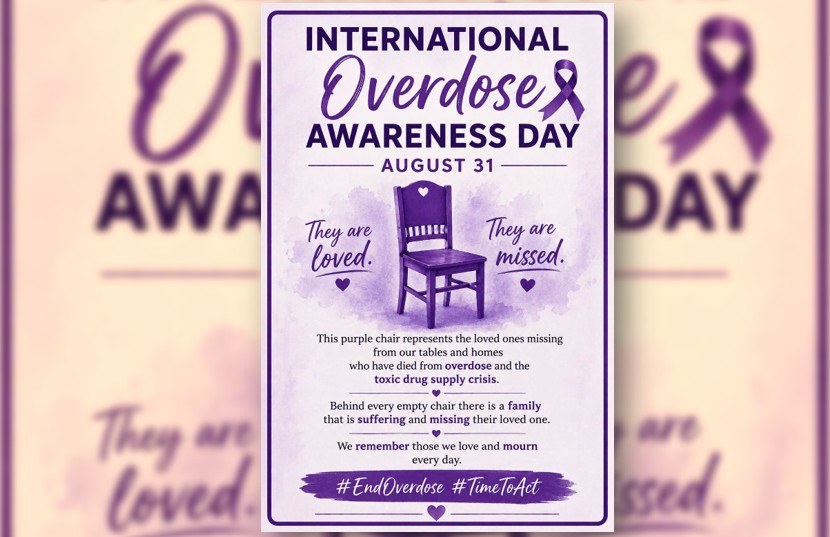
International Overdose Awareness Day (IOAD) is observed globally on August 31 each year to remember people who have lost their lives to overdose, acknowledge the grief of families and communities, and challenge the stigma surrounding drug-related deaths. The 2026 theme, “25 Years On. Still Needed.”, is a timely reminder that overdose remains a serious public-health concern and that awareness must be matched by concrete action.
In Manipur, one such action is already clearly reflected in a government directive.
On 17 April 2026, the Director, Health Services, Manipur, issued a notice directing that naloxone, the opioid-overdose-reversal medicine included in the Essential Medicines List (EML), be made available at government health institutions. This is an important step—but it is also one that should have been standard practice wherever essential medicines are concerned.
Naloxone is not an optional or luxury medicine. It is a critical emergency and life saving intervention for opioid overdose. Its timely administration can reverse the effects of an opioid overdose and provide a person with the opportunity to receive further medical care and, ultimately, treatment and rehabilitation.
For far too long, however, access has not always reflected this basic principle.
Manipur has witnessed lives lost to opioid-related overdose. At the same time, there have been instances in which people desperate to obtain naloxone during an emergency have reportedly been charged exorbitant amounts, sometimes as much as ₹8,000 for an ampoule or vial, despite the medicine having a much lower listed retail price.
When a medicine can mean the difference between life and death, such circumstances raise serious questions about accessibility, affordability and accountability.
The 17 April 2026 notification from the Director, Health Services provides an important opportunity to address this gap. The public needs to know that the government health system has already directed that naloxone be accessible through government health institutions. This information must reach the people who may need it—not merely remain within administrative files.
Government health facilities must therefore ensure that naloxone is actually stocked, accessible and available when an overdose emergency occurs. Health workers should be familiar with its use, and members of the public should know where they can seek emergency assistance.
The importance of this cannot be overstated.
An overdose does not have to become a death sentence. Naloxone can create a crucial window in which a person can be stabilised and connected to appropriate medical and psychosocial care. Surviving an overdose can become the first step towards treatment, recovery and a different future.
That is why overdose must be treated primarily as a public-health emergency, rather than as a moral failing.
Stigma can discourage people from seeking help. Fear and judgment can delay emergency intervention. A humane and effective health system should instead make it possible for people to seek help quickly and without humiliation.
The message of IOAD 2026 should therefore resonate strongly in Manipur: awareness must lead to access, and access must lead to action.
The notification issued on 17 April 2026 is a significant step in the right direction. But a government directive achieves its purpose only when it translates into something tangible at the point of care. Naloxone must be available where people seek emergency treatment, and no family should have to navigate an informal market or pay an unreasonable price while a loved one’s life hangs in the balance.
This International Overdose Awareness Day, the public should be encouraged to ask a simple question: Is naloxone available at our government health facilities when we need it?
The answer must be yes.
Because overdose happens. People can die from it. But people can also survive it.
Saving a life gives that person another opening—for treatment, recovery, family, dignity and the possibility of a better future. A trustworthy and responsive health authority can make that opening possible.
Twenty-five years on, IOAD is still needed. So is action. Human lives matter
The writer is a drug user activist