For two and a half centuries, Manipuris have built villages, temples and courts far from the valley they call home — on the Barak and the Brahmaputra, in Tripura and in Bangladesh. Their story is also Manipur’s story.
We usually picture Manipur as one oval valley ringed by blue hills. That picture is true, but it is not complete. Walk through Lakhipur in Cachar, Jugijan in Hojai, Kamalganj in Bangladesh or the old quarters of Agartala, and you will hear Meiteilon at the doorstep, see the phanek on the loom and find a mandap at the heart of the village. Manipur has always been a people with homes on many rivers.
Why they went west
Geography set the direction. The valley is small and enclosed, and it lies open on its eastern side toward Burma, the way invading armies came. To the west, a handful of hill tracks led down to the Jiri and the Barak. Below them lay warm, wet plains with alluvial soil and low hillocks above the flood line — country a Meitei rice farmer could read at a glance.
Circumstance supplied the push. Princes who lost the struggle for the throne fled to Cachar, Sylhet or Tripura with their followers. After the court embraced Gaudiya Vaishnavism, pilgrims walked the same roads to Nabadwip and Vrindavan, and some stayed. Royal marriages carried queens and their retinues to Agartala and to the Ahom court.
Then came catastrophe. The Burmese occupation of 1819–1826 — remembered as Chahi Taret Khuntakpa, the Seven Years Devastation — emptied much of the valley. Tens of thousands crossed the hills. Many never returned, because the land in the plains was open and the homeland was in ruins.
Two valleys of Assam
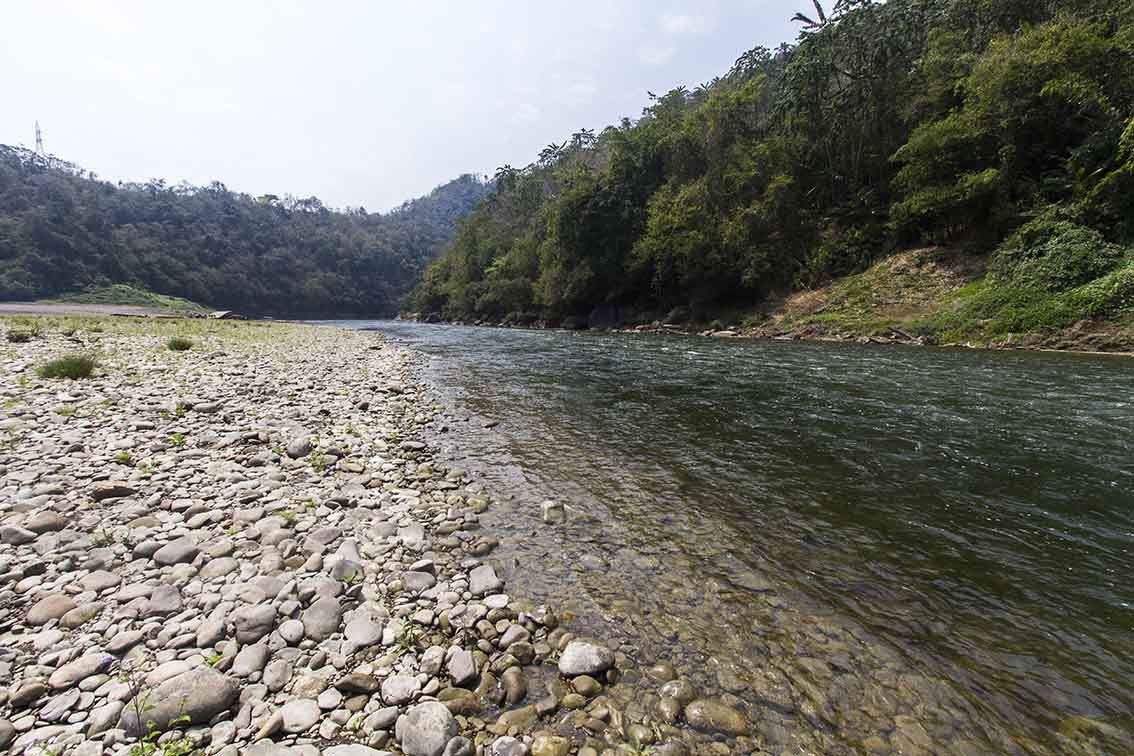
The Barak Valley became the heartland. Along the Barak and the Jiri, from Jirighat through Lakhipur to Banskandi, refugee camps around the princes turned into peasant villages. Census villages there still carry the name Monipur. Assam today counts some 168,000 Meiteilon speakers, the largest Manipuri population outside Manipur.
The Brahmaputra Valley tells an older and gentler story. In the 1760s the Ahom king Rajeswar Singha sent armies to help Bhagyachandra recover his throne from the Burmese. In gratitude, the Manipuri princess Kuranganayani was married to him in 1768. Her attendants settled near Sonari, where Malau Ghat and Maglau Pukhuri still recall her arrival.
Kuranganayani became a heroine of Assam too. When Moamoria rebels seized the Ahom capital in 1769–70 and their leader Ragha Moran forced her to marry him, she struck the first blow at the Bihu festival that ended his life and restored the king. Assamese and Manipuris still remember her as a symbol of friendship between the two peoples.
Later settlers followed from Cachar. From 1907 families moved to the Jamuna and Kapili rivers of Hojai; Jugijan Rajbari, founded in 1927 with Maharaja Churachand Singh’s support, became the first of some 55 villages. In Guwahati, land granted at the Maharaja’s request between Paltan Bazar and Ulubari became Manipuri Rajbari — today’s Manipuri Basti. Further north, in places such as Ukhamati Tarajan in Dhemaji, small Meitei communities keep Meiteilon alive at home while speaking Assamese in the market.
Princes, soldiers and a rebel
The diaspora did not merely survive; it rescued the homeland. In 1824 Gambhir Singh raised the Manipur Levy, about 500 men recruited from refugees in Cachar and Sylhet and trained with British help. Its field commander was Nara Singh, whose father had himself been exiled to Cachar. The Levy marched from Sylhet in 1825 and drove the Burmese out of the valley.
Nara Singh later refused the throne and served as regent for the infant Chandrakirti, before resigning as king from 1844 to 1850. Manipuris still call him Eningthou Nungsiba, “our beloved king”.
A generation later the same frontier produced a rebel. Prince Narendrajit Singh, son of Chourjit and born in the exodus year of 1819, made common cause with sepoys of the 34th Native Infantry who mutinied at Chittagong in 1857 and fought their way to Latu and into Cachar. Wounded at Binnakandi in January 1858, he was handed to the British and transported to the Andamans. His handwritten Bhagavad Gita is still kept by descendants in Agartala.
Palaces in Sylhet, queens in Agartala
In Bangladesh the Manipuris are few — about 18,000 in Moulvibazar district at the 2022 census — but their monuments are remarkable. In Sylhet stand the ruins of Gambhir Singh’s palace, Sanggai-yumpham, once enclosed by seven brick walls. Nearby at Lamabazar, the three temples known as the Tin Mandir, dedicated to Pakhangba, Yumjao Lairembi and Nongshaba, rise up to 24 metres. Near Bhanugach lie the crumbling walls and sand-buried tombs linked to Marjit Singh and Devendra Maharaja. Few of these sites are protected.
Sylhet also gave Manipuri dance to the world. In November 1919 Rabindranath Tagore watched a performance at Machimpur and took the dance to Santiniketan. Today Kamalganj in Moulvibazar is the community’s heartland, where the Maha Ras at Madhabpur has been held for some 170 years.
Tripura’s Manipuri story was written by marriage. Manipuri queens of the Manikya kings brought courtiers, dancers and artisans to Agartala, and in the north, villages around Kailashahar and Kamalpur once formed a single belt with Kamalganj across today’s border.
Literate villages, living looms
Today’s Manipuri villages are among the most literate in their regions, with census literacy of 75 to 97 per cent — far above their neighbours. Most families have moved from farming into teaching, government service, trade and other work.
Yet the loom remains at the heart of the home. On the days that matter — Ras Lila, Lai Haraoba, weddings, Ningol Chakouba — women return to the phanek with its striped border and the fine innaphi. In Kamalganj alone, an estimated 5,000 handlooms and 10,000 weavers supply some 130 Manipuri cloth shops in Sylhet, Srimangal and Kamalganj. In Manipur, Shaphee Lanphee, Wangkhei Phee and Moirang Phee have been protected as Geographical Indications since 2011.
The pressures are real: power-loom copies, costly yarn, chemical dyes and young women leaving for salaried jobs. Registering traditional motifs, building weavers’ cooperatives and simply wearing Manipuri dress on festival days are what keep the craft — and the culture woven into it — alive.
A partner for a modern Manipur
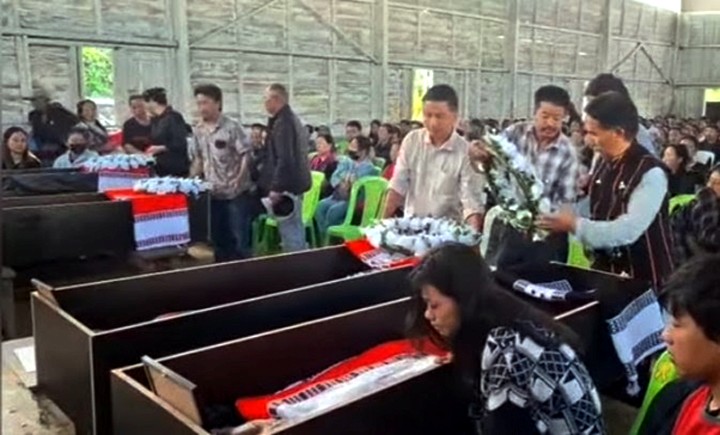
The lesson of this history is that the diaspora is not a lost branch but a second home of Manipuri life. It preserved court traditions and rituals when the valley lay in ruins. It raised the army that freed the kingdom. It carried the Ras Lila to Santiniketan and the world. It campaigned alongside Manipur for the inclusion of Manipuri in the Eighth Schedule in 1992, and in 2024 it won associate official status for the language in Cachar, Karimganj, Hailakandi and Hojai. Since 2023, it has again given shelter to families fleeing violence across the Jiri.
A modern Manipur would gain by treating its diaspora as a partner. That means mapping its villages, protecting shared heritage from Sylhet to Sonari, sending textbooks and teachers to Manipuri schools beyond the state, supporting weavers and artists, and building regular exchanges for students and scholars. It also means respecting the diaspora’s own plurality — Meitei, Pangal and Bishnupriya — and the good neighbourliness that has let it flourish among Bengalis, Assamese and Tripuris for two centuries.
Manipur was never only a valley ringed by hills. It has always been a people on the move, with homes on many rivers. Recognizing that wider family may be one of the surest ways to strengthen Manipuris everywhere.
Adapted from Manipuri Settlement in the Barak and Brahmaputra Valley, Tripura and Bangladesh: History, Villages and Society by Dr. Rajkumar Ranjan Singh.

The writer is a former Member of Parliament and a former Union Minister of State External Affairs and Education, Government of India.