In Manipur, land has never been just land.
We know this instinctively, perhaps more deeply than we know how to explain it, because a village is not simply a cluster of houses marked on a map, a field is not merely an agricultural holding, and a hill, a valley, a forest, a road, a stream, a courtyard, a market, a piece of ancestral ground; each can carry a history that is difficult to put into the language of ownership alone. We inherit places before we inherit documents.
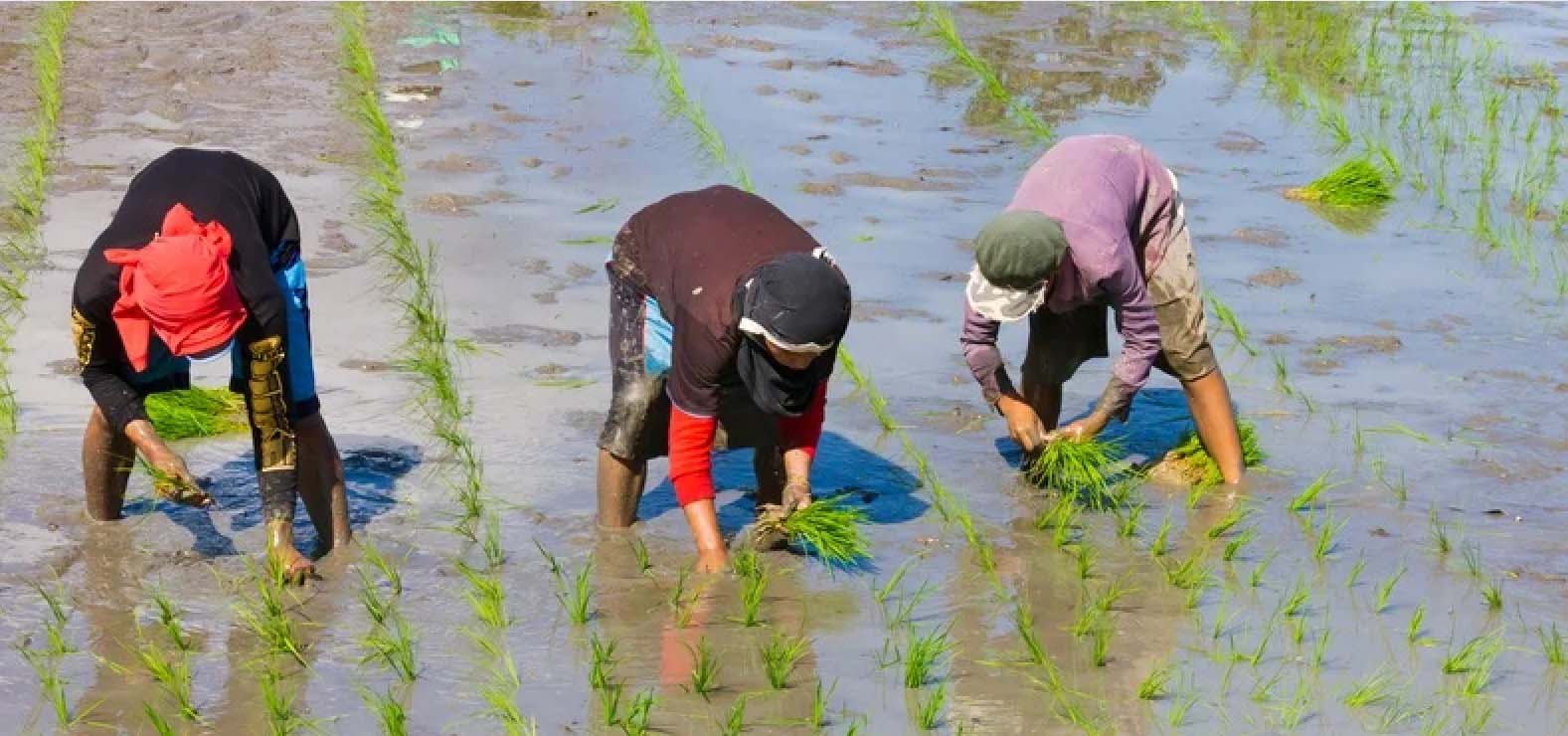
We inherit the memory of who lived there, who farmed there, who planted the trees, who built the house, who walked the road before there was a proper road, and we know where our grandparents came from, we know the name of the village even when we have moved away from it, we know the particular hill that appears from the window, the particular stretch of paddy that changes colour with the season, the particular road by which we return home.
And perhaps that is where we have to begin if we are going to talk honestly about leaving. Because if land matters so deeply to us, then surely we must understand that it matters deeply to somebody else too.
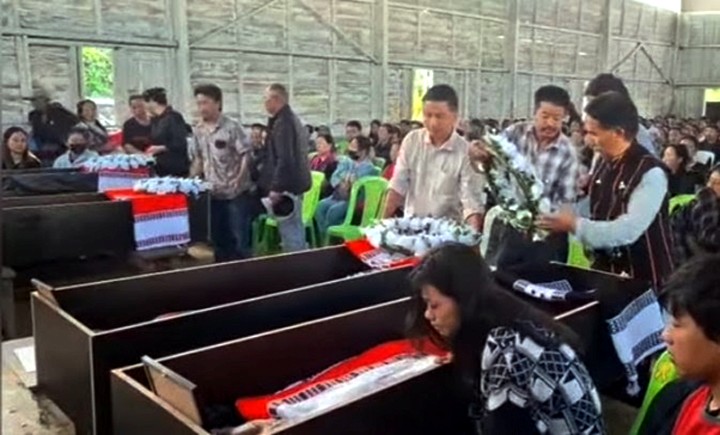
The events since 2023 have made this question impossible to avoid, because across the state there are people who have been forced from places they called home, carrying with them not only the immediate fear and uncertainty of displacement but also the much harder question of what happens to a life when the place around which that life was built is suddenly no longer available to them, and these histories, circumstances and claims are not identical, and there is little value in pretending that they are, but beneath those differences is a human fact that should not be difficult to understand:
A person who is forced to leave home loses something that cannot simply be replaced by giving them another roof. That is because a home is not the same thing as a house.
A house can be rebuilt, a livelihood can perhaps be reconstructed, and a new road can be learned, but the accumulated life of a place cannot simply be transferred from one location to another.
A farmer does not carry the knowledge of one field into another field as though it were a piece of furniture, a shopkeeper does not carry an old customer base into a new town, a family does not reproduce its neighbourhood simply by moving into another house, and a child can be given another school and still lose the classmates, routines and familiarity that made the old one feel like theirs.
Even the smallest things matter, including the person who knew which neighbour had a spare key, the shopkeeper who would give something on credit, the path taken every morning, the tree that had been there longer than the children, and the grave that could no longer be visited.
These things rarely appear in discussions about displacement because they are difficult to measure, but perhaps what cannot be measured is precisely what makes a place a home. And this is why there is a difference between leaving and being made to leave.
People leave Manipur every day for education, employment, marriage, business or simply because they want to experience another life, people have always travelled, and people will continue to travel, and there is nothing inherently tragic about leaving home when leaving is a choice.
The tragedy begins when staying is no longer a choice.
That distinction matters, because when we talk about people leaving, we can too easily make the movement itself the story, talking about where they have gone, whether they will return, whether they will rebuild, whether they have found work somewhere else, when perhaps we should first ask what they were made to leave behind.
A house, a field, a shop, a workshop, a livestock shed, a school, a church, a temple, a market, a neighbourhood, a grave, a way of life, a sense that tomorrow would still happen in the same place as today, and perhaps, most painfully, the assumption that home was something they had the right to remain inside.
This is where the question of land becomes difficult. We all understand the desire to hold on to land, and in a place like Manipur, where land is tied so closely to identity, history, livelihood and community, it would be dishonest to pretend otherwise.
But there is a difference between loving a place and believing that another person’s attachment to a place is less legitimate than our own.
There is a difference between saying this is my home and saying therefore you cannot call it yours, and somewhere between those two sentences lies much of the difficulty we have not learnt to resolve.
Perhaps we have become too accustomed to thinking that every disagreement about land must eventually produce a winner and a loser.
But what does winning mean when the price of victory is another person’s departure, and what exactly have we won when a family that lived somewhere for years, decades, perhaps generations, is no longer there?
A boundary, a stronger claim, a sense of security, a temporary feeling that the question has finally been settled, and what happens to the question itself after the people have gone?
This is particularly difficult in Manipur because we are not speaking about an abstract piece of territory, but about a small and extraordinarily complicated place in which mountains and valley, villages and towns, communities and histories have always been close to one another, even when our political imaginations have kept them apart.
We know each other’s names, we have traded with one another, we have studied together, we have worked together, we have travelled through each other’s places, and we have depended on one another in ways that our arguments sometimes make us forget.
And yet we have reached a point where the answer to belonging can begin to sound like exclusion. That should trouble us.
Not because history does not matter, because history matters enormously, and not because claims over land, rights and identity are unimportant, because they are enormously important, but because every community that says this is our home is making a claim that is human precisely because it is also capable of being understood when made by somebody else.
There is another thought that is difficult to escape. We will not take the land with us.
None of us will.
The hill will remain a hill after we are gone, the paddy field will continue to receive rain, the road will carry people who do not know our names, and the house we spent a lifetime building will one day belong to someone else, or disappear, or become part of something none of us can imagine.
This does not mean land is unimportant. It means that our possession of it is temporary, even when our belonging to it feels permanent.
Perhaps that distinction should make us more careful with one another, because if we know that we are only passing through this world, what does it say about us when we decide that another human being must be removed from the place they call home so that our own claim can feel complete? I do not know if Manipur has an easy answer to this. I doubt it does.
There are histories here that cannot be wished away, grievances that cannot be dismissed, fears that are real, and questions of land and identity that cannot be solved by asking people simply to forget what happened to them.
But perhaps there is one question we can still ask before every argument reaches its final and most terrible conclusion:
Must somebody leave?
Not, who should leave? Not, whose claim is stronger? Not, who deserves this land more? But simply: must another human being’s absence be the condition for our own belonging?
Because leaving should be one of the things a person is free to choose.
A student should be able to leave for Delhi and come back, a young person should be able to leave for Bengaluru and return when they want, and a family should be able to move because life has taken them somewhere else and still know that the place they came from remains home.
Leaving can be movement, leaving can be possibility, and leaving can even be hope. But when leaving is forced upon someone because staying has become dangerous or impossible, it becomes something else entirely.
It becomes the final evidence of everything that came before it. And perhaps that is why, in thinking about Manipur, leaving should come last.
Before leaving, there should have been conversation. Before departure, there should have been a way to remain.
Before somebody’s home became somebody else’s contested territory, there should have been the difficult work of finding a way for people to live with the fact that more than one person can belong to the same land, even when their histories of belonging are different.
We have spent a great deal of time asking who owns what. Perhaps we should also ask what kind of society we are becoming when ownership can only be secured by making another person leave.
Because none of us will ultimately own this land.
We will only have had our turn with it.
And perhaps the measure of that turn is not how much of it we managed to claim, but how many people we allowed to remain human, remain rooted, and remain at home while we were here.

Sam Khumanthem writes about home, identity, and the quiet complexities of life in Manipur. His work reflects a deep connection to place, shaped by both love and uncertainty.