
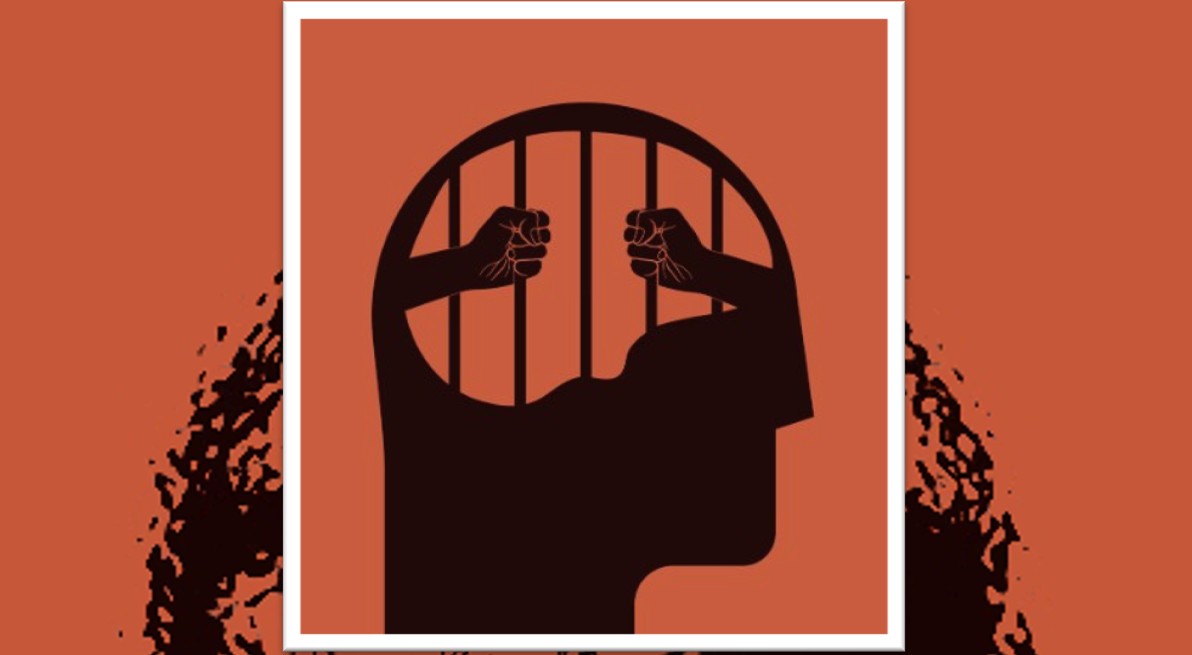
Manipur’s chaos has long become endemic, thanks to those who are supposed to ensure public order. If insanity is defined at its basic as unpredictability of a person’s or in this case a society’s response to any given situation, Manipur fits that definition perfectly at this moment. Everything is in hyperbole and often incomprehensibly so. Which sane society would expect bandhs called for petty personalized issues as denial of promotion to certain employees; newspapers shutting down to avoid coercions to publish statements by interested parties without vetting; indefinite blockades on highways called on major highways by government servants wanting their services upgraded without merit screening, and the list can go on.
In Manipur however, the parameters of entitlements and freedom have become unrecognizably skewed and everybody has come to resign to this madness as their destiny. It is true the parameters defining freedom can actually become oppressive. To borrow songwriter and singer Leonard Cohen’s often quoted lyric, the frontiers of the definition of freedom or even law can become a prison.
At this moment however, the problem is about everybody insisting they only can decide where the line that divides freedom and license must be. In the process, the competition for pedagogical authority on the mater itself has become a licentious affair, with every player advancing their own frames within which freedom should be contained. Manipur today, as we have often noted in these columns, reminds one of “Alice in Wonderland” where the “Queen of Heart” makes laws on the spot, coldly pronouncing in fits and starts, and for no logically intelligible reason: “off with his head.” Laws in this land have long ceased to be a result of evolution driven by intense discourses between the necessities of lived experiences and universal axioms of rectitude.
These are no trivial debates either to be decided between any Tom, Dick and Harry, or any reporter, gunman and petty politician. These have been harrowing subjects of modern political philosophy, as yet to be fully resolved, and perhaps destined to remain as a process rather than have a conclusive verdict.
In Manipur however, intricacies and nuances of the understanding of the concept have been damned, and it is down to the rectilinear whip made so famous by the American President, George W. Bush: “You are either with us or against us.” Indeed, Manipur lives in the tyranny of a world which has no alternatives other than those prescribed by overbearing “authorities”.
This tyranny is even crueller because you are coerced into believing this essentially multicoloured world is actually monochromatic. Rights and wrongs hence are also no longer a matter of consensual norms, but of fiats and decrees. The media’s position is even more unenviable for its role and significance is directly correlated to the status freedom, or rather on whether the parameters of freedom are defined by the liberal paradigm of sharing responsibilities so that everybody can have freedom together.
Nature abhors vacuums, so says the exact science of physics. The same can be said of law, so much so that there can be nothing as a legal vacuum. If the legitimate guardians of the law and its institutions think they can do with a vacuum here and there, let them be under no illusion for the “absence” itself, in a mutant way, would then become a law. This “absence” can become the tool of authoritarian rule in the hands of either the guardians of the law themselves or else its challengers.
Conflict torn Manipur is today living in the worst case of such a scenario. In this “absence” of the law, both the guardians of the law and their challengers are running riots, the first set manipulating the system for personal aggrandisement, and the second to establish their authoritarian sway over the minds of the people.
While these are the very basic and crude manifestations of this “absence”, there are much more sophisticated arguments about more complex and nuanced situations. Italian political philosopher and a professor of aesthetics in the University of Verona, Georgio Agamben’s book: “State of Exception” is one such. The primary argument is, extraordinary laws made in supposedly extraordinary circumstances, by suspending laws that guarantee civil rights is not law, but precisely an “absence” of law.
This “absence” has been used in history to devastating effects, as in the case of Hitler, who in 1933 suspended the Weimar Constitution of 1919 which made Germany a republic to declare a “state of exception”, or emergency in Indian lexicon. Agamben cautions that the post 9/11 world is increasingly leaning towards this “absence”. If nature abhors vacuums, those of us in Manipur know only too well why this “absence” must be abhorred equally vehemently.

Editor, Imphal Review of Arts and Politics and author