Prologue – The Sunup of Speech
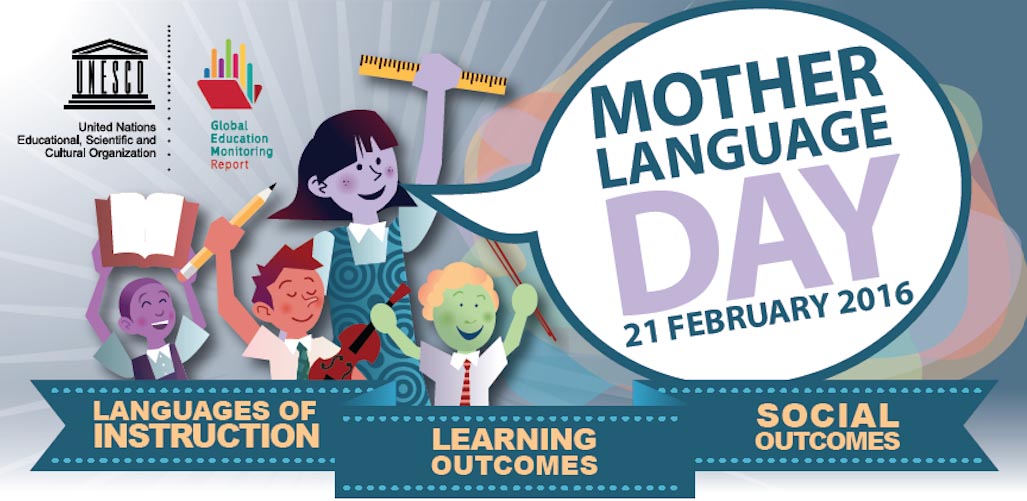
On the incandescent dawn of 21 February, the planet pauses to honour *International Mother Language Day*, a celebration that transcends mere remembrance and blossoms into a symphony of cultural pride, linguistic diversity, and human solidarity. Proclaimed by *UNESCO in November 1999* and first observed in *2000*, this day commemorates the *Bengali Language Movement martyrs of 1952*, whose sacrifice in Dhaka (then East Pakistan) for the right to speak Bangla reverberates as a universal call for language rights and preservation.
2026 theme: Youth Voices On Multilingual Education
On this radiant confluence of tongues, the world’s young hearts rise like sunrise over the Himalayas, chanting in unison for a pedagogy that honors every mother‑tongue while embracing the global chorus. The linguistic landscape has undergone profound change in recent years, shaped by increased migration, rapid technological development, and growing recognition of the cognitive, social, and economic benefits of multilingualism. Today, multilingualism is increasingly understood not only as a social reality but as a fundamental human characteristic and a powerful educational approach. Young people play a vital role in this evolution by defending and revitalising languages, creating digital content, and using technology to make linguistic diversity more visible and valued. These efforts reinforce the deep connection between language, identity, learning, well-being, and participation in society, while highlighting the need for education systems that recognise and support learners’ languages.
At the same time, significant challenges remain, as 40% of learners worldwide still lack access to education in a language they understand best, with indigenous, migrant, and minority youth most affected. Addressing this gap requires education policies and practices that embed multilingual education at their core to promote inclusion, equity, and effective learning for all. By advancing concrete actions, sharing promising experiences, and fostering dialogue among young people, educators, and policymakers, global initiatives create spaces to exchange ideas and identify solutions that strengthen linguistic diversity in schools and communities worldwide.
International Mother Language Day, first proclaimed by UNESCO and later adopted by the UN General Assembly, underscores the role of languages in promoting inclusion and achieving Sustainable Development Goals. Multilingual education not only promotes inclusive societies but also aids in preserving non-dominant, minority, and indigenous languages. It is a cornerstone for achieving equitable access to education and lifelong learning opportunities for all individuals.
Safeguarding Linguistic Diversity
Languages, with their complex implications for identity, communication, social integration, education and development, are of strategic importance for people and planet. Yet, due to globalization processes, they are increasingly under threat, or disappearing altogether. When languages fade, so does the world’s rich tapestry of cultural diversity. Opportunities, traditions, memory, unique modes of thinking and expression — valuable resources for ensuring a better future — are also lost.
Every two weeks a language disappears taking with it an entire cultural and intellectual heritage. UNESCO estimates that there are 8,324 languages, spoken or signed. Out of these, around 7,000 languages are still in use. Only a few hundred languages have genuinely been given a place in education systems and the public domain, and less than a hundred are used in the digital world.
Multilingual and multicultural societies exist through their languages, which transmit and preserve traditional knowledge and cultures in a sustainable way. International Mother Language Day is observed every year to promote linguistic and cultural diversity and multilingualism.
Historical Tapestry
The genesis of this observance lies in the *Bengali Language Movement*, a political and cultural campaign demanding recognition of Bangla as a state language of Pakistan. On 21 February 1952, students and activists at Dhaka University were shot by police while protesting, becoming martyrs for linguistic identity. Their sacrifice inspired Bangladesh’s creation and, decades later, UNESCO’s recognition of the day as a global observance.
International Mother Language Day was proclaimed by the General Conference of the United Nations Educational, Scientific and Cultural Organization (UNESCO) in November 1999. The idea to celebrate International Mother Language Day was the initiative of Bangladesh. The UN General Assembly welcomed the proclamation of the day in its resolution of 2002.
On 16 May 2007 the United Nations General Assembly in its resolution A/RES/61/266 called upon Member States “to promote the preservation and protection of all languages used by peoples of the world”. By the same resolution, the General Assembly proclaimed 2008 as the International Year of Languages, to promote unity in diversity and international understanding, through multilingualism and multiculturalism and named the United Nations Educational, Scientific and Cultural Organization to serve as the lead agency for the Year.
Today there is growing awareness that languages play a vital role in development, in ensuring cultural diversity and intercultural dialogue, but also in strengthening co-operation and attaining quality education for all, in building inclusive knowledge societies and preserving cultural heritage, and in mobilizing political will for applying the benefits of science and technology to sustainable development.
On ‘International Mother Language Day’, the world’s youth rise like the first rays of Uṣas (dawn), chanting in chorus for a ‘multilingual education’ that honors their mother tongues while embracing global horizons. Their voices echo the ancient maxim (Vasudhaiva Kutumbakam- The whole World is One Family) and demand that every child be taught in the language of their heart, a right enshrined in ‘Article 350A* of the Indian Constitution and reinforced by ‘NEP 2020’ ¹.
Why Youth Speak Up – The Core Rationale
- Cognitive brilliance: Learning in multiple languages sharpens memory, problem‑solving, and creative thinking.
- Cultural continuity: Mother‑tongue instruction preserves folklore, oral histories, and indigenous knowledge.
- Social equity: It bridges the rural‑urban divide, reducing dropout rates among linguistic minorities.
These points mirror the shloka of Vishnu Purana (1.19.41)- (Sā vidyā yā vimuktaye) – “That is knowledge which liberates” or “Knowledge is that which liberates”. (that knowledge which liberates) – True education frees the mind and spirit, not merely transmits facts. True education (Vidya) brings freedom (Vimukti) by removing inner ignorance and worldly bonds, rather than merely teaching technical skills or craft for livelihood.
Vivid Youth Narratives – From TikTok to Tribal Classrooms
- Digital storytellers: Across South Africa, creators on TikTok document their children’s isiZulu and isiXhosa journeys, turning everyday speech into viral, humor‑laden lessons. Their example inspires Indian youth to craft short videos in *Kannada, Tamil, or Bodo*, making language “cool” and relatable ².
- Classroom champions: In Odisha’s *Multilingual Education (MLE)* program, tribal students learn first in Santali, Saora, or Kui before transitioning to Hindi and English. Youth volunteers act as peer tutors, echoing the principle (do not neglect self‑study) .
- Community festivals: Youth groups in Mizoram and Arunachal Pradesh organize *“Language Melas”* where elders recite ‘shlokas’ and youth perform rap in their native dialects, embodying (Udyamena hi sidhyanti kāryāṇi na manorathaih –Actions (tasks) are accomplished only through effort, not by (merely) wishing) .
By promoting ‘mother‑tongue based education’, societies nurture self‑esteem, critical thinking, and intergenerational transmission of wisdom, echoing the ancient Indian reverence for (Shabd-Brahma: the divine word- “Sound as God,” “Word-Brahma,” or “Sound Absolute”).
Rituals of Celebration
Across the globe, schools, universities, and cultural organizations host language festivals, poetry readings, storytelling sessions, and exhibitions* on endangered languages. In Bangladesh, millions gather at the *Shaheed Minar (Martyr’s Monument) in Dhaka, laying flowers and singing songs of remembrance. UNESCO encourages member states to promote multilingual education and to document and revitalize threatened languages.
Exemplary Anecdotes
- Bangladesh’s Shaheed Minar: Every year, millions visit this monument, reciting poetry and singing “Amar Bhaier Rokte Rangano” (My Brother’s Blood Spattered), a song of sacrifice and pride.
- India’s Linguistic Diversity: On this day, schools in Odisha, Tamil Nadu, and other states celebrate with *Odia, Tamil, and other regional language* programs, highlighting India’s 22 scheduled languages and hundreds of dialects.
- UNESCO’s Atlas of Endangered Languages: The day spotlights efforts to protect languages like Ainu (Japan), Irish (Ireland), and many tribal tongues of India and Africa.
Policy and Practice – Youth as Catalysts
- NEP 2020 recommends mother‑tongue instruction up to Grade 5, a policy youth activists are now monitoring through social audits.
- Article 350A guarantees primary education in the mother tongue for linguistic minorities; youth groups file petitions when schools default.
- Digital platforms (YouTube, Instagram Reels) are used by students to create open‑source, bilingual learning modules, a modern _gurukula_ that transcends geography.
- Such actions exemplify (svarajyam mam janmasiddh – self‑rule is my birthright) – youth claim agency over their educational destiny.
Legacy and Contemporary Resonance
International Mother Language Day reminds us that ‘language rights are human rights’. It calls for policies that support ‘mother‑tongue instruction, translation, and digital inclusion’, ensuring no child is left behind in education.
Epilogue – A Vision for Tomorrow
Imagine a classroom where a child from Nagaland recites a Sanskrit shloka in her native “Naga” tongue, then explains its meaning in English, while a peer from Gujarat mirrors the same in Gujarati. This harmonious chorus, nurtured by youth voices, will turn ‘International Mother Language Day’ into a daily celebration of ‘linguistic diversity, cognitive growth, and cultural pride’.
“Happy greetings on the International Mother Language Day”

The writer is Faculty, Brahma Kumaris, RERF & Professor (Ex- Dean & Head), Faculty of Education, Rajiv Gandhi Central University, Itanagar; Tel: 9436042658, 8837245051