Democracy does not necessarily perish when elections cease to take place. Nor does it disappear merely because a legislature is dissolved, or when a government collapses, or for many other reasons. Its decline can be considerably less visible and, for that very reason, more consequential. Democracy begins to lose its substance when citizens gradually cease to experience themselves as participants in the political order and become spectators to decisions made in their name. Elections may continue, and political parties may remain active with their usual businesses, occupying offices, and at the same time institution may still survive. Yet the fundamental question remains: do the people actually exercise political authority, or have they merely become the subjects of an increasingly distant political establishment?
This question has particular significance in Manipur. The contemporary political experience of the state invites us to reconsider what democracy has come to mean in a society marked by historical grievances, competing political identities, ethnic divisions, institutional distrust and an increasingly uncertain relationship between the government and the governed.
The question, therefore, is not simply whether Manipur has a functioning democratic government. It is whether the democratic ideals that give legitimacy to political institutions have retained their meaning in the everyday lives of its people. Has democracy remained a living political principle, or has it increasingly become an institutional vocabulary through which power is exercised without adequate public accountability?
Democracy beyond the existence of elections
The first difficulty in evaluating Manipur’s democratic condition lies in the tendency to equate democracy with electoral representation. Elections are undoubtedly indispensable to representative government, but they are not sufficient to establish the democratic character of a political society. The right to vote does not automatically translate into the ability to influence public policy. This also means, in this context, that one can question political authority remains dubitable. A sheer understanding can also grasp that neither we can demand institutional accountability nor does it guarantee to participate meaningfully in decisions concerning one’s collective future in this understanding of democratic set up.
Democracy, in its substantive sense, presupposes a relationship of accountability between the governed and those who govern. It requires that political authority remain answerable to the people. Citizens should necessarily enjoy sufficient freedom to express disagreement without fear of intimidation or exclusion. When these conditions deteriorate, the formal machinery of democracy may survive while its substantive foundations become increasingly fragile.
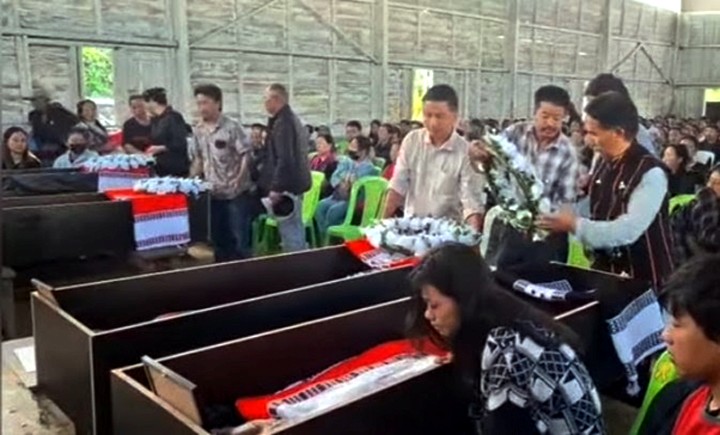
Manipur’s political experience since May 2023 raises precisely these questions. The prolonged ethnic conflict, the displacement of communities, the geographical fragmentation of social life and the disruption of ordinary administrative functioning have exposed the limitations of the existing political arrangements. According to Human Rights Watch, the violence that began in May 2023 had resulted in more than 260 deaths and over 60,000 displaced people in its earlier reporting, while renewed violence between Naga and Kuki-Zo communities in August 2026 further complicated the situation.
The significance of these developments extends beyond the question of law and order. When citizens cannot safely return to their homes, when communities become geographically separated, and when access to public institutions is mediated by fear and insecurity, the very conditions necessary for democratic participation become compromised. A citizen who cannot safely access a public institution, participate in a public meeting, travel freely or exercise ordinary civil rights cannot be said to enjoy the full benefits of democratic citizenship.
This does not mean that the government alone can be held responsible for every dimension of the conflict. Violence, armed mobilisation, economic blockades, intimidation and the failure of competing political and social organisations to sustain peaceful engagement have all contributed to the deterioration of public life. Nevertheless, the constitutional responsibility of the state is not diminished by the complexity of the conflict. The state exists precisely because the protection of citizens, the impartial administration of law and the preservation of public order cannot be left entirely to competing groups and their respective claims.
The central democratic question, therefore, is whether the institutions entrusted with these responsibilities have been sufficiently accessible, impartial and accountable to all communities.
The constitutional paradox of political representation
The political developments in Manipur also expose a significant constitutional paradox. On 13 February 2025, President’s Rule was imposed following the resignation of the then Chief Minister, and the Legislative Assembly was placed under suspended animation. President’s Rule was subsequently revoked on 4 February 2026, following which Yumnam Khemchand Singh assumed office as Chief Minister. The elected Assembly, originally constituted following the 2022 election, continues to serve within its existing term.
The constitutional legitimacy of President’s Rule and the political legitimacy of an elected government are not identical questions. Article 356 provides a constitutional mechanism for dealing with situations in which the government of a state cannot be carried on in accordance with the Constitution. Its existence is not, by itself, evidence of democratic failure. Yet the prolonged interruption of an elected government’s functioning inevitably raises questions about the relationship between constitutional authority, political accountability and popular sovereignty.
The difficulty is not simply that a state has experienced President’s Rule. It is that a political crisis of such magnitude can leave citizens wondering how effectively their elected representatives have been able to articulate their concerns, mediate competing interests and restore confidence in public institutions. The return of an elected ministry is an important constitutional development, but it should not be mistaken for the restoration of democratic normality. A government can regain office without necessarily restoring public confidence. It can command a legislative majority without resolving the deeper questions of political trust, social reconciliation and institutional legitimacy.
There is an important distinction between the authority to govern and the capacity to represent. The former may be established through constitutional procedures; the latter must be continually earned through public accountability, responsiveness and the willingness to recognise grievances that do not necessarily correspond with the political interests of the ruling establishment. Manipur’s political representatives must therefore confront a difficult question: does their legitimacy derive exclusively from the numerical strength of their legislative position, or does it also depend upon their ability to address the insecurity, alienation and political anxieties experienced by the people they represent?
When public life becomes subordinate to the politics of insecurity
Perhaps the most disturbing feature of Manipur’s contemporary experience is the extent to which insecurity has become intertwined with everyday political existence. Democracy requires a minimum degree of social confidence. Citizens must be able to disagree without interpreting every disagreement as a threat to their collective survival. Political differences must remain negotiable, and institutions must provide spaces in which conflicting claims can be articulated and examined.
But what happens when political disagreement becomes inseparable from ethnic suspicion? What happens when the identity of a person increasingly determines the extent to which that person is trusted, heard or accepted in public life? The danger is that political belonging begins to be determined by communal affiliation rather than equal citizenship. The language of collective security can gradually displace the language of constitutional rights. Communities begin to regard political institutions not as common institutions belonging to all citizens but as arenas in which competing groups struggle to secure their respective interests.
This development is particularly consequential in a plural society such as Manipur. Its historical and social composition cannot be adequately understood through the assumption that political unity must necessarily produce cultural or ethnic uniformity. The existence of different historical memories, customary institutions, territorial relationships and political aspirations is not inherently incompatible with democracy. The challenge is to construct a political arrangement in which such differences can coexist without one community having to surrender its identity or another having to live under permanent suspicion.
Democracy does not demand that people abandon their historical identities before they can become citizens. It demands that their differences be accommodated within a framework of equal political dignity. The question is whether Manipur’s political institutions have been able to sustain such a framework, or whether the growing separation of communities has increasingly reduced the possibility of a shared democratic existence.
The erosion of democratic freedoms in the name of public order
Another dimension that deserves serious consideration is the relationship between public order and civil liberties. Governments are constitutionally obligated to maintain peace and prevent violence. In situations involving communal unrest, misinformation and the possibility of organised violence, restrictions on communication may sometimes be defended as emergency measures. However, the democratic legitimacy of such restrictions depends upon their necessity, proportionality, duration and accountability.
Manipur’s experience with internet suspensions provides an important example. According to records of the State Home Department reported in September 2026, internet services were suspended for a cumulative 385 days between May 2023 and April 2026, while bandhs, shutdowns and economic blockades affected 523 days between May 2023 and September 2026. The figures illustrate the extraordinary disruption of ordinary public life.
One must acknowledge that misinformation and inflammatory communication can aggravate communal tensions. Nevertheless, the suspension of internet services also restricts access to information, education, employment, communication, commercial transactions and the ability of citizens to scrutinise public affairs. In a democracy, the public’s right to know cannot be treated as an inconvenience that must routinely be sacrificed whenever political circumstances become difficult. The question is not whether the government should possess the authority to respond to emergencies. It is whether emergency powers remain subject to democratic scrutiny. A restriction that is exceptional in its justification but recurrent in its application deserves careful institutional examination.
There is also a more fundamental concern. When communication between citizens is repeatedly interrupted, the public sphere itself becomes vulnerable. Democracy depends upon the circulation of information, the possibility of questioning official accounts and the existence of spaces where competing interpretations of public events can be examined. Without these conditions, citizens become increasingly dependent upon fragmented information networks, rumours and narratives circulated within their respective communities. The democratic principle should be clear: public order must protect the conditions of democratic life rather than become a permanent justification for restricting them.
The silence of institutions and the crisis of accountability
Democracy is not sustained by the government alone. It depends upon a network of institutions whose independence, integrity and accessibility make the exercise of public power answerable to society. Legislatures, courts, the media, universities, civil society organisations and independent constitutional bodies all contribute to this arrangement. When these institutions become ineffective, politically compromised or inaccessible, democratic accountability weakens.
The problem becomes particularly acute during prolonged political crises. Citizens begin to question whether their grievances are being heard, whether investigations are conducted impartially, whether public representatives are answerable for their decisions and whether constitutional institutions can act independently of immediate political considerations. The question of accountability should not be reduced to the performance of one political party or one administration. It concerns the institutional structure through which public authority is exercised.
A democratic society cannot depend upon the goodwill of individual politicians for the protection of its citizens. Nor can it depend upon the occasional intervention of higher constitutional authorities to resolve problems that require sustained institutional responses. Democratic governance must be capable of functioning through established procedures, transparent investigations, legislative scrutiny and the rule of law.
The Union government’s own published figures demonstrate the magnitude of the continuing administrative and humanitarian responsibilities. The Ministry of Home Affairs reported substantial financial assistance for relief camps and rehabilitation during 2023–24 and 2024–25, followed by a special package of some crores during 2025–26 that included security expenditure, assistance for internally displaced persons and rehabilitation-related measures. These allocations are important, but expenditure alone cannot establish the success of rehabilitation or the restoration of democratic citizenship. The more consequential questions concern the actual condition of displaced families, the safety of their return, the restoration of livelihoods, access to education and healthcare, and the extent to which affected communities participate in decisions concerning their future.
A person living indefinitely in a relief camp is not merely a beneficiary of government assistance. That person is a citizen whose relationship with home, property, livelihood, community and political participation has been profoundly disrupted. Rehabilitation, therefore, must be understood not simply as an administrative exercise but as an obligation arising from the constitutional promise of equal citizenship.
It is here that democratic accountability must become tangible. Citizens should be able to demand information about rehabilitation programmes, scrutinise the distribution of public resources and question the institutions responsible for implementing them. The government, in turn, must be prepared to explain its decisions and submit its performance to public examination.
The dangerous substitution of political participation with political mobilisation
There is another problem that deserves attention: the gradual confusion between political participation and political mobilisation. The two are not necessarily the same. Political participation involves deliberation, representation, institutional engagement and the possibility of influencing collective decisions. Political mobilisation, on the other hand, may organise people around a particular demand, identity, grievance or political objective. Mobilisation can be an essential component of democracy, especially when marginalised groups seek recognition or challenge institutional neglect. However, mobilisation alone cannot sustain a democratic political order.
A society may witness enormous political mobilisation while simultaneously experiencing a decline in democratic deliberation. Public demonstrations, protests, shutdowns, collective declarations and political campaigns may communicate the intensity of public grievances. Yet the democratic significance of such activities depends partly upon whether they create opportunities for negotiation and institutional change or whether they progressively make disagreement more difficult.
When every political issue is interpreted through the logic of collective loyalty, citizens may find themselves under pressure to conform to the dominant position within their own communities. The freedom to disagree with one’s political representatives, community organisations or ideological groups becomes increasingly difficult to exercise. This is a serious problem because democracy must protect not only the right of communities to express collective demands but also the right of individuals within those communities to think differently.
A citizen should not have to demonstrate unconditional allegiance to a particular political narrative before being recognised as a legitimate participant in public life. Manipur needs a political culture in which disagreement is not treated as betrayal. We also need to realise that criticism should not be interpreted as hostility, and dialogue should not be mistaken for surrender.
The responsibility for this transformation does not belong exclusively to political parties. Community organisations, intellectuals, student bodies, civil society groups, journalists and educational institutions must also examine the extent to which their own practices encourage deliberation or reinforce political conformity.
The forgotten meaning of democratic citizenship
Perhaps the deepest crisis confronting Manipur is the weakening of the idea that people belonging to different communities can share a common political future without being required to share an identical historical or cultural identity. The modern democratic state is expected to accommodate differences while guaranteeing equal citizenship. Its legitimacy rests not upon the elimination of diversity but upon the establishment of institutions through which diversity can coexist with political equality.
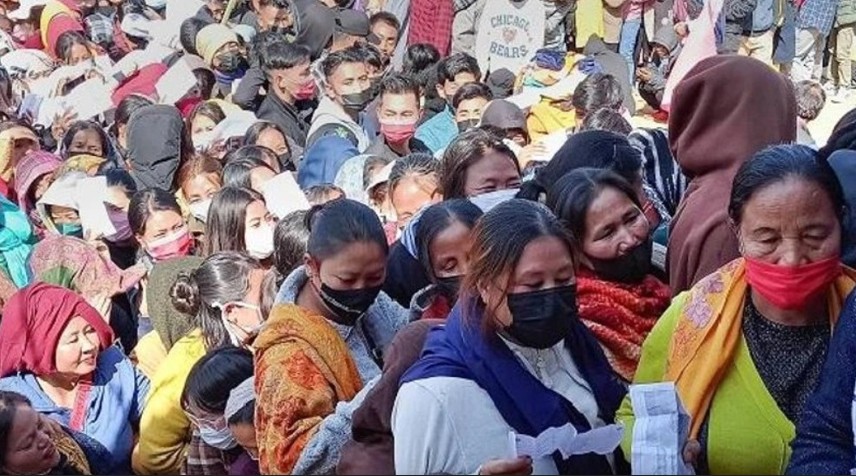
In Manipur, however, the continuing geographical and psychological separation of communities raises difficult questions about the practical meaning of this principle. The Internal Displacement Monitoring Centre’s 2026 global report noted that at least 78,000 people remained displaced within Manipur two years after the violence, with many families unable to return to previously mixed neighbourhoods and facing restricted mobility and access to services.
This situation should compel us to reconsider the meaning of political community itself. Can a territory continue to claim democratic unity when large sections of its population experience radically different conditions of security, mobility and access to public life? Can constitutional citizenship remain meaningful when the ordinary freedom to move, work, study and reside in one’s chosen locality is severely constrained?
These questions should not be interpreted as arguments against the constitutional unity of Manipur. Rather, they expose the responsibility of political institutions to make that unity meaningful in the lives of all its inhabitants. A democratic political community cannot be sustained merely through geographical boundaries or constitutional declarations. It requires a degree of mutual confidence that allows people to recognise one another as equal participants in a shared political arrangement.
This is where the responsibility of political leadership becomes particularly significant. Leadership must be capable of moving beyond the immediate calculations of electoral arithmetic and communal representation. It must create conditions in which different communities can articulate their concerns without being compelled to regard the political aspirations of others as an existential threat. Such leadership does not require the suppression of historical differences. It requires the political imagination to accommodate them.
Has Manipur truly outlived its democratic ideals?
The title of this article poses a deliberately uncomfortable question. It does not presume that democracy has disappeared from Manipur, nor does it suggest that constitutional institutions have become entirely irrelevant. Rather, it asks whether the political practices, institutional arrangements and social relationships that sustain democracy have deteriorated to such an extent that its ideals are increasingly difficult to recognise in everyday public life.
The restoration of an elected government in February 2026 demonstrates that constitutional government has resumed after a period of President’s Rule. The existence of a functioning Legislative Assembly, elected representatives and constitutional institutions remains significant. But the restoration of institutional arrangements should also be accompanied by a more searching examination of what those institutions are expected to accomplish.
The people of Manipur need more than the periodic opportunity to elect their representatives. They need institutions that can protect their lives, guarantee their freedoms, recognise their grievances and provide meaningful opportunities for political participation. They need a legislature that does not merely function as a site of numerical political strength but also as a forum for confronting difficult questions of public accountability. They need an administration that treats citizens as rights-bearing individuals rather than as members of competing political constituencies. Above all, they need a political environment in which the exercise of democratic rights does not depend upon one’s ethnic affiliation, geographical location or proximity to political power.
There is also a responsibility that belongs to the people themselves. Democracy cannot be sustained exclusively through demands directed at governments. It requires citizens who are willing to defend the rights of others, including those with whom they disagree. The defence of democratic freedom becomes meaningless when it is invoked only for one’s own community, one’s own political organisation or one’s own ideological position.
If we demand justice for ourselves while remaining indifferent to the suffering of others, we weaken the very principle through which justice acquires its universal significance. If we demand freedom of expression for our own political positions but seek to silence dissenting voices, we reproduce the authoritarian tendencies that democracy is supposed to restrain. This is particularly important in a society experiencing deep ethnic divisions. The restoration of democratic life cannot be achieved through the numerical dominance of one political constituency over another. Nor can it be achieved by expecting one community to abandon its historical concerns in the interest of an abstract political unity. It requires a constitutional arrangement in which the security, dignity and political participation of every community are treated as indispensable conditions of the common political order.
The question before Manipur, therefore, is not merely whether its government can complete its constitutional term or whether political parties can successfully negotiate their legislative positions. It is whether the state can reconstruct the relationship between political authority and public trust.
Democracy is not simply the right of the majority to govern. It is also the obligation of the majority to recognise the rights of those who do not belong to it. It is not merely the authority of elected representatives to make decisions. It is their obligation to remain answerable to those whose lives are affected by those decisions. It is not merely the constitutional recognition of citizenship. It is the practical assurance that citizenship carries equal dignity, protection and political significance.
Perhaps the most disturbing possibility is not that Manipur has formally abandoned democracy, but that its people may gradually become accustomed to living with the absence of its essential promises. When insecurity becomes ordinary, democratic decline risks becoming normalised. And when political distrust becomes permanent, public participation in a democratic procedure becomes feels like a nauseatic meal. That is a danger more serious than the temporary suspension of an elected government.
Manipur has not necessarily outlived democracy as a constitutional arrangement. But its recent political experience demands an honest examination of how far democratic ideals have been displaced by the imperatives of insecurity, political competition and ethnic estrangement. The distinction matters because constitutional restoration and democratic restoration are not interchangeable.
The real measure of democratic recovery will not be the number of political leaders occupying constitutional offices, the strength of their legislative majority or the frequency of their public declarations. It will be whether ordinary citizens, irrespective of their community, can once again experience the state as an institution that belongs to them.
A democracy may survive the failure of a government, but it cannot indefinitely survive the loss of public faith in the possibility of equal citizenship. And perhaps that is the question Manipur must confront before it speaks of political normalcy: have we been trying to restore democracy, or have we become satisfied with restoring the machinery through which political power is exercised?

The writer is Assistant Professor, Imphal College