
We spend a lot of time talking about how social media is shaping younger people. What we don’t talk about as much is how much it has already shaped us.
Maybe we assume we’re in control. Or maybe we just don’t want to look too closely. But if you pay attention, the change is obvious.
Start with time.
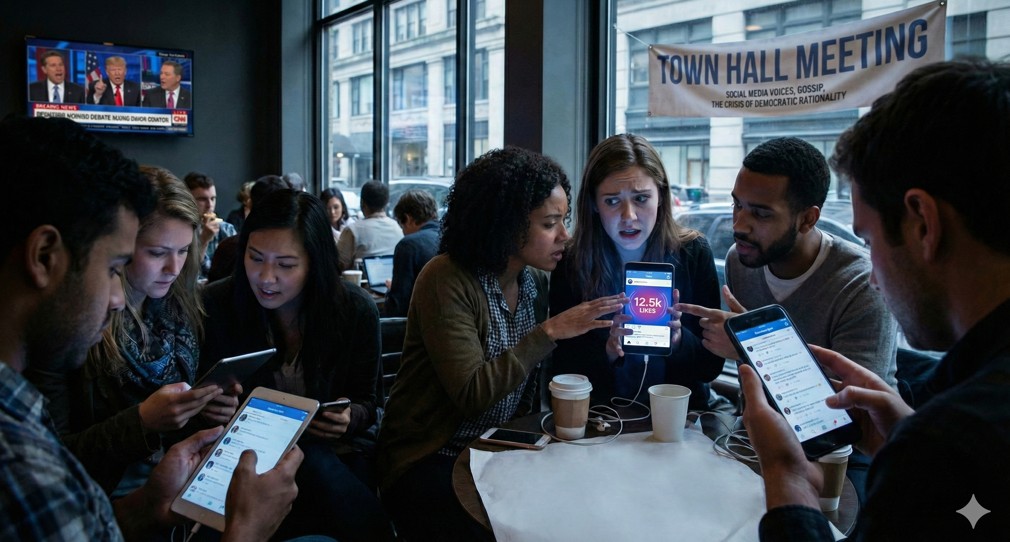
Most of us didn’t consciously decide to spend this much of our day on our phones. It crept in slowly. You pick it up to check one thing, and ten minutes disappear. Sometimes you even forget why you picked it up in the first place.
And the strange part is, it’s not even that enjoyable half the time. It’s just something to fill the gap.
If you’re waiting for someone, you scroll. If nothing’s happening, you scroll. If you’re tired but not ready to sleep, you scroll.
Those empty spaces we used to have are mostly gone—and we didn’t really notice when that changed.
Even rest has changed. You sit down to relax, but your attention doesn’t settle. Your hand goes to your phone almost automatically. Silence doesn’t feel restful anymore—it feels like something is missing.
Then there’s the way it gets into your thinking.
Most adults would say they don’t care about likes or reactions. And maybe not in an obvious way. But we still notice what gets attention and what doesn’t. Over time, that awareness shapes how we express ourselves.
You start adjusting things. You hold back certain thoughts. You phrase things differently because you already have a sense of how people will respond.
It’s not about being fake. It’s more subtle than that. It’s editing. And the more you do it, the more natural it feels.
Communication has shifted too.
We’ve become quicker—quicker to react, quicker to form opinions, quicker to respond. But not always better at understanding. We skim more than we absorb. We react more than we reflect.
That shows up most clearly in how we disagree. It often feels less like trying to understand someone and more like trying to state a position clearly and confidently. There’s a quiet pressure to sound certain, especially in public spaces.
So we do—even when we’re not.
That might be one of the biggest changes. We’ve become comfortable sounding sure of things we haven’t fully thought through.
Real life isn’t like that. Most things are messy and unclear. But online, everything seems to demand a clear stance, a quick reaction, a definite answer. And we’ve adapted to that environment.
Then there’s the dependency.
Not in an extreme or obvious way. Just a constant habit. You check your phone without thinking. You move between apps with no real purpose. And when you try to stop, even briefly, you feel it—that small pull to check again, that sense you might be missing something.
It’s subtle, but it’s there.
That’s when it becomes clear this isn’t just a tool anymore. It’s a pattern that’s settled into daily life.
And patterns don’t stay contained. They start shaping how you think, how you focus, how patient you are. You become a little more restless, a little less comfortable with slowness, a little quicker to judge—because that’s what you practice all day without realising it.
None of this means social media is entirely negative. It’s useful. It connects people. It can be meaningful.
But that’s not really the point.
The point is how rarely we question it. We assume we’re choosing how we use it, when often it feels automatic.
And maybe that’s where the real issue is—not in the technology itself, but in how unexamined it has become in our lives.
As adults, we’ve lived without this. We know what it felt like to have more space, more patience, more distance from everything.
That means we’re in a position to notice the difference—and to respond to it.
Not in extreme ways. Not by cutting everything off.
Just in small, deliberate choices. Putting the phone down without immediately replacing it with something else. Letting yourself sit in a quiet moment. Taking the time to read something properly before reacting. Holding back from forming an instant opinion.
None of this is visible. No one applauds it.
But it shifts something internally.
Because right now, it’s easy to feel like we’re in control, when in reality we’re often just following patterns we didn’t consciously choose.
The goal isn’t to reject the scroll.
It’s simply to stop letting it run everything without noticing.

Sam Khumanthem writes about home, identity, and the quiet complexities of life in Manipur. His work reflects a deep connection to place, shaped by both love and uncertainty.