
I have been carrying you in my thoughts for a long time now.
Not the Manipur that fills newspaper headlines or dominates television debates. Not the Manipur measured only by its wounds. I have been thinking instead about the Manipur you have not yet become.
For all your beauty and all your brokenness, you are still home.
Perhaps that is why I have spent these past months writing about you. Sometimes I wrote about roads. Sometimes about schools, or children, or faith, or leadership. Sometimes I wrote about the quiet dignity of ordinary people simply trying to live ordinary lives. Looking back, I realise I was never really writing about any of those things alone. I was trying to understand what makes a place feel like home—and whether home can be rebuilt after trust has been broken.
This is not a letter to the Manipur we lost. I am old enough to know that every generation has a way of romanticising the past. We have always had our differences. We have carried old grievances, lived with competing histories and struggled to understand one another. We should not pretend that everything was once perfect. Yet neither should we accept that what we see today is the best we can become. I dream of a Manipur that has not yet existed—not because it is impossible, but because we have not yet chosen it.
I remember a time when travelling across the state felt ordinary. Roads were simply roads. We thought more about where we were going than who lived along the way. We stopped for tea without wondering who owned the shop. We attended weddings because we knew the family, not because we first considered their identity. We crossed the hills and the valley with little thought beyond the journey itself. Looking back, it is this ordinariness that I miss most.
We often imagine that societies are held together by grand ideals. More often, they are held together by countless ordinary moments that nobody notices until they disappear. Somewhere along the way, I realised that this quiet truth had been hiding beneath every reflection I had written. I was never really writing about roads or markets or schools. I was writing about trust. About the invisible threads that allow neighbours to become friends, children to remain curious, and strangers to feel that they belong.
That is the Manipur I hope we will yet build. A home where a child’s first lesson is not to fear another community but to be curious about it. A home where roads once again carry children to school, farmers to market, families to weddings and patients to hospitals without becoming symbols of power or protest. A home where markets are remembered for conversations rather than caution, where sharing tea or waiting in a queue are once again unremarkable moments of everyday life. There is something profoundly hopeful about ordinary life. It is often in ordinary life that homes and societies, quietly heal.
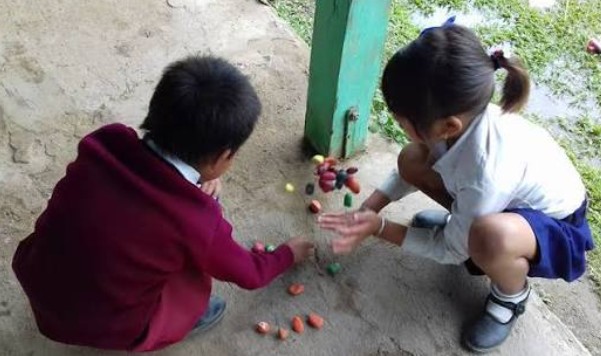
I dream of children travelling from the hills to the valley, and from the valley to the hills, with the same excitement with which they travel to play football, celebrate festivals or simply discover a place they have never seen before. I dream of leaders who understand that influence is measured not by how many people they can mobilise in anger, but by how many they can unite in hope. I dream of churches, temples and every place of worship becoming places where compassion is practised before it is preached, where our convictions make us better neighbours before they make us better debaters. Above all, I dream of a generation that inherits fewer fears than we did.
Too often we speak as though peace will arrive when someone else changes. Yet every conflict also survives because ordinary people continue to find reasons to distrust one another. If a better Manipur is to emerge, it will not be built only through political agreements or public declarations. It will also be built by ordinary people who decide, day after day, not to surrender their humanity to their anger. Rebuilding a home is slower than breaking one. It happens quietly, through thousands of ordinary choices to listen before judging, to understand before condemning, and to remember that another person’s dignity is never the enemy of our own.
Over these past months, I have come to believe something quite simple. Home is not a place where everyone is the same. It is a place where people learn to live with their differences without allowing those differences to become greater than their shared humanity. Home is where disagreement does not become dehumanisation, where justice is pursued without abandoning compassion, and where identity is celebrated without diminishing another’s dignity. That is not a perfect Manipur, because no place ever is. Nor is it a conflict-free Manipur, because human beings will always disagree. It is simply a Manipur where every child, regardless of who they are or where they come from, feels that this land belongs to them, and that they belong to it.
There are days when these hopes feel distant. Another headline. Another accusation. Another reminder of how fragile trust has become. I understand that feeling. Yet hope has never depended on certainty. Hope is not believing that a better future is inevitable. Hope is choosing to live today as though that future remains possible.
Every home is built twice. It is first imagined, and only then constructed. Before there are stronger institutions, there must be stronger imaginations. Before there is reconciliation, there must first be the belief that reconciliation is still worth pursuing. Perhaps that is why I have written these reflections. Not because words alone can heal a wounded home, but because no home has ever been rebuilt without someone first believing that it could be.
I do not know how long it will take us to become that Manipur. Perhaps it will take years. Perhaps it will take a generation. Perhaps I will not live to see it in its fullness. But I hope that when future generations look back on us, they will not remember us only for the conflicts we endured. I hope they will remember that, despite our failures and our fears, we still found the courage to imagine the kind of home we wanted to leave behind for those who came after us, and then began, however imperfectly, to build it.
This letter has no real ending. It cannot.
A letter to the future is never completed by the one who writes it. It is completed by those who choose to live it. Perhaps one day, years from now, a child will read these words and wonder why they ever seemed necessary.
I hope that day comes.
Until then, this letter remains unfinished. So too does the home we are still learning to build.
And every one of us still holds the pen.

Sam Khumanthem writes about home, identity, and the quiet complexities of life in Manipur. His work reflects a deep connection to place, shaped by both love and uncertainty.