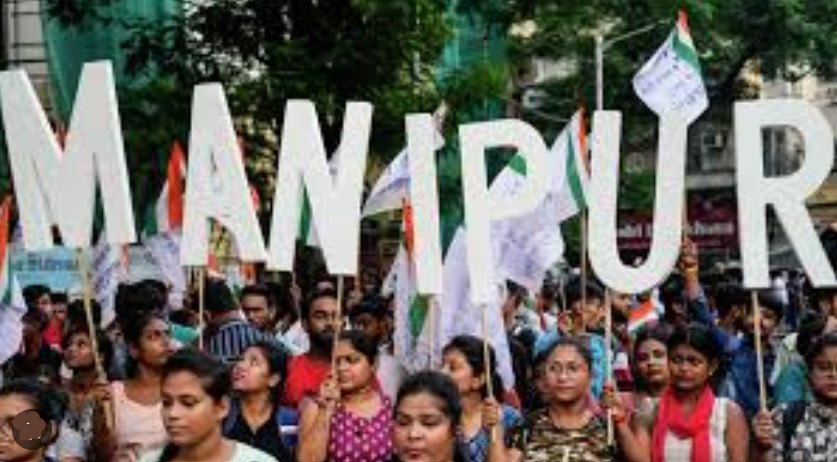
The lingering sting of tear gas still permeates the air near the gates of the Regional Institute of Medical Sciences (RIMS) as three Kuki patients were shifted under heavy escort. Chants of “No treatment for terrorists!” and “Justice for our dead first!” continued to echo long after the ambulance departed.
Just days ago, on June 10, the decomposed and mutilated bodies of 6 Naga men were finally brought home. They were part of a group of 18 innocent civilians who had been abducted on May 13 from Leilon Vaiphei in Kangpokpi district – 6 men and 12 women with a tiny infant. The women and infant were eventually released, their hearts shattered but bodies spared. The 6 men, including pastors from the Liangmai Naga community, were not. They were slaughtered and left to rot in the hills for nearly a month.
Many families have refused to claim the bodies immediately. “How can we bury our brothers without justice?” they ask through tears. ANSAM leader T.P. Dining’s voice broke as he spoke: “Our innocent brothers were slaughtered like animals and left to the vultures. They were pastors… men of God who only wanted to serve their people. Now their children ask why Papa is not coming home.”
In that moment, ethnicity fades. What remains is raw, universal human pain the empty chair at the dinner table, the half-told bedtime story, the dreams buried with bodies that bear marks of unimaginable cruelty.
On June 15, central security forces brought three injured young Kuki men Genlenmang Vaiphei (18), Lunliandan Vaiphei (20), and Paogoulal Chongloi (18) described as gunmen linked to groups under the central government’s Suspension of Operations (SoO) agreement to RIMS. What made the moment especially painful was that the forces did not handle the transfer quietly. Information about the Kuki gunmen being brought to Imphal was leaked ahead of time, ensuring the news spread through the valley before the convoy even reached RIMS. Army ambulances flanked by armed personnel rolled in with a highly visible, heavily guarded display into the heart of Imphal Valley, where the wounds from the Naga killings were still bleeding fresh.
Heavy security forces were deployed across surrounding localities and near RIMS, effectively preventing people from coming out to protest. Tear gas was fired near the casualty ward. The scenes were devastating not just for security reasons, but for what they revealed about the government’s priorities. To many in Manipur, the same painful question arises again: Why have the armed forces remained mere spectators for so long, repeatedly citing that they “cannot control the mob,” yet they swiftly and decisively controlled the situation to bring these three injured Kuki gunmen into Imphal? Where was this efficiency and resolve when violence first erupted on 3rd May 2023 in Churachandpur and has been allowed to rage unchecked for more than three years?
In a state already exhausted by more than three years of relentless ethnic bloodshed, this moment laid bare a troubling insensitivity. Many in Manipur are now openly questioning whether the government is actively playing one fighting community against another waging a proxy war instead of remaining strictly neutral and impartial. By appearing to shield SoO-linked gunmen with advance publicity and overwhelming force, while justice for the slain Naga pastors and civilians moves at a glacial pace, authorities risk being seen as tilting the scales and deepening the divide.
The government had gentler options. It could have arranged treatment discreetly, sparing the valley another spark. It could have avoided leaks, kept the transfer low-profile, and paired it with immediate, heartfelt assurances to Naga families setting a clear timeline for arrests. It could have indicated a serious review or potential suspension of the SoO agreements shielding the implicated groups, and genuine dialogue with grieving communities. Instead, the state allowed or chose advance publicity for the move, followed by swift, visible protection for these injured gunmen from SoO-linked groups while the other side waited in agony for basic justice. No warm words for mourning families. No urgent accountability for the May 13 abductions and killings. No visible effort to balance compassion with fairness.
This is what hurts the most: the perception that some lives, such as those of alleged gunmen command a premium and the full protection of the state, while others, such as those of the innocent victims, are extinguished with impunity amidst a silent state. When the government fails to exercise equality in safeguarding the lives of citizens, it is not surprising that this creates a feeling in the populace that it is acting in a partisan manner.
Across the hills and valley, fear reigns. Retaliatory shadows lengthen, widening the Naga-Kuki divide atop the existing Meitei-Kuki conflict. Almost all communities in Manipur have suffered and endured losses, yet scenes at RIMS reveal how the government’s questionable decisions transform shared tragedy into sharper polarization. By appearing to shield one side with overwhelming force while the other mourns unaddressed killings, authorities have eroded trust and driven communities further apart. As darkness fell over Imphal and the crowds slowly dispersed under heavy security, one truth remained – the people of Manipur have carried too much for too long. They have wept enough tears to fill rivers. They deserve compassionate and insightful leaders who deliver justice with urgency for every victim, who speak with compassion to every grieving family, and who act with the wisdom to heal rather than inflame or exploit divisions. Until that day comes, the tears will continue to fall in Manipur quiet, endless, and too often ignored. The land cries out not just for peace, but for a government that finally chooses to care equally for all its hurting children and remains truly neutral but empathetic in the face of their suffering. Without correcting this insensitivity and doubtful priorities, Manipur risks plunging even deeper into chaos. The people have endured far too much. They deserve governance that heals divisions rather than deepening them.

The author is Founder & Chairperson of ETA, Northeast Women’s Network