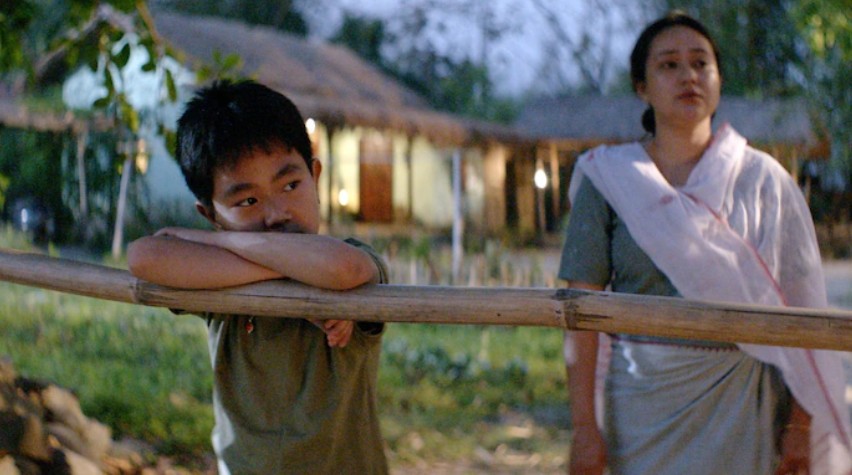
The Manipuri movie Boong written and directed by Laxmipriya Devi and produced by Farhan Akhtar, was understandably celebrated in Manipur for its cinematic brilliance, and for the pride it brought the place, after all it was first Indian film to win a prestigious BAFTA award, the British equivalent of the Oscar, in the children’s film category 2026. I watched it with my family on the third day of its release in movie theatres in Imphal.
Beyond the entertaining drama of a boy’s longing and quest for his long missing father, and the intimate glimpses his search provided into the complex and emotionally delicate inter-community relationships in multi-ethnic Manipur, something else in the film touched a raw nerve of the Manipuri audience.
As the show ended and lights flooded back into the theatre, there visibly was a general cathartic sense of purge that all good performing arts normally leave audiences with, but some women remained seated quietly wiping off tears, taking a few extra moments to regain composure before joining the rest to move out of the theatre.
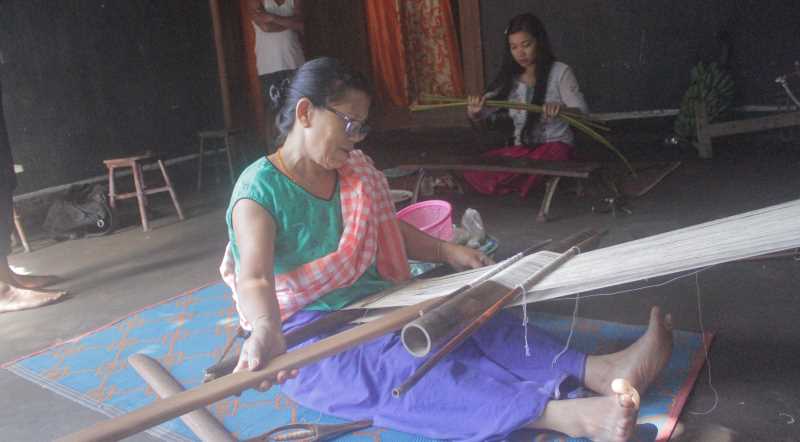
Manipur’s gender equation reality is complex. At one level, women have been at the forefront of many social, economic and political upheavals through history. In the hills as well as in the valley, there are several exclusive women’s markets, just as in its agrarian world, men and women are equal economic partners. That the director of Boong is a woman reflects this sinew of gender empowerment too.
The Meira Paibi movement amongst Meiteis, which also manifests under different nomenclatures amongst hill communities, is the most prominent alibi of Manipuri women’s well-deserved image as social torchbearer. During colonial period, in 1904 and then 1939, womenfolk rose to oppose British policies leading ultimately to their revocations. These are now commemorated as Nupi Lan or women’s war
The first pertained to forced labour of Manipuri menfolk to rebuild the British residency in Imphal, gutted in an arson attack by some disgruntled elements, and the second to inordinate rice export from the state as part of British WWII war effort, causing a shortage of the commodity for local consumption.
Yet, despite all these, there are also strongly entrenched gender oppressive patriarchal norms which have persisted. This is especially so amongst Meiteis, who continue to be burdened by many albatrosses around the neck from a past feudal era. Polygamy arguably is the ugliest.
The practice has become normalised, although not encouraged, hence persists. This is so particularly amongst the elite section, where keeping mistresses and concubines or even taking more wives than one, is not uncommon. A good many of Manipur’s current set of ministers and MLAs would be guilty of this despicable feudal legacy.
The hurt and humiliation of women who suffer this fate is imaginable. Even those who are spared would still be anxious about the vulnerability of their daughters and loved ones. Because the practice has become an organic social norm, this gender agony remains largely invisible.
Not only this, often women themselves become gatekeepers of this gender oppressive patriarchal order in the phenomenon Frantz Fanon charactersised as the silent wish of the oppressed of to emulate their oppressors. Hence, even women vigilantes tend to overlook men given to this betrayal of marital faith as destiny. However, if a woman were to make this breach, these same vigilantes often become the harshest moral police.
A change however may not be too far away. Although no study has been done to correlate them yet, rising cases of divorce among younger generation Meiteis may be a herald of Fanon’s “mailed fist”.
In the spirit that good art is hiding good art, Boong succeeds in drawing up a non-dogmatic but piercing portrayal of this inherent gender injustice. The workplace of Boong’s father, a carpenter and timber trader Joykumar, played by Hamom Sadananda, is the border Indian town of Moreh and neighbouring Tamu township in Myanmar.
At some point, the family loses contact with him and for a prolonged period. Many presume he is dead or has joined the insurgents, but the family refuses to give up. Boong, or Brojendro, played by Gugun Kipgen, yearns to find his father and bring the good news to his mother Mandakini, played by Bala Hijam.
On one occasion the boy dupes his mother that his school was organising a 2-day school excursion to Ukhrul district and would like to be part of the tour. He then slips away to make a trip to Moreh instead. His bosom friend, a Manipuri Marwari, Raju Agarwal, played by Angom Sanamatum, follows him there out of concern. The families of the boys learn of the trip but too late. The two boys’ adventure is thrilling. Boong traces his father in Tamu but to his horror discovers he has remarried and has a daughter.
The final scene is powerful. Boong finds his mother, on crutches after a scooter accident, waiting for him at their courtyard. They both know that they both know the truth. Boong tells his mother blandly “Baba is dead”. Camera zooms in on his mother. She pauses a while before asking in resignation “is he doing well?”. Boong answers “Yes,” and hugs his mother.
Bala’s breaths deepen, face reddens, tears swell a little. She confronts what she had always suspected but tried not to believe. Not a single word is uttered but her tearing pain, benumbing humiliation, seething anger, and together with them, a resolve to stay on her feet for the sake of her son, well up on her countenance.
For those sensitive enough to hear her agonised silent scream, it was deafening. For many more who have faced this betrayal themselves, or else know of near and dear ones who suffer or have suffered this humiliation, Bala’s silent scream becomes theirs.
Powerful as the articulation of this invisible oppressive order is, things probably will settle back to the old abnormal-normal. But for many, the power of Bala’s silent scream is a confirmation that Boong is a desperate appeal for social introspection.
This article was first published in The Hindu. The original can be read HERE

Editor, Imphal Review of Arts and Politics and author