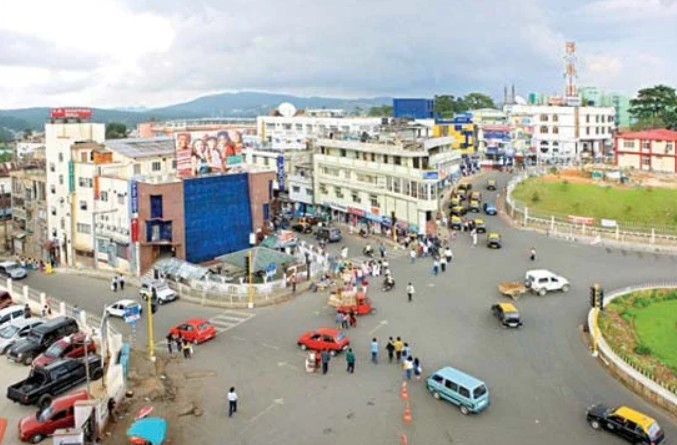
Hundreds of black-garbed, masked motorcycle riders last week streamed into Shillong, capital of Meghalaya, carrying black flags and exuding an aura of menace. Making it even stranger, they had also masked their number plates with black cloth, making identification difficult.
These were members/loyalists of the Khasi Students Union (KSU), a non-governmental organisation that issues diktats, holds political protests and rallies in support of local demands and presents itself as the voice of Khasi youth, though it does not appear to be much engaged with student issues.
The organisers had given a 15-day deadline to the state government to respond on five demands, including a fair public hearing on a major new project awarded to Shree Cement, one of the largest private cement companies in India, after an earlier one was disrupted by government forces. Another longstanding demand was the imposition of the Inner Line Permit (ILP), a colonial-era system that regulates the entry of visitors to border states like Arunachal Pradesh, Nagaland and Mizoram.
Citing government’s non-response, the KSU announced a bike protest on August 18 for the following day. The district administration (obviously the state government was also involved) gave permission for the large rally. But no arrangements were made to curb the protesters or keep them at a distance from the public. There were no barricades or announcement of alternative routes for the public, as is common in most cities during a sensitive march.
The authorities made the fatal mistake of allowing the grim flow of black-clad motorcyclists to drive through neighbourhoods with a large number of ‘non-tribals’ — that’s how residents from other parts of the country or the plains are referred to here and in other hill states of the North-east. Non-tribals, including Bengalis, are in significant numbers here, but have been targeted in the past by local groups. Few cases over the decades, including for heinous crimes, have ended in conviction, leading to a palpable sense of edginess and unease at times.
Cars with Assam number plates were attacked by so-called protesters, as were Meghalaya government vehicles and a school bus carrying children by pelting them with rocks before the violence turned towards innocent bystanders, who were beaten with sticks, kicked and punched. Yet, a KSU leader was filmed before the rally urging participants to stay peaceful!
These attacks were video-recorded by hundreds of people. They uploaded their videos on social media apart from their own networks. The videos went viral. The police were worse than bystanders. Not only did they fail to challenge the thugs, they were swere barely visible on the ground. It appears that the Meghalaya police are either insufficiently trained, incapable or ignorant of how to handle violent mobs. KSU rallies have a history of erupting in occasional and unprovoked violence. That should have alerted the state government.
The KSU apologised and tried to distance itself from the attackers, saying the latter were non-members. But they were hoist with their own petard: if the hooligans were not members, why were they allowed to take part in the rally? Surely such a powerful organisation, that has made a tradition of targeting non-tribals and is tacitly supported by all political parties, has a list of its members? A second question: if these were not members, why did its members not restrain them?
The social media accounts and reports had a swift and cascading effect. First came reactions from taxi drivers and associations in Assam, where Meghalaya vehicles were also targeted and movement blocked at Jorabat, a key entry point into Meghalaya, through which fuel tankers, consumer and commercial goods flow. It became a choke point and by the following evening, there were long lines at petrol pumps in Shillong.
Second, tourists and travellers who had come from different parts of the country found themselves in a panic; rooms were cancelled, guests sought to return to Assam and take the earliest connections home. Most of the taxi business into Meghalaya is controlled by tour operators based in Assam or using Assam vehicles. The reason is simple — the nearest large airport and the only railway station are in Guwahati; Meghalaya has a tiny airport near Shillong where jets cannot land. And the KSU and other groups have long opposed railway connections to the Khasi hills of Meghalaya.
The transportation issue has been an old grouse for Meghalaya taxi associations, which find themselves getting the short end of the stick before a better organised and more powerful association. Some want the Assam taxis to stop at Jorabat and passengers to transfer to Meghalaya registered cars. This is not workable – which taxi will come 20-25 km from Guwahati airport and hand over bona fide passengers to rival taxis? It’s hard to imagine passengers going with such transfers which will end up being heavy on their wallets. They want ease of passage, not pain of travel.
During the three-day standoff, travellers came to Jorabat from Shillong – the exodus was one way — walked to Assam-registered cars before making their getaway. All this drives the point home that the much-vaunted Act East and Look East policies of successive governments cannot work without trust between neighbouring states.
Social media influencers on both sides went on bitter tirades against the other state and some individuals. We forget so easily that many young – and older people from Meghalaya and other states – are pursing studies and livelihood options in other places, be it Assam or Bangalore or Delhi, Hyderabad or Mumbai. They are few in number and vulnerable. Racism is unacceptable and should invite the full force of the law. The KSU and such organisations are surely aware of this – a majority in their home state can become a huge minority in other parts of India.
Ultimately, the two state governments stepped in to sort out the escalation. Meghalaya agreed to compensate people who were injured and vehicles that were damaged. Even this truce is temporary – till September 10 is what we are told. The government in Shillong invoked the Meghalaya Maintenance of Public Order Act which says that “any individual, group, or organisation that destroys public or private property is explicitly held liable to financially compensate the government and private citizens for the losses suffered.” This should be worrying to the protesters. But the damage had been done and Meghalaya’s carefully cultivated and expensively managed image of an oasis has been dented, perhaps for a long time.
Inter-state traffic may have resumed, but lurking at the back of many minds is the uncertainty caused by sudden, unprovoked incidents and how the government was found wanting. A few KSU leaders have been arrested, FIRs filed and some attackers identified. The Chief Minister of Meghalaya, Conrad Sangma, known for his guitar play, networking skills and media-savviness, is under pressure. The issue is not just the attacks but that in full public view, people saw naked prejudice for what it was.
All eyes are on the Sangma government: will it go after the criminals and ensure that such events don’t happen again? Will it take action against officials who failed in their duties? Or are we kidding ourselves? Such eruptions of targeted violence have been taking place in Meghalaya for decades and the number of people who’ve been booked, brought to trial and convicted even for heinous crimes is a fraction of those involved.
One important development to note is the local outcry, stressing that a few aggressive person don’t represent the state. People of all ages have taken to social media to condemn the violence and demanded an end to it.
Prospective travellers to Meghalaya must note that Shillong, Umiam and Sohra/Cherrapunji are not the only parts of the state to visit. There are the Garo hills, green, hospitable and friendly with untouched beauties like Balpakram National Park and the Siju Caves, among the longest caves in India. If you believe the CM, they’re planning five-star hotels in the Garo hills (which certainly won’t help the ecosystem).
Actions like those of August 19 have far-reaching consequences. Tourists may head to other parts of the region with a reputation for safety.
Shillong may have five-star hotels, guest houses, cafes and hostels, but it also has narrow, unexpandable roads, awful traffic; its green cover is being replaced by concrete monstrosities. There is no heritage conservation worth the name. Its reputation may have been built on historical beauty, fashion and music celebrations, but its education excellence is now lost.
It is a time of reckoning.
Courtesy The Tribune, Chandigarh. The original can be read HERE
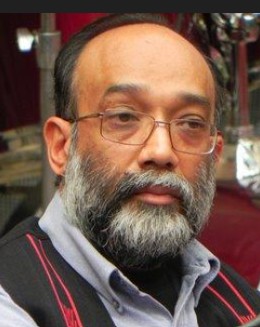
The writer is a senior journalist and author of several books