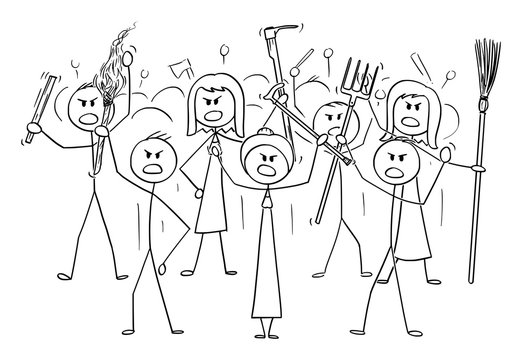
In Manipur, almost everybody today speaks in the language of “civil society.”
Every community has one. Sometimes several. Student bodies, women’s groups, youth organisations, village committees, federations, councils, volunteer networks, self-appointed spokespersons, defenders of the land, defenders of history. Hardly a week passes without another press statement, another bandh call, another ultimatum issued “in the interest of the people.”
Some of these organisations genuinely emerged out of necessity. Many people survived the worst months after May 2023 because volunteers stepped in when institutions seemed absent or paralysed. Relief camps functioned because ordinary people organised themselves. Medicines reached stranded families because local groups coordinated transport. Funerals were arranged, donations collected, missing persons traced. It would be dishonest to ignore that reality.
But conflicts do not only produce victims. They also produce structures around the conflict itself. Over time, an entire ecosystem of organisations has grown around the crisis in Manipur — some sincere, some reactive, some opportunistic, and many operating in the blurry space between public service, community anxiety, and political influence.
The longer the violence continued, the more groups appeared. Some arrived almost overnight with grand names, logos, and declarations, speaking as though they alone carried the voice of entire communities. A number of them had little visible public presence before the conflict. No long history of social work. No democratic culture inside the organisation itself. Yet suddenly they became moral authorities, issuing directives to governments, institutions, media houses, and sometimes even to ordinary citizens trying to stay out of trouble.
What is unsettling is not merely their existence, but the atmosphere many of them now contribute to.
A language of permanent outrage has slowly become normal in Manipur. A violent incident occurs somewhere, and before facts settle, positions are already hardened. Statements appear within hours. Social media pages linked to different organisations circulate emotionally charged claims, old images, selective histories, rumours presented as certainty. The dead quickly become symbols for competing narratives. Grief is no longer allowed to remain grief for very long; it is immediately absorbed into larger ethnic arguments.
In that environment, truth begins to matter less than mobilisation.
Civil society, ideally, is supposed to calm public tempers when politics becomes reckless. It is meant to create space for dialogue, accountability, and restraint. In Manipur today, many organisations instead function as amplifiers of collective fear. Some may not even realise they are doing it. Constant emotional mobilisation eventually becomes its own habit. Anger creates visibility. Visibility creates influence. Influence, once acquired, is rarely surrendered easily. And perhaps that is one of the more uncomfortable realities of prolonged conflict: over time, crisis itself can become a source of relevance.
None of this means people’s fears are imaginary. They are not. Every community in Manipur carries genuine wounds now. Meiteis have suffered. Kukis have suffered. Nagas have suffered. Muslims have suffered. Families have been uprooted. Homes burned. Young people died. Women endured humiliation that will leave scars long after headlines disappear. Distrust has seeped into everyday life.
But somewhere along the way, public discourse also became trapped in a competition of suffering. Every community feels unseen. Every group feels its pain is minimised while somebody else’s is amplified. The result is a society where even mourning has become politicised.
That atmosphere has changed public behaviour in quieter ways too. Many people no longer speak carefully in public, not because they have nothing to say, but because nuance itself has become dangerous. One wrong sentence can invite accusations of betrayal or disloyalty. Moderation now often sounds suspicious to deeply polarised audiences.
So the loudest voices dominate.
And loud voices are not always wise ones.
There was a time when civil organisations across the Northeast carried moral weight because they challenged state excesses, corruption, disappearances, and injustice. They were imperfect, certainly, but many still spoke from a position of public trust. Today, some organisations appear less interested in healing fractured societies than in defending wounded collective pride.
Others behave almost like parallel authorities. Economic blockades, social boycotts, public threats wrapped in the language of “public sentiment” — these have increasingly become normalised. In some places, people are more afraid of angering powerful organisations than formal institutions of the state.
Politicians, unsurprisingly, learn to navigate this environment rather than change it. Sometimes civil organisations pressure governments. Sometimes governments quietly benefit from the pressures these groups create. The relationship shifts constantly depending on circumstance, election cycles, and public mood. The lines are rarely clear anymore.
And ordinary people remain stuck somewhere in the middle of this endless mobilisation.
A shopkeeper trying to reopen his business, a student preparing for exams, a displaced family waiting to return home — most people are simply exhausted. Emotionally exhausted. Financially exhausted. Socially exhausted. Yet the larger machinery of outrage rarely pauses long enough to allow society to breathe.
Of course, civil societies alone did not create this crisis. The vacuum left by political failure made their rise almost inevitable. When governance loses credibility, alternative centres of authority emerge. Manipur’s instability, deep ethnic mistrust, weak institutions, and prolonged insecurity created fertile ground for the mushrooming of organisations claiming to represent “the people.”
But necessity alone cannot excuse everything that followed.
A society cannot heal if every institution within it survives by keeping wounds permanently open.
At some point, Manipur will have to ask difficult questions not only of the state, insurgencies, or political leaders, but also of the many organisations now speaking in the name of society itself. Who genuinely wants peace, even if peace reduces their relevance? Who benefits from permanent emotional mobilisation? Who speaks responsibly during moments of tension, and who inflames them further?
These are uncomfortable questions. But avoiding them has not brought Manipur any closer to healing.
Perhaps that is the real tragedy now. The more fractured society becomes, the more representatives suddenly emerge claiming to speak for it.
Everybody claims to speak for the people. Very few are still willing to speak honestly to the people.
And if Manipur is ever to recover, it doesn’t need any more statements, ultimatum or newer organisations with bigger names.
Recovery may begin only when enough people rediscover the courage to be human before becoming representatives of a community.
Sam Khumanthem writes about home, identity, and the quiet complexities of life in Manipur. His work reflects a deep connection to place, shaped by both love and uncertainty.