It is curious how often disappointment begins long before the moment that disappoints us, taking shape quietly in the expectations we place upon people, in the things we assume they will do, the kindnesses we believe will be repeated, the understanding we think will always be there, until one day something happens that is different from what we had imagined and we realise that perhaps the weight of the moment lies not entirely in what has happened, but in what we had expected to happen instead.
We expect things from one another because that is part of being human, because families, friendships and communities cannot exist without some measure of expectation, and because we need to believe that the people with whom we share our lives will, when it matters, keep their word, show kindness, lend a hand, respect our differences and stand beside us when life becomes difficult; without such expectations, trust would be difficult to build, relationships would become little more than arrangements of convenience, and community itself would lose much of the meaning we give to the word.
The difficulty begins somewhere between expectation and assumption, in that almost invisible space where something we once hoped for becomes something we begin to take for granted, because a friend helped us when we were in trouble and we remember that kindness the next time we need help, which is perfectly natural, until the day comes when that friend cannot be there and we find ourselves thinking, I thought you would, and suddenly the absence of a favour seems to mean much more than the favour itself, because what has really been disturbed is not simply our immediate need but the picture we had formed of the relationship.
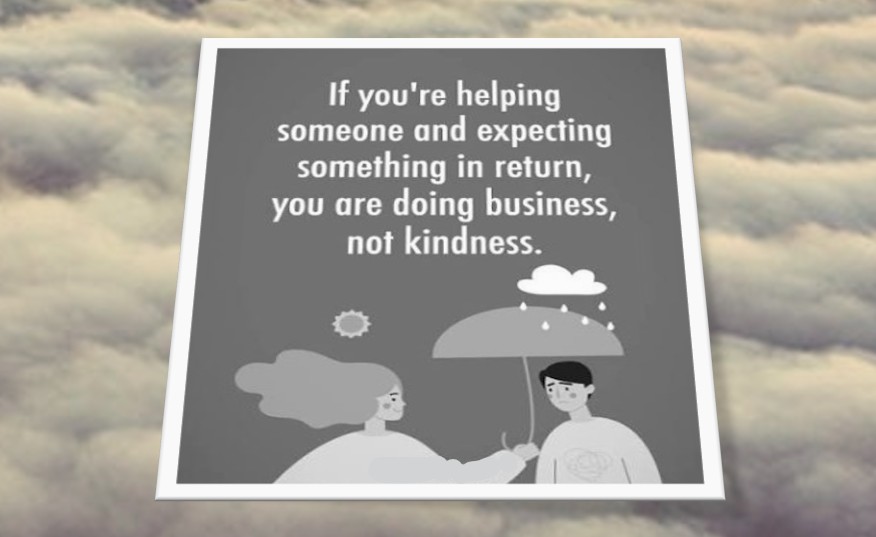
A favour freely given is a gift, something we receive with gratitude precisely because the other person was free not to give it, but when that same kindness becomes something we expect, and then something we assume, it can slowly become an obligation in our minds, and when the obligation is not fulfilled we can feel that something has been taken from us even though nothing was ever promised, which is perhaps one of the quiet dangers of expectation, that it can turn generosity into debt without the person who gave us the kindness ever agreeing to the arrangement.
We do this in our personal lives all the time, keeping little accounts of who was there for us, who helped us, who remembered us, who made the difficult phone call, who stood beside us when things were uncertain, and although there is nothing wrong with remembering kindness, there is a point at which remembering becomes accounting, and we begin to measure the relationship by what we have given and what we believe should now come back to us, until a friendship that once rested on affection and trust begins to carry the invisible weight of things neither person ever actually promised.
Perhaps that is why some disappointments hurt more than they should, because we are not always grieving what another person did or failed to do; sometimes we are grieving the distance between who they are and who we had quietly expected them to be, and the closer the person is to us, the greater that distance can feel, because we assume that those who know us well should understand what we have not said, remember what we have not reminded them of, recognise what we have sacrificed and respond to us in the way we believe we would have responded to them.
Yet another person has a life of their own, with responsibilities we may not see, burdens they may never speak about, limitations we may not understand and choices they have every right to make, and perhaps loving someone means learning that our affection for them does not give us ownership over their decisions, just as their affection for us does not require them to become the person we imagined they would be.
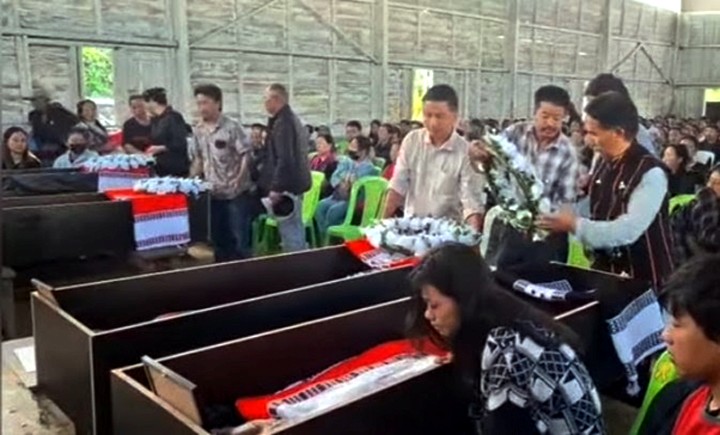
The same is true of communities, although the expectations become larger and sometimes much harder to see because they are shared by many people at once, and perhaps that is where Manipur enters this conversation, not as an argument about who is right or wrong, but simply as a place where the expectations of living together have become painfully visible because so much of what we once assumed about tomorrow has been shaken.
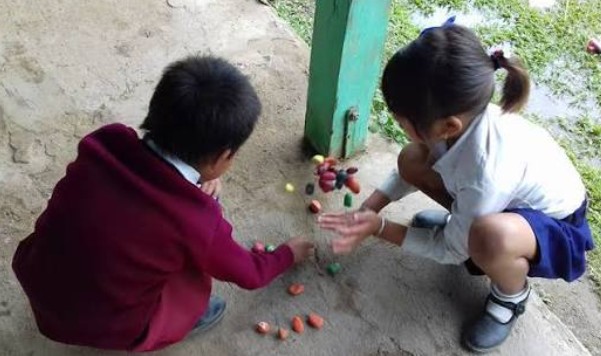
For a long time, we expected ordinary things from the place we called home, things that perhaps seemed too ordinary to deserve the word expectation at all; we expected people to go about their lives, to meet in markets and schools and offices, to travel the same roads, to visit one another, to attend weddings and funerals, to disagree about politics and personalities and still find a way to sit together afterwards, and we expected our children to grow up knowing people from different communities not as names in conversations or categories in difficult times, but simply as classmates, neighbours, friends and people whose lives happened to be intertwined with theirs.
We expected, perhaps without ever saying it aloud, that we would continue to live together, grow together and build something that our children could inherit with greater confidence than we had received it, and there was nothing extraordinary about that expectation because it is what people everywhere hope for from the place they call home: that tomorrow will contain more possibilities than yesterday, that differences can be lived with, that disagreements can be endured, that ordinary life can remain ordinary, and that our children will not have to carry the fears and divisions that belong to the generations before them.
Then much of that confidence was shaken, and what makes the experience particularly painful is that we are not only dealing with what has been lost but also with what we had believed would never be lost, because there is a difference between grieving a house that is gone and grieving the assumption that you would always have a place to return to, between missing a neighbour and realising that the easy familiarity of neighbours may no longer exist in quite the same way, and between worrying about the future and wondering whether the future we once imagined for our children is still possible.
There are losses that can be counted, and there are losses that cannot, and perhaps one of the harder things to measure is the loss of expectation itself, the quiet confidence that we would continue to share a future even when we did not share everything else, because when that confidence is weakened, people begin to protect themselves by expecting less, trusting less and hoping less, and that may be understandable, but it can also become dangerous if disappointment teaches us that the safest future is one in which we no longer expect anything from one another.
A society cannot build itself on that kind of resignation.
We need to expect our leaders to carry responsibility, our institutions to serve people, our communities to care for those who are vulnerable, our neighbours to recognise that another person’s dignity is no less valuable than their own, and our children to grow up believing that they can have a future larger than the wounds they inherited, because without such expectations we eventually stop asking what kind of place we want to become and settle instead for whatever kind of place circumstances leave behind.
But perhaps there is a difference between expecting a better future and expecting the future to return us to the past, because the past may no longer be recoverable, some things may have changed permanently, some relationships may need to be rebuilt rather than simply resumed, and some assumptions we once carried so easily may never again have the same innocence, and perhaps the work before us is not to recreate exactly what was but to find a way of imagining what can still be.
That requires expectations, but perhaps different ones.
Not the expectation that everyone will agree with us, because they will not; not the expectation that people will forget what has happened, because they should not; not the expectation that trust can be demanded simply because we say we want it, because trust takes time to rebuild; but the expectation that people can still listen, that difference can still exist without becoming separation, that dignity can still be extended across lines of disagreement, and that we can still choose, even after everything that has happened, to believe that living together is not an idea that belongs only to a more innocent past.
Perhaps that is the most difficult expectation of all, because it asks something from us when we have already given much and lost much, but perhaps it is also the expectation we cannot afford to surrender, because once we stop expecting to live together, grow together and build together, we have already surrendered a part of the future before the future has even arrived.
There is also something humbling about recognising that expectations can be both a burden and a necessity, because the very expectations that make disappointment possible are also the ones that make hope possible; we expect that tomorrow can be better because we believe tomorrow is worth building, we expect that our children can live differently because we believe their lives need not simply repeat ours, and we expect that people can find a way back to one another because we have not entirely given up on the idea that there is still something worth sharing.
Perhaps, then, the lighter way is not to stop expecting, but to learn what is worth expecting and what must be allowed to change, to hold our hopes firmly without turning them into demands, to recognise what has been broken without assuming that everything is beyond repair, and to understand that a shared future cannot be built by insisting that everyone return to exactly what they once believed, but by finding enough common ground to begin again.
Manipur does not need us to pretend that nothing happened, nor does it need us to carry forever the expectation that everything can simply go back to the way it was, but perhaps it does need us to hold onto the quieter and more difficult expectation that people who have shared a home can, in time, learn again how to share a future, that children can inherit something other than the divisions of their parents, and that living together, growing together and thriving together can remain not a naïve dream of what might have been, but a deliberate expectation of what might still be.
Because perhaps the greatest weight of expectations is not the disappointment when they fail, but the temptation, after they have failed us, to stop expecting altogether.
And perhaps that is one weight we should be careful not to put down.

Sam Khumanthem writes about home, identity, and the quiet complexities of life in Manipur. His work reflects a deep connection to place, shaped by both love and uncertainty.