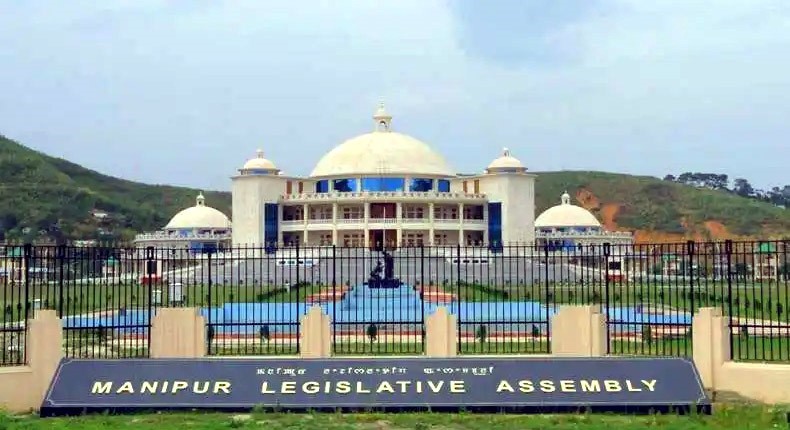
Manipur stands at a critical juncture where the contours of its macro-economic and fiscal trajectory will determine whether it can transition from dependency-driven growth to a self-reliant and competitive economy. The state’s existing economic architecture has been shaped largely by decades of heavy public transfers, centrally sponsored schemes, and limited structural transformation. While these inflows have enabled commendable social development achievements; especially in literacy, life expectancy, and basic health-they have not been accompanied by a robust industrial base, high-value job creation, or diversified revenue streams. The challenge before policymakers is to recalibrate fiscal priorities, governance mechanisms, and regional economic integration strategies in a way that strengthens productive capacity, attracts sustainable private investment, and reduces structural vulnerabilities (Planning Department, Government of Manipur, 2024). This analysis seeks to offer a policy-oriented evaluation of Manipur’s macro-economic and fiscal landscape in 2025, grounded in both empirical data and comparative insights from other North Eastern states.
Manipur’s development paradox underscores the limits of growth driven by public transfers without structural transformation. While its social development record is commendable, the macro-fiscal architecture remains fragile and externally driven. Without concrete strategies to diversify its industrial base, attract private capital, and execute governance reform, Manipur will continue to overperform socially while underperforming economically. Policy realignment must prioritise fiscal decentralisation, public investment efficiency, industrial competitiveness, and regional integration. Only a bold shift towards self-sustaining growth rooted in local capacity, climate-resilient infrastructure, and cross-border trade can unlock the state’s long-term economic potential. Manipur’s geographical position offers unique opportunities for leveraging Act East Policy initiatives, yet institutional bottlenecks continue to limit the conversion of strategic location into tangible economic gains. The absence of a fully functional integrated check post at Moreh, coupled with delays in implementing the India-Myanmar-Thailand Trilateral Highway, has reduced the state’s capacity to become a trade hub. Moreover, inadequate warehousing, cold chain facilities, and freight handling infrastructure constrain agricultural and horticultural producers from accessing export markets. In contrast, neighbouring Mizoram has advanced in building integrated logistics parks and cold storage units with central support, enabling its farmers to participate in cross-border trade. Addressing these gaps through coordinated investment in border trade infrastructure, streamlined customs procedures, and targeted export promotion policies can position Manipur as a gateway for India’s engagement ith ASEAN economies, generating employment and stimulating industrial growth in the state.
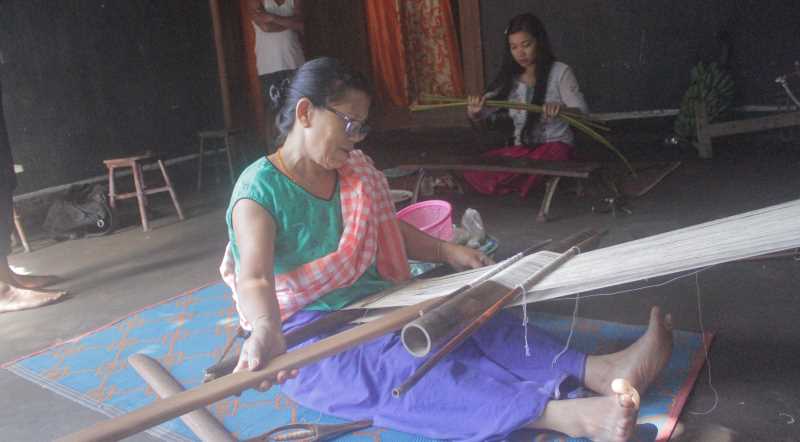
Manipur’s long-term economic resilience depends heavily on its ability to address structural constraints that have persisted for decades. Despite commendable progress in education, health, and gender equity, the state’s growth trajectory has been hindered by its over-reliance on public transfers and limited productive capacity. A more diversified and innovation-driven economic structure is critical to reducing vulnerability to external shocks. This requires strategic investment in agro-processing, value-added handicrafts, renewable energy, and IT-enabled services, coupled with targeted skill development to meet industry demands. Strengthening transport and logistics infrastructure; particularly all-weather roads, integrated check-posts, and digital connectivity will facilitate greater market access both within and beyond national borders.
The state must also enhance its policy ecosystem to attract ethical private investment, leveraging its unique cultural heritage and biodiversity as competitive advantages in tourism and niche exports. Importantly, policy design should integrate climate adaptation measures, given Manipur’s susceptibility to extreme weather events. By aligning state-level development strategies with both Act East Policy objectives and Sustainable Development Goals, Manipur can position itself not merely as a recipient of central assistance but as an emerging contributor to India’s eastern economic corridor, thereby transforming its current economic limitations into opportunities for inclusive and sustainable growth. The urgency of this transformation is heightened by the growing competition from neighbouring states and countries, which are moving swiftly to capture emerging opportunities in renewable energy, agro-processing, and digital trade (World Bank, 2024).
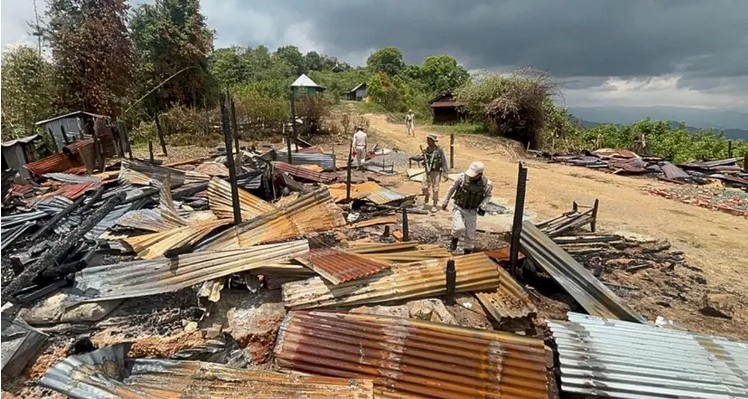
Time-series data show that Manipur’s economic recovery post-COVID has been slow, particularly in industrial output. While the national GSDP showed a rebound in FY2021–22, Manipur’s manufacturing base remained stagnant, contributing only 1.6 percent to GSVA, a statistic that has remained unchanged since 2015. Compared to peer Northeastern states like Mizoram, which has successfully diversified into pharmaceuticals and processed food, and Sikkim, which capitalised on hydropower and organic farming, Manipur has not yet operationalised its planned Special Economic Zones or industrial clusters. This lack of sectoral diversification and weak execution of capital projects has locked the economy in a low-growth trap. Infrastructure bottlenecks, security-related disruptions, and limited investor confidence have compounded the challenge, making it imperative for the state to adopt targeted industrial policies backed by efficient project implementation (Ministry of Commerce & Industry, 2024).
The state’s fiscal health reflects a heavy dependence on central transfers, which account for over 80 percent of total revenue receipts. While such dependency is not uncommon in special category states, it leaves little room for independent fiscal manoeuvring. The limited tax base, dominated by a narrow set of goods and services, further constrains fiscal flexibility. Efforts to expand the tax net, such as better GST compliance and digitised tax administration, have yielded modest results but have yet to make a significant dent in revenue mobilisation. The absence of large-scale private sector investment exacerbates this challenge, as potential sources of own-tax revenue, such as corporate taxes, property taxes, and industrial levies remain underdeveloped (RBI, 2024).
At the same time, Manipur’s public expenditure profile shows a heavy bias towards committed expenditure, including salaries, pensions, and interest payments, which collectively consume a substantial share of the budget. Capital expenditure, although increasing in nominal terms, remains insufficient to address the state’s infrastructure deficit, particularly in transport connectivity, urban infrastructure, and industrial estates. The execution rate of infrastructure projects also lags behind national averages, with frequent delays caused by administrative bottlenecks, land acquisition disputes, and intermittent law and order concerns (Comptroller and Auditor General of India, 2024).
Comparative data further highlight the gap between Manipur and faster-growing Northeastern peers. For instance, Meghalaya’s strategic investment in tourism infrastructure has generated significant multiplier effects in rural economies, while Arunachal Pradesh’s focus on hydropower has boosted state revenues and energy security. In contrast, Manipur’s growth drivers remain concentrated in low-productivity agriculture and public administration. While agriculture provides livelihoods for a majority of households, productivity levels remain low due to fragmented landholdings, inadequate irrigation, and limited adoption of high-yield varieties. These challenges are compounded by climate change-induced weather variability, which poses risks to both crop yields and rural incomes (FAO, 2024).
Manipur’s human capital, particularly its youth population, represents an untapped resource that can catalyse economic transformation if skill development and employment linkages are strengthened. Despite high literacy rates and encouraging gender parity in education, the state faces a pronounced skills mismatch, with vocational and technical training poorly aligned to emerging sectors such as renewable energy, agro-processing, IT-enabled services, and tourism.
Consequently, unemployment and underemployment remain high, even among educated youth, constraining consumption-led growth and entrepreneurial activity. Addressing this requires a comprehensive state-level skill development strategy that integrates industry-led curriculum design, public-private partnerships for vocational training, and incentivised entrepreneurship programmes. Establishing sector-specific skill centres, promoting internships and apprenticeships with local enterprises, and facilitating access to finance for young entrepreneurs can convert demographic potential into productive capacity. Such interventions will also complement industrial and trade initiatives by ensuring that Manipur has a workforce capable of supporting both local production and export-oriented activities. Failure to address these structural workforce challenges risks leaving the state dependent on external labour inflows and perpetuating the low-productivity trap that has historically constrained its economic expansion.
Cross-border trade with Myanmar, once viewed as a potential growth engine under the Act East Policy, has underperformed expectations. The Moreh-Tamu trade route remains underutilised due to inadequate customs infrastructure, security disruptions, and non-tariff barriers. Formal trade volumes have stagnated, while informal trade persists without generating tax revenues or regulatory oversight. In contrast, border states such as Mizoram and Tripura have made greater headway in integrating with neighbouring economies, leveraging improved infrastructure and bilateral agreements (Ministry of External Affairs, 2024). Unlocking the potential of Manipur’s border economy will require not only infrastructure investment but also diplomatic ngagement, harmonisation of trade standards, and facilitation of cross-border value chains.
Despite these constraints, there are pockets of opportunity that could catalyse structural transformation if supported by coherent policy frameworks. Manipur’s biodiversity and agro-climatic conditions position it well for high-value horticulture, organic farming, and medicinal plant cultivation. The state’s rich cultural heritage and scenic landscapes also offer scope for sustainable tourism, particularly eco-tourism and cultural tourism. Leveraging these niches will require investments in value-chain infrastructure, skill development, and marketing, as well as strong linkages between local entrepreneurs, cooperatives, and external markets (UNDP, 2024).
Another promising frontier lies in the digital economy. With expanding mobile penetration and improving internet connectivity, there is scope for developing IT-enabled services, digital payment ecosystems, and e-commerce platforms tailored to local producers and consumers. This would not only diversify the economy but also enhance transparency, reduce transaction costs, and improve service delivery in both urban and rural areas. The state’s youth demographic, if equipped with relevant skills, could be a major driver of this transformation (NITI Aayog, 2025).
Manipur’s macro-economic and fiscal landscape in 2025 reflects both the achievements of past development efforts and the pressing need for a new growth strategy. The state’s future will depend on its ability to move beyond dependency-driven growth, diversify its economy, and build resilience against external shocks. A coordinated approach involving fiscal reforms, governance enhancements, targeted industrial policy, and regional integration will be critical. If such a shift is pursued with urgency and strategic clarity, Manipur can transform its structural constraints into opportunities, positioning itself as a competitive and self-reliant economy in the decade ahead.
References
Comptroller and Auditor General of India. (2024). State Finances Audit Report: Government of Manipur 2023–24. Government of India.
FAO. (2024). Climate change impacts on agriculture in North East India. Food and Agriculture Organization of the United Nations.
Ministry of Commerce & Industry. (2024). Annual report 2023–24. Government of India.
Ministry of External Affairs. (2024). Act East Policy progress report. Government of India.
NITI Aayog. (2025). North Eastern Region economic review. Government of India.
Planning Department, Government of Manipur. (2024). Economic survey of Manipur 2023–24.
Government of Manipur.
RBI. (2024). State finances: A study of budgets of 2024–25. Reserve Bank of India.
UNDP. (2024). Sustainable livelihoods in North East India. United Nations Development Programme.
World Bank. (2024). South Asia economic focus: Expansion amid uncertainty. World Bank Group.

Dr. Aniruddha Babar is a senior academician, policy analyst, writer, and researcher currently serving in the Department of Political Science, St. Joseph College, Ukhrul, Manipur. He is also the Co-Founder and Deputy Director of the Centre for North-East Development and Policy Research (CNEDPR), St. Joseph College, Manipur