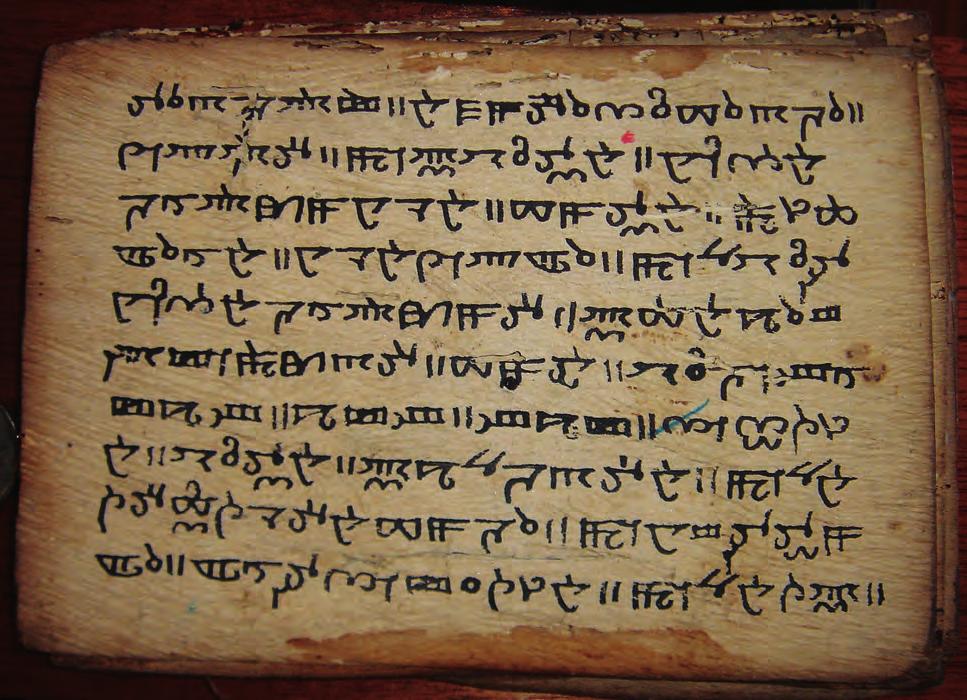
Every year, this day calls us back to a moment of collective pride and collective struggle — the recognition of Manipuri Language in the Eighth Schedule of the Constitution of India. That recognition was not handed to us; it was earned through the tireless devotion of linguists, writers, students, and ordinary citizens who believed that a language is not merely a means of communication but the very soul of a people’s identity.
Thirty-five years on, this year’s observance is being held jointly under the auspices of the Manipur Language Day and the Jawaharlal Nehru Manipur Dance Academy, a reminder that language, dance, and music are three threads of the same fabric — the composite cultural identity of Manipur.
A THEME DRAWN FROM THE STATE SONG
This year’s observation takes its message directly from Manipur’s own State Song, letting its melody carry an appeal for peace, unity, and integrity to every corner of the state. Manipur, in recent years, has passed through periods of great sorrow, division, and uncertainty. In such times, the shared Manipuri Language — spoken and cherished across communities, hills and valley alike — can serve as a quiet but powerful bridge. Language does not ask which hill or which valley one comes from; it asks only that people understand one another.
A day dedicated to language, therefore, is never merely ceremonial. It is an act of nation-building at the most intimate level — the level of the mother tongue, the lullaby, the folk tale, the proverb passed from grandmother to grandchild.
“Peace is not the mere absence of conflict; it is the presence of understanding.”
Unity, in this framing, is not uniformity but the harmonious coexistence of Manipur’s diverse communities — Meitei, Naga, Kuki and all who call the land home — bound together by shared histories and a shared future. Integrity, of the state, its institutions and individual conscience, is described as the foundation on which peace and unity must rest.
TRIBUTE TO ‘SANA LEIBAK MANIPUR’
The address paid tribute to the State Song, “Sana Leibak Manipur” — the golden land of Manipur — penned by lyricist B. Jayantakumar Sharma and set to music by the veteran composer Shri Aribam Shyam Sharma. The composition, it was noted, has for generations stirred a profound sense of belonging and pride in every Manipuri heart.
The song was originally tuned and broadcast by All India Radio, Imphal, carrying its melody into households across the state long before it received any official recognition — evidence, the address suggested, that true cultural symbols are often embraced by the people first and endorsed by the State afterward. It was only later that the Government of Manipur formally accorded it the status of State Song, with effect from 12 August 2021, giving official sanction to what had already lived in the hearts of the people for decades.
“In its melody lies unity; in its lyrics lies pride without prejudice; in its continued singing across generations lies integrity of memory,” the address noted, describing the song as a living embodiment of this year’s theme — one that speaks not of a single community’s glory, but of a golden land shared by all who dwell there.
CULTURAL NATIONALISM, REFRAMED
Addressing the question of whether observances anchored in language, music, and dance can serve as a genuine pathway toward cultural nationalism in Manipur, the address offered a qualified yes — with a clarification of what that phrase should mean.
Cultural nationalism, in its healthiest form, was described not as an exclusionary sentiment dividing “us” from “them,” but as the cultivation of a shared cultural consciousness strong enough to hold together the diversity within it. Celebrating Manipuri language, nurturing classical and folk dance traditions, and giving Manipur’s music a national platform were framed not as wall-building but as the construction of a shared house of memory, art, and pride that every community can inhabit on its own terms.
The address cautioned that if cultural nationalism is understood as an inward-looking pride that excludes Naga, Kuki, and other communities, it will only deepen existing wounds. Understood instead as a rooted, confident identity that reaches out rather than shuts out, occasions such as Language Day were described as genuine pathways toward a deeper, more resilient unity.
AN APPEAL TO YOUNG MANIPUR
A direct appeal was made to students and young people: to learn the language not as a burden of the classroom but as an inheritance of the heart, and to sing “Sana Leibak Manipur” not merely as a school-assembly formality but as a declaration of identity and belonging — carrying forward scripts, folk tales, classical dance forms, and music as the foundation of a confident, peaceful, and united Manipur.
POLICY SUGGESTIONS
The address suggested that the State Government could lend the observance greater practical meaning by putting the State Language into everyday official use. As a concrete first step, drawing on the precedent of Hindi Divas — observed nationally each year with official work conducted in Hindi for the day — it proposed that on Manipuri Language Day itself, all file noting and correspondence across every government office, department, and institution be carried out exclusively in the Manipuri language, once a year, as a practical demonstration of the language’s promotion. It further suggested that the Directorate of Language could consider setting up an institution, on the lines of a Council, dedicated to the promotion of the diverse dialects spoken among Manipur’s recognised ethnic communities.
CLOSING MESSAGE
Concluding the 35th observation of Manipuri Language Day, the address called for a renewed pledge to protect and promote the mother tongue, to use shared cultural heritage as an instrument of healing rather than division, and to work collectively — across every community, every hill and valley — for a Manipur defined by peace, unity, and integrity.
“Let the melody of ‘Sana Leibak Manipur’ continue to echo,” the address concluded, “not as a song of one community, but as the golden anthem of a shared and united homeland.”

The writer is a former Member of Parliament and a former Union Minister of State External Affairs and Education, Government of India.