
For decades, entrepreneurship in India’s North Eastern Region (NER) has been viewed through a lens of lack – a story about what the region doesn’t have: infrastructure, investment, or markets. These challenges are real, but they are not the whole truth.
Over the past two decades, however, India’s entrepreneurship ecosystem has undergone a remarkable transformation. The establishment of the National Skill Development Corporation (NSDC), the Atal Innovation Mission with its network of incubation centres, and a host of start-up incentives across states have fostered a new climate of innovation and risk-taking. This nationwide momentum has been further strengthened by digital connectivity, financial inclusion, and an expanding market for ideas. The North Eastern Region must now position itself within this national surge – not by imitation, but by leveraging its own unique strengths, culture, and geography.
The question isn’t what the North East is missing – it’s what it already has, and how those strengths can be harnessed differently. Around the world, smaller and less connected regions have built thriving economies. Vietnam, with a population density like Assam’s, has become a manufacturing hub. Thailand, with a smaller GDP than India’s, leads in tourism and creative industries.
The fundamental constraint for the NER isn’t geography, it’s mindset. It’s time to shift from a narrative of limitation to one of possibility.
Myth 1: “The Region Is Too Small and Isolated for Business”
Reality: The North East isn’t small – it’s strategically located. It borders five countries and connects India to over 700 million people in Southeast Asia. Few other Indian regions enjoy such proximity to international trade routes.
As Bangladesh’s economy rises, with an average GDP growth rate of 6.48% between 2014 and 2023 (despite the COVID-19 pandemic), it demonstrates that cross-border integration fuels growth. Projects like the India-Myanmar-Thailand Trilateral Highway and the ambitious Kaladan Multimodal Project can turn Imphal, Aizawl, and Guwahati into gateways to the ASEAN region supply chains. For entrepreneurs, this isn’t isolation — it’s access.
Myth 2: “The Market Is Too Small for Scale”
Reality: Digital technology has shattered the myth of small markets. A start-up in Tura or Kohima can reach customers in Mumbai, Singapore, or Berlin with a smartphone and logistics network.
Think of Zizira from Meghalaya, which sells indigenous produce globally, or Hill Wild Chocolates from Manipur, delighting customers across India. Scale today depends on imagination, not geography. If a YouTuber from Mokokchung or a fashion label from Aizawl can go viral nationally, the size of the city hardly matters – creativity does.
Myth 3: “The North East Lacks Infrastructure and Logistics”
Reality: Yes, infrastructure has lagged, but it is improving fast, and that’s precisely why it’s full of opportunity. Every new road, flight, and fibre network creates markets waiting to be served. Assam, for example, has seven airports – an unusual number for a state in India.
Take Agartala, which now enjoys the facility of India’s third Internet Gateway – a digital bridge that connects Tripura and its neighbours to the world. That’s not just a statistic; it’s a gateway to global opportunity. Start-ups in Tripura, and other north-eastern states can now collaborate with investors in Bengaluru or customers in Tokyo, in real time.
Myth 4: “The Region Has a Weak Industrial Base”
Reality: A weak industrial base can also be an advantage. The world is moving beyond factory-led industrialisation to knowledge and creative economies, where talent matters more than land or machinery.
From agritech to digital content, wellness products to app-based tourism, opportunities lie in innovation, not imitation. In this era, a laptop, an internet connection, and a good idea can be the most powerful factory floor.
Myth 5: “People Here Depend Too Much on Government Support”
Reality: That mindset is historical, not cultural. For decades, state jobs were considered the only stable source of livelihood. But the new generation is redefining that legacy.
Genuine self-reliance means using government support as seed capital for creativity. Across India, government schemes are increasingly acting as enablers rather than providers – encouraging private enterprise, innovation, and public–private partnerships. In the North East, a similar shift is underway. Programs promoting youth entrepreneurship, women-led enterprises, and local start-up incubation are already transforming attitudes. What matters now is to channel this support into innovation ecosystems, not dependence on subsidies – to make the state a catalyst, not a crutch.
Myth 6: “There’s No Entrepreneurial Culture Here”
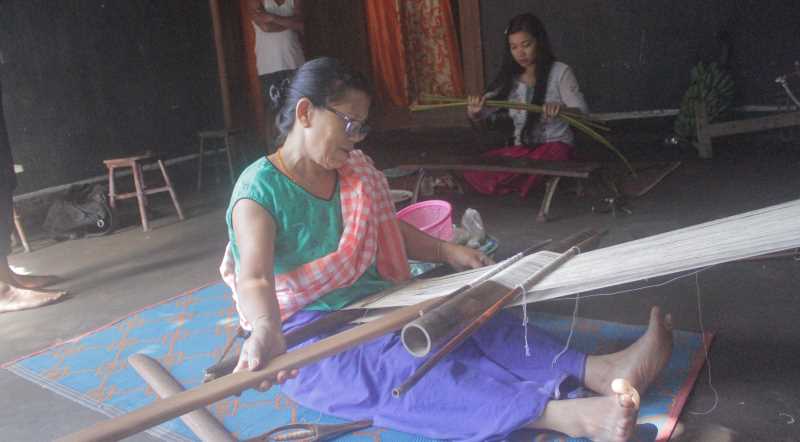
Reality: Entrepreneurship has always been part of the North East’s fabric – from community land systems to traditional handloom cooperatives. What’s changing now is visibility.
Walk through Assam Startup Nest, AIC- SELCO Foundation Incubator, or Prime Hub in Meghalaya, and you’ll find hundreds of young innovators – coders, designers, and eco-entrepreneurs proving that the culture is alive and thriving. What’s missing isn’t spirit; it’s a stronger ecosystem of mentors, networks, and champions.

Strengths Waiting to Be Claimed
Once we drop the myths, the North East Region stands out for what it already offers:
- Youth and Diversity: A young, multilingual, and creative population – agile and global in mindset.
- Natural and Cultural Wealth: Organic produce, bamboo, textiles, music, eco-tourism, and wellness – products that align perfectly with global demand for sustainability and authenticity.
- Community Cohesion: Strong local institutions and social networks can evolve into cooperative enterprises and collective brands.
- Sporting Potential: The region’s natural athleticism and passion for sports can be transformed into a thriving sports economy through professional leagues, sports tourism, training facilities, and allied industries.
- Strategic Geography: With India’s Act East Policy, the North East Region can become the country’s bridge to ASEAN through logistics, exports, education, and creative industries.
The New Mindset: From Dependency to Enterprise
Unlocking this potential requires more than funds or infrastructure. It calls for a psychological revolution – to stop waiting for opportunity and start creating it.
Three truths must guide the next generation:
- You are not too small to matter – ideas are global by default.
- You are not too far to compete – technology has erased distance.
- You are not too late to start – the North East Region can leapfrog, not follow.
A Decade of Possibilities
If this mindset takes hold, the next decade could be a transformative one. Imagine these:
- Entrepreneurial Corridors linking universities, incubators, and trade routes into innovation clusters.
- A North East Innovation Fund, co-managed by financial institutions like North Eastern Development Finance Corporation Ltd (NEDFi), private investors, and state governments.
- Expanding Vernacular Innovation, with start-up toolkits and marketing guides in local languages.
- Promoting Culturepreneurship – monetising music, art, and fashion rooted in local identity.
- Launching Rural Enterprise Missions to help farmers, artisans, and women’s collectives scale through branding and tech.
- Introducing programs that celebrate failure, making risk-taking part of the learning process.
These ideas are not utopian – they are already emerging across the region. What’s needed is confidence and collaboration to scale them.
From Margins to Mainstream
Entrepreneurship in the North Eastern Region is no longer a social experiment; it’s a national imperative. A thriving entrepreneurial ecosystem here strengthens India’s frontier economy, generates local jobs, and deepens ties with the ASEAN region.
The future of the North East won’t be written in boardrooms in Delhi or Bengaluru— it will be built in Imphal’s workshops, Shillong’s cafés, Aizawl’s studios, Sikkim’s farms, Itanagar’s innovation labs, Mokokchung’s creative corners, Khumlung’s ITI, and Cachar’s young enterprises — wherever someone dares to begin.
The North East Rising
Entrepreneurship in the North Eastern Region marks a shift from dependence-driven growth to enterprise-led development. The region need not replicate other models; its progress will depend on building pathways rooted in sustainability, creativity, and community participation.
The focus must move from development for the North East to development from the North East. Historically, women have been at the center of the region’s economic life, leading markets, managing cooperatives, and driving community trade systems. This tradition offers a strong foundation for inclusive and resilient entrepreneurship today.
As India’s start-up ecosystem expands, the North East can show how locally grounded and gender-inclusive enterprises can contribute to national growth. For this, policies and institutions must enable innovation, strengthen financing, and foster cross-border and inter-state collaboration.
The region’s rise will not come from imitation but from imagination, anchored in its identity, inclusive of its people, and connected to the broader world.

Biswanath Sinha is a senior development expert who has been working in the Northeastern region of India over two decades on livelihood, energy, healthcare, sports, WASH and other issues. Views expressed here are personal. He can be reached out at mbiswanath@gmail.com