
The landscape of Manipuri cinema has, for many years, been composed quite predominantly of family dramas and love stories, reliable family-friendly subjects targeting the mass audience of the state. These films are undoubtedly valuable in the context of culture and community. However, the limited thematic spectrum has ultimately prohibited Manipuri cinema from making significant attempts at national or international circuits, while intensely powerful and politically inspired, untold stories about the landscapes, histories, and lived experiences of life in Manipur are often left unspecified on the global stage.
In addition, the complete absence of formal film study institutions and the limited scope of exposure mechanisms to international cinema education and international film festival initiatives mean too many filmmakers submit films to festivals to which they hold no visibility or artistic credibility value. While thousands of festivals operate globally, only a very small percentage possess the prestige and mark of credibility necessary to a filmmaker’s career; this very distinction is being felt by many filmmakers located in the Manipuri film community. A handful of filmmakers have consistently sought to submit to these reputable festivals and have been keen to share the stories of Manipur beyond their localities.
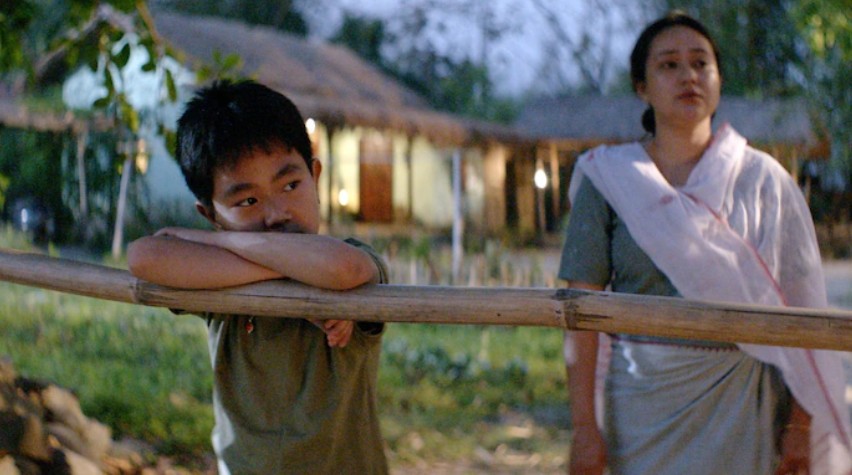
It is in this context that an extraordinary moment has created an exhilarating sense of excitement within the Manipur film community. Two films from Manipur were selected for the Indian Panorama at the 56th International Film Festival of India (IFFI), which is rare and a meaningful feat! National award-winning filmmaker Borun Thokchom’s feature-length documentary Battlefield was selected in the Non-Feature category, while debut filmmaker Dinesh Naorem’s 102-minute feature Oitharei (“Save My Soul”) was selected in the Feature Film category. It is profoundly meaningful recognition, especially as IFFI remains the only South Asian festival that is accredited for “Competitive Feature Films” by the International Federation of Film Producers’ Associations (FIAPF), which makes an entry to IFFI not only an honour, but it prompts serious consideration about the evolving standard of Manipuri cinema. In this context, Imphal Review of Arts and Politics (IRAP) exclusively spoke with Borun Thokchom, filmmaker of Battlefield, whose 10-year process of making the documentary has now culminated in this moment of selection.
Excerpt from the interview:
IRAP: Why did you choose this subject, and what story does Battlefield seek to reveal?
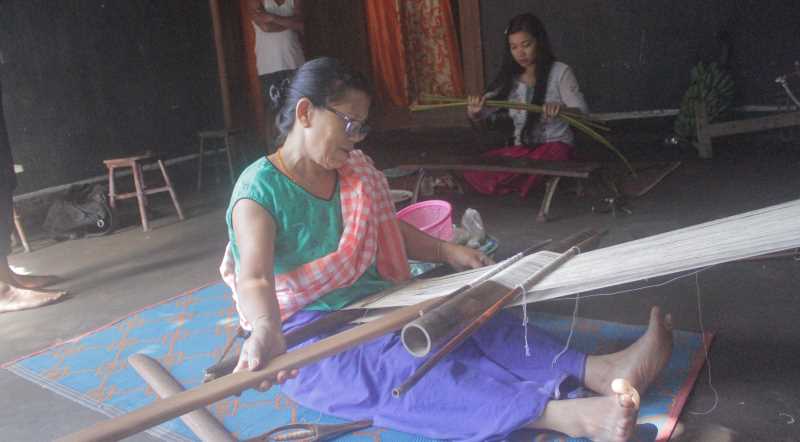
Borun Thokchom: First of all, I want to mention that the film is produced by Manjoy Lourembam, Dr. Radhesyam Oinam, and Viswamithra Universals. Battlefield explores the lingering effects of World War II in Manipur. Because it is a documentary, nothing could be scripted, so I couldn’t set a strict timeline. As I followed the story, the narrative kept shifting, and I had to keep changing the angle and approach. That is why it took me nearly ten years to complete the film. During shooting, I was constantly looking for funding and potential producers. It was only through the support of film lovers like Manjoy Lourembam and Tamo Radheshyam that I was able to complete the film.
IRAP: Where was the film primarily shot, and how did you decide on these locations?
Borun Thokchom: The film was shot across several parts of Manipur. I was lucky to have completed shooting before the current conflict began. I filmed in places where Japanese Imperial forces and Allied troops moved during World War II—Imphal, Chandel, Tamenglong, Ukhrul, Moreh. These areas witnessed major wartime action. The film also includes sequences shot in London. I coordinated with contacts there and worked with line producers to capture the material needed.
IRAP: World War II has inspired countless films. What makes your exploration of the war distinct from others in the global canon?
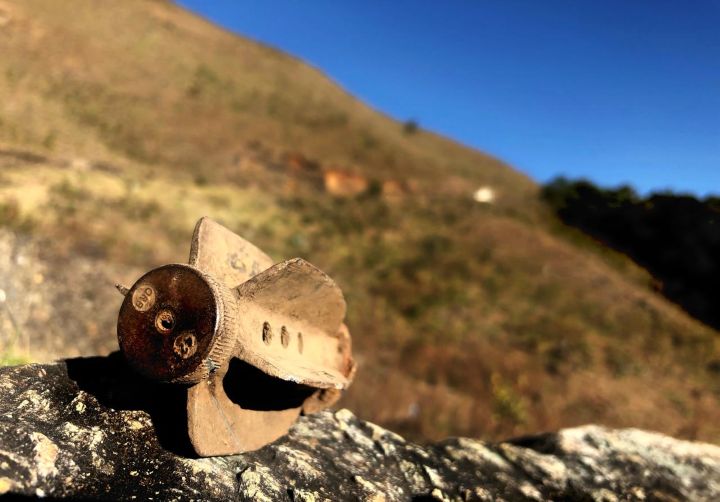
Borun Thokchom: There are thousands of films on the Second World War, and I have pitched mine at many forums, sometimes getting selected, sometimes not. But the story of Manipur’s war experience remains largely untold. During research, you’ll find that every home in Manipur has a unique wartime story. I collected these stories to create a documentary that speaks to future generations and highlights the lasting impact of the war. Even today, the effects remain. Live bombs are still discovered, and some have exploded. With ongoing construction, many unexploded bombs are likely still buried. Recently, during an excavation near Manipur University, various wartime objects, including bombs and ammunition, were found. The film also carries a message of caution regarding these dangers.
IRAP: Given the competitive nature of the Indian Panorama section, how confident were you about the film’s chances at IFFI?
Borun Thokchom: “I believed the production quality of my film was high. We had major sequences shot in Manipur and London. It became a large production, and I felt it reached an international standard. So yes, I was confident. I am very fortunate that it was selected. But this is only the beginning. The film will premiere at IFFI Goa, and I hope and pray it enters many more international festivals.”
IRAP: World War II is a massive and logistically demanding subject. What challenges—financial or practical—did you face while making this film?
Borun Thokchom: Honestly, the challenges I faced are the same ones most documentary filmmakers from small states face. We work with limited resources—and that’s putting it mildly. My story is not unique in that sense. Throughout the shoot, I was constantly searching for funding. But the real financial weight came during post-production. That stage requires a significant investment. I completed most of my post-production work in Kolkata—not because studios there are inherently superior, but because the technicians I collaborated with understood my vision. Their sensibilities aligned beautifully with the tone of my film. The team was not limited to Kolkata. Several key crew members are from Manipur. My associate editor is a close friend. My sound recordist, Tomba, has been with me on many projects. And Jeet Kshetricha, a Meitei professional based in Bengaluru, is my sound designer. Their contributions were vital. And the post-production was expensive, no doubt. But by God’s grace, producers came forward at the right moment to help me bring the film to this level.
IRAP: Documentary filmmaking in Manipur seems to be gaining momentum. What do you see as the current trend, and what do young filmmakers need to reach the level of international competition?
Borun Thokchom: Across the Northeast—and especially in Manipur—we have an extraordinary wealth of documentary material. We live in a place full of unexplored stories, many of which the world has never heard. The first responsibility of a documentary filmmaker is choosing the right subject. You must find a unique topic, but it should also be something you are genuinely passionate about. Only then can you tell the story truthfully and powerfully. The competition out there is intense, but if your story is extraordinary, it will resonate globally. The market will respond. You don’t need to make many films. What matters is making the right film, the one you care deeply about, even if it takes years. Documentaries don’t follow scripts; they evolve. You must give them time. Gradually, the story reveals the path you should follow.
We live in a competitive world. To stand alongside international films, we must invest properly in post-production. That’s where a film gains its polish, its global standard. Young filmmakers must aim for that level of excellence. We should all strive for it: because we can achieve it.
The road of battlefield towards achieving global recognition began long before its recognition at IFFI. The project was developed at an Imphal based named ‘Documentor’ (a five-day development lab for documentary projects), run by the Manipur State Film Development Society (MSFDS) in partnership with Kolkata based Documentary Resource Initiative (DRI) in 2022. The initiative aims to facilitate emerging voices in nonfiction by providing mentoring and strategic support to strengthen documentary projects in the early stages.
Documentaries as Manipur’s Strength: MSFDS on the Way Forward
With Battlefield’s recent achievement, the Imphal Review of Arts and Politics reached out to Sunzu Bachaspatimayum, Secretary of MSFDS. His response suggested pride with a clear sense of purpose, “This is very good news for Manipuri cinema and for Film Development Society,” said Sunzu, “Battlefield was incubated at Documentor in 2022, and its success indicates that we are moving in the right direction. We will continue to curate and nurture new talent so that our cinema reaches a truly global audience.”
When we asked him about the documentary filmmaking environment in the state and what can be done for Manipuri cinema to continue achieving those levels of success, he offered a frank opinion. “In fact, Manipuri cinema has always had its strong point in alternative cinema, not in mainstream narrative cinema,” he said. “Documentaries and reality-based films may not be in abundance, but they have consistently fared well in both national and international circuits.”
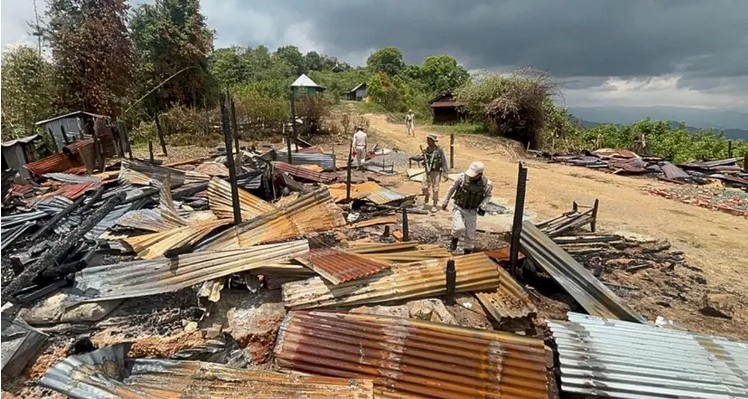
He also highlighted how important storytelling in the present circumstances is. “A lot of work needs to be done, and a lot more stories need to be told, particularly after the conflict situation in Manipur. I hope Borun Thokchom’s Battlefield inspires young filmmakers and new talents to step in and engage in reality cinema.”
The debutant Dinesh Naorem’s 102-minute feature film Oitharei (“Save My Soul”) is also included in the Feature Film section of the Indian Panorama. Imphal Review of Arts and Politics will be presenting an exclusive interview with this filmmaker soon, addressing how his debut made it to a distinguished film platform, and starting a broader conversation, about the future of fiction filmmaking in Manipur.
The writer is a media scholar and professional