At its crux, there are only two known ways of resolving a conflict of interests. One is to crush the weaker of the two with brute force and the other to reach a democratic consensus. The civilized norm of the modern world being the latter option, the need is to explore its possibilities, wherever conflict has come to stay, at least until a more perfected mechanism is evolved.
For the moment, what is predictable is that all putative future conflict would have to be by the latter conflict resolution mechanisms associated with the idea of the democratic system. This is so because it is known for its resilience and almost infinite accommodative capacity. But it must be acknowledged that often the most vocal advocates of democracy have regressed into the logic of an atavistic past where only force mattered. The objectionable interventions in the Middle East and West Asian by America led West have said this eloquently.
It is a matter of pessimism that war still seems unavoidable even in the days of democracy. Is it dishonesty of those who sit at the top of international power hierarchy professing democracy. Two decades ago, a UNDP Human Development Report, HDR, with the theme “Deepening Democracy in a Fragmented World”, had given hope. Today, that hope is threatened by the pattern of war the world is seeing.
One of the many interesting patterns of national behaviours that the UNDP report summarised from empirical data on wars in the second half of the 20th Century is, no two democracies have ever gone to war with each other. Quite obviously, these nations have discovered an alternative ground on which to thrash out vexed issues. The indication is also, democracy is a versatile medium for this meeting of minds and resolution of conflicts.
What happened ever since? Why has this optimism disappeared? What has led to the depletion of the awe that once was associated with international bodies, in particular the UN? Instead of the internalism that institutions such as the UN stood for, why has bloc politics now become increasingly predominant in a fractured international political equation?
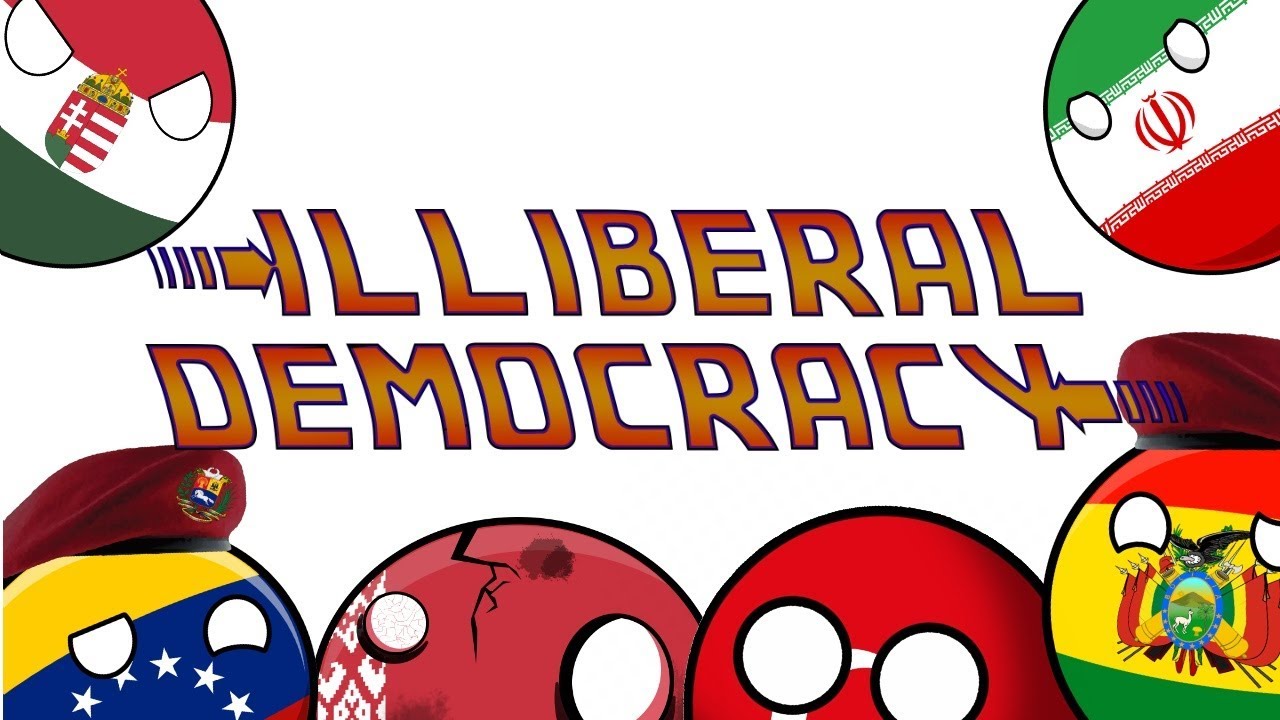
There cannot be any doubt whatsoever that the principle of dialogues and negotiations as the best conflict mechanism probably has not been replaced. This being so, maybe it is how the idea of democratic and non-democratic nation has been decided by the powerful West which is at fault. Maybe, democracy is more about a guarantee of humanistic values to citizens than the mere fact of being led by elected governments. How otherwise would an apartheid regime as in Israel be projected as the only democracy in the Middle East?
But again, maybe it is not systemic failure of democracy, but distortion of the system by those at the helm. If the system worked as per its design, probably there still remain no better conflict resolution mechanism than democratic dialogues of equal stakeholders. But it will do well to not forget that even while civilisation is at its peak, civilisational norms are only a veneer beneath which is the ancient instinctual beast in all of us and all our societies.
Even in our situation, there have been very strong tendencies on very many occasions for a return to the former method of conflict resolution, which basically has a one-line philosophy made famous by Joseph Conrad’s fictional character, Kurtz in Heart of Darkness – exterminate the brute. But, as in this story, the scale by which the “civilized” and the “brute” are measured and distinguished is very thin. The line dividing the exterminator and exterminated, can become extremely blurred.
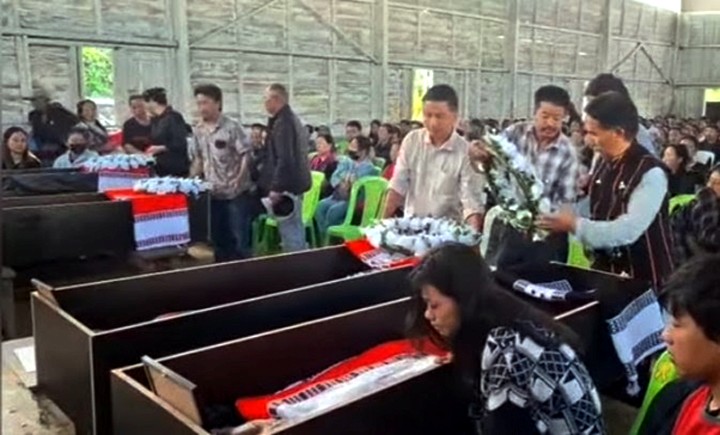
But the values of democracy, with its insistence on giving each and every one a say, regardless of numerical or physical strength, have generally managed to keep this tendency in check. There have been occasions when this inner moderation snapped, as in the case of the Naga-Kuki feud, Meitei-Meitei Pangal mayhem, and Kuki-Paite fratricide, of dark decade of the 1990s. The darkness of the decade is now enveloping the state again.
It would however be reasonable to presume that there could have been many more similar dark phases in between, but were prevented by the inner sinew of civilisation in us. Let the optimism alive that this same sinew will come to the fore again to end today’s ethnic mayhem too.
For indeed although our society seemed at certain junctures to have reached points of explosive of ethnic violence, it has held together its integrity of sanity. The reminder however is the dark forces of violence cannot be subdued for all times and periodic assessment of social conditions and timely redressal is a must. Even in times of peace, let us not forget we continue to sit on a dormant volcano which can with provocation come alive again. And provocations there have been and there will be always from those who either do not understand or believe in the healing power of accommodation and mutual respect that democracy recommends.
Even in the current tragic situation, there have also been plenty of talks of a dialogue between the civil societies of the different communities that are at loggerheads. This is welcome, but a dialogue devoid of a willingness to accommodate cannot possibly lead anywhere. A dialogue or a discourse is not simply about convincing the opposing party to surrender to the will of the other party, but of discovering, or rediscovering as the case may be, of common grounds on which to build the foundation of the future together.
By democracy we do not necessarily mean only the number game. This is a necessary ingredient, but it is far from being a sufficient condition. Equally important, it is also about justice, and in evolving this understanding of justice, the premium must be on reason and creative insights into what is common good.
Here the concept of freedom is also important. Without individual freedom, the aggregate of which is what constitutes freedom of larger social grouping, including the nation, there can be no democracy. But again, as philosopher Isaiah Berlin said, freedom cannot be without any conditions. Absolute freedom for the wolves translates into death for the lambs. Freedom then can make meaning only if it is moderated by reason and a commonly legislated rational law.

Editor, Imphal Review of Arts and Politics and author