Introduction: A Kingdom Beyond the Periphery
Manipur, nestled in the Indo-Myanmar borderlands, was not a peripheral province waiting to be absorbed—it was a sovereign kingdom with a written constitution as early as 1947. The Meitei, who form the majority within the valley region of Manipur, had established a sophisticated polity, language, script, and religious tradition. Their society thrived for centuries under kingship, reform movements, and literary efflorescence.
Yet, after the controversial merger with India in 1949, Manipur lost not just its political autonomy but also constitutional recognition of its historical trajectory. The process of state formation in post-independence India often conflated demographic majority with political dominance. This assumption overlooks the fragility of small, localised ethnic majorities, such as the Meitei, within a wider federal structure. As a result, the Meitei found themselves legally and administratively positioned as a majoritarian group but socio-politically treated as a dominant force that required no special protections.
This misalignment has exposed the community to demographic vulnerabilities, cultural dilution, and developmental marginalisation.
The Legal Vacuum: When History is Forgotten
India’s constitutional architecture provides safeguards—such as Scheduled Tribe status, Sixth Schedule provisions, and Inner Line Permit (ILP) mechanisms—to protect smaller indigenous populations from cultural erosion and economic displacement. However, despite fulfilling many of the criteria, the Meitei have been stripped of these protections in an absolute sense.
This exclusion is not just a legal oversight; it is the consequence of a historical misreading. Unlike other communities in the hills of Northeast India, whose protective status was preserved and often expanded, the Meitei were bracketed with mainland India’s majorities. However, their population is barely one and a half million, spread over less than 10% of Manipur’s total geographical area. The landlocked Imphal Valley, where the Meitei are concentrated, is encircled by hills and populated mainly by other tribal communities with constitutionally recognised rights over land and identity.
This land demography has created a paradox: the Meitei are the only indigenous group in Manipur who do not have the right to own land in the hill areas. At the same time, the valley remains legally open to settlers and external interests due to the lack of restrictive constitutional provisions. This asymmetry continues to deepen socio-economic disparities and breeds long-term insecurities.
Cultural and Demographic Vulnerability
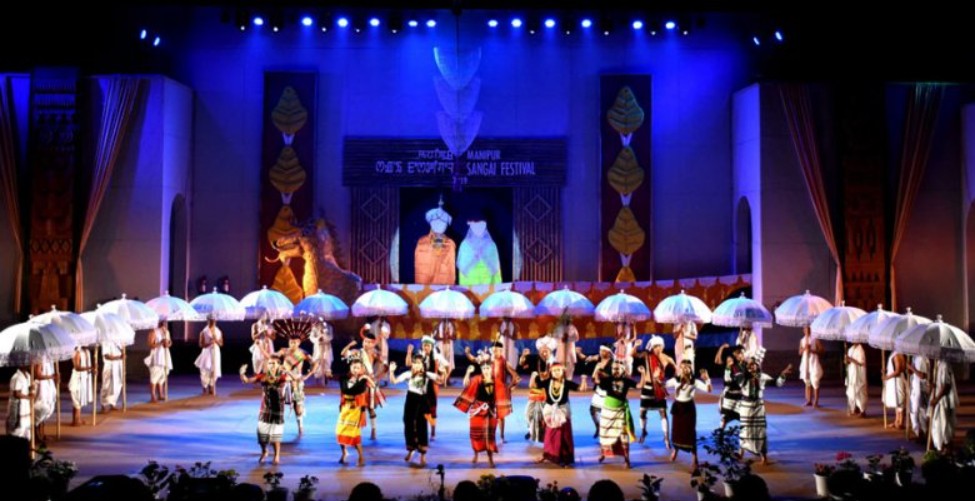
Culturally, the Meitei possess a wealth of intangible heritage, including classical dance, martial traditions, ancient manuscripts, and a syncretic faith that blends Hinduism with indigenous practices. Their language, Meiteilon, is officially recognised but remains under threat because of the absence of institutional investment and protective policies.
Demographically, there is growing anxiety over the shrinking space—both literal and metaphorical—for the Meitei identity. With rising immigration, inter-state movements, and economic pressures, and the opening up of railways, the Meitei homeland risks being overwhelmed. The Inner Line Permit system, introduced in Manipur in 2019, was implemented late and with limited retrospective effect. It provides some regulatory protection but cannot replace deeper constitutional safeguards, such as Scheduled Tribe status or an autonomous governance mechanism.
Rethinking Equity: Safeguards as Democratic Justice
It is crucial to understand that seeking constitutional safeguards for the Meitei is not a call for exceptionalism but an appeal for parity. The community’s historical exclusion from protective frameworks has denied it a level playing field in managing land, culture, and political representation. This neglect has also led to misinformed perceptions of the Meitei as a dominant force, when in fact, the profound structural vulnerabilities they face are often overlooked.
The Meitei need constitutional tools not to dominate, but to coexist meaningfully and sustainably. This includes the potential inclusion in the Scheduled Tribe list (a demand that has gained legal and scholarly support), protective mechanisms over land and resources, and recognition of traditional institutions of self-governance.
India’s federal promise was always built on accommodating differences. The Meitei, with their deep historical roots and geostrategic location, embody both difference and resilience. A democracy that values justice must recognise that majorities, too, can be vulnerable—especially when they are numerical majorities in a region but structural minorities in the national framework. The marginalisation of the indigenous Tiprasas in Tripura, who, like the Meteis, were the rulers of a kingdom for centuries, raises concerns for the Meiteis.
In this context, various cases of acts and regulations brought in at the national and state levels systematically put the Meiteis more into marginalisation within their ancestors’ land. We analyse some of the critical developments, post India’s independence, below:
Tabular Summary: Acts and Their Implications for the Meitei Community
| Policy / Act | Year | Objective | Implications for Meiteis | Resulting Challenge |
| Armed Forces (Special Powers) Act (AFSPA) | 1958 | To control insurgency in ‘disturbed areas’ of the Northeast | AFSPA was disproportionately enforced in the Imphal Valley (Meitei heartland), undermining democratic rights and civic space. | Civil liberties of Meiteis curtailed; militarisation of Meitei areas; alienation from the Indian state. |
| Manipur Land Revenue and Land Reforms (MLR & LR) Act | 1960 | To codify land ownership and tribal land protections | Meiteis are prohibited from owning land in ‘Scheduled Tribe’ areas (90% of Manipur’s hill areas). | Territorial confinement to the Valley (~10% of total area), leading to acute demographic pressure and landlessness. |
| Recognition of ‘Any Kuki Tribe’ as a Scheduled Tribe | 2003 | To constitutionally protect the rights of ‘Any Kuki’ under the Scheduled Tribes category | Formalised many tribes migrating into Manipur from other countries, especially Myanmar; reinforced political and land-based asymmetry. | Institutional exclusion of Meiteis from affirmative action and tribal land rights has led to a rise in ethnic competition and political fragmentation. |
| Suspension of Operation (SoO) Agreement with Kuki militant groups | 2008 (initially signed) | To bring the Kuki insurgent groups into a ceasefire and a political dialogue framework | Empowered armed Kuki groups through official recognition, allowing parallel governance structures in hill areas and reinforcing ethnic territoriality. | Undermined state sovereignty in hill regions; heightened ethnic polarisation; Meitei perception of state complicity in undermining valley interests; emboldened demands for separate administration. |
| Inner Line Permit (ILP) for Manipur | 2019 | To regulate the entry of non-indigenous persons into Manipur | Hills already protected by the Sixth Schedule; the ILP now also protects the Valley. However, ST areas remain exclusive. | Reinforced Meitei identity as ‘non-tribal’, despite being indigenous; exclusion from ST benefits while being constrained by ILP controls. |
From the above analysis, it is clear that while the majority tribe, the Meiteis, have been accommodative, situating themselves in the larger national polity, this has led to their gradual marginalisation. This historical trajectory of Meitei marginalisation in postcolonial India reveals a complex intersection of state policy, ethnic federalism, and securitisation in the Northeast. While the Meiteis have often been constructed as a “dominant” community within the Manipur Valley, this positionality is misleading when contextualised against pan-Indian structures of power, identity categorisation, and spatial access.
Territorial Constriction and Spatial Marginalisation
The MLR & LR Act of 1960, by freezing land ownership along ethnic lines, entrenched a geographic bifurcation between “tribal” hills and “non-tribal” valley. This created an artificial spatial ethnicity, wherein Meiteis (despite being indigenous) were confined to 10% of the state’s landmass, while having no right to own or settle in 90% of the hill districts.
Combined with rapid population growth and a lack of valley expansion, this confinement exacerbated socioeconomic stress among the Meiteis, manifesting in land fragmentation, urban sprawl, and increased migration pressure. Moreover, this spatial marginalisation contributed to the symbolic construction of the Meiteis as “settlers” within their historical territory.
Denial of Scheduled Tribe Status
Despite historical claims to indigeneity, the Meiteis remain excluded from Scheduled Tribe status under the Indian Constitution. This disqualifies them from land protections, educational and job reservations, and socio-political representation mechanisms afforded to other tribal groups in the state. Paradoxically, even smaller groups, such as the Anal, Moyon, and Monsang (with populations of a few thousand), enjoy ST recognition. At the same time, the 1.5 million Meiteis are denied it—rendering them numerically significant but constitutionally excluded.
Militarisation and securitisation
The application of AFSPA in the valley districts (Meitei-majority) has normalised a culture of surveillance, arbitrary detention, and impunity. The long-term militarisation has created generational trauma and eroded public trust in institutions, fuelling both insurgency and civil resistance movements. It is a well-known fact that between 1978 and 2012, the civil societies of Manipur had compiled 1,528 cases of extrajudicial killings by Indian forces. These cases were subsequently taken up by the Supreme Court of India. The majority of the victims in all these cases were the Meiteis.
Regional marginalisation: Assam and Tripura
Historically, the Meitei diaspora in Assam and Tripura was a part of the larger religious and linguistic continuum. The rise of ethnic nationalism and majoritarian politics in these states has increasingly labelled the Meiteis as ‘outsiders.’ In Assam, the discourse surrounding the National Register of Citizens (NRC) and the Citizenship Amendment Act (CAA) has delegitimised their long-standing presence. Just as a case in this regard, the Assam Chief Minister’s remark in July 2025, saying people from as far as Manipur were encroaching on land in Assam, created a fear factor among the Meiteis who have been settled in Assam for decades. Like with Tripura, the Meiteis’ association with Assam through royal matrimonial, etc, is well documented. In Tripura, Bengali demographic dominance and tribal assertiveness have marginalised Meitei voices, reducing them to a cultural minority with limited political agency.
Ethnicization of Policy and Rise of Competitive Autonomy
The 2003 ST recognition of “Any Kuki Tribe” and the subsequent rise of ethnic congregations like the Kuki Inpi, Zomi Council, etc., have institutionalised ethno-territorial politics. Meitei demands—such as for ST status or protection of valley lands—are increasingly seen as majoritarian or expansionist. This has made genuine redressal of their historical grievances politically unviable, especially in a context where ethnic militias, demographic anxieties, and cross-border affiliations dominate public discourse.
Conclusion: Toward a More Inclusive Federalism
Manipur’s future lies not in competitive victimhood but in constitutional inclusion. The path forward must involve respectful dialogue, historical clarity, and recalibration of policy. The Meitei must be seen not just as stakeholders of the past but as architects of a shared future in the Northeast—a future that upholds equity for all communities without denying the specific historical rights of any. The Meiteis occupy a paradoxical position in postcolonial India—numerically dominant within the state but structurally peripheral in the federal and constitutional order. They are a majority, just by a whisker, without ST protections, a community historically indigenous but not recognised as tribal, and a culturally rich group facing demographic, territorial, and legal exclusion.
As the Indian Union continues to experiment with asymmetrical federalism in the Northeast, the Meitei case prompts a re-evaluation of categories such as “tribal,” “indigenous,” and “majority”—not as static descriptors, but as evolving positions shaped by law, policy, and power. Granting constitutional safeguards to the Meitei is a necessary act of democratic repair. Preserving a culture is not the only goal; it also involves sustaining a people whose identity has endured through colonisation, merger, and marginalisation. As India continues to redefine its democratic ethos, the story of the Meitei must find its rightful place—not on the margins but at the centre of constitutional imagination.
Author’s Note:
This article is written with the belief that constitutional safeguards are instruments of justice, not tools of division. It invites further dialogue grounded in mutual respect, academic rigour, and a shared commitment to peace and dignity for all communities in Manipur and beyond.

Views expressed by the author are personal