When I was selected to be part of the Ashtalakshmi Programme in Manipur, organised by the Ministry of Development of North Eastern Region (MDoNER), I looked forward to the opportunity, but I also arrived with many questions and expectations. I had known Manipur primarily through its rich history, sporting achievements, diverse culture and the issues that frequently appear in the news. However, I soon realised that knowing about a place and actually experiencing it are two very different things.
The programme was designed to encourage young people to experience the North Eastern Region closely, interact with its people and cultures, and develop a deeper sense of understanding and national unity. For me, it became much more than a visit to another state. Over 14 days, I had the opportunity to travel through different parts of Manipur, visit places of historical and cultural significance, interact with administrators and local communities, experience traditional food and art, and observe everyday life.
What I discovered was a Manipur that cannot be understood through headlines alone. It is a land of remarkable natural beauty, rich traditions, sporting excellence, historical significance and resilient people. At the same time, I encountered realities and challenges that made me reflect on the diversity of experiences across different parts of our country.
This journey changed the way I look at Manipur and, in many ways, changed the way I look at India itself. These are some of the experiences, observations and memories that remained with me after those 14 days.
When I first came to Manipur, I honestly did not know exactly what to expect. I had heard about Manipur through its history, sports, culture and the issues that are often discussed in the news, but spending 14 days there gave me a completely different understanding of the place.
I did not just see Manipur as a tourist. I got the opportunity to stay there, travel through different places, interact with people, experience the food and culture, and observe everyday life. These are some of the things that stayed with me.
One of my first visits was to the Manipur Zoological Garden. It was exciting to see animals that I had mostly only seen in pictures or documentaries. The most special one for me was the Sangai deer, which is closely associated with Manipur and is one of the state’s most important wildlife symbols. We also saw cobras and leopard cats. The zoo itself involved quite a bit of walking, which was tiring but fun. There were also small shops around the area, and I ended up shopping for a few little things, which made the visit even more enjoyable.
One of the experiences that personally meant a lot to me was interacting with the District Collectors of Thoubal and Kakching. The sessions were very informative and interactive. Rather than just learning about administration theoretically, we got to understand what governance actually looks like on the ground and the responsibilities that come with being a civil servant. As someone who is interested in entering government service in the future, these interactions were particularly valuable to me. They gave me a better idea of the kind of responsibility and involvement required to work for the public.
We visited Shri Govindajee Temple, where we learned about its history and significance. We also visited ISKCON Temple. This was personally special to me because I have always loved ISKCON and had actually wished to visit one someday. I never imagined that my first visit would be to an ISKCON temple in Manipur. The atmosphere there was incredibly peaceful and serene. After the busy schedule of travelling and visiting different places, being there felt like a moment to simply slow down.
Ima Market was one of the places that felt very different from anything I had experienced before. The market, run predominantly by women, had so many products that were unfamiliar to me. I was particularly interested in the traditional Manipuri clothing. I bought a phanek, and I actually wore it on the day we received our certificates. I loved it so much that buying it became one of my favourite memories from Manipur. People even told me that I looked like a Northeastern girl when I wore it, which was a fun little moment for me.
The visit to the INA Museum and INA Headquarters was one of the most meaningful historical experiences for me. Learning about the Indian National Army and Netaji Subhas Chandra Bose was different when we were actually standing in a place connected with that history. The INA’s presence in Manipur is closely connected with the larger story of India’s freedom struggle, and the museum helped us understand the sacrifices, struggles and determination behind that history.
The Japan Peace Memorial also gave me an opportunity to look at the history of the region from another perspective. It reminded me of the enormous human cost of war and why remembering history should ultimately lead us towards peace rather than glorifying conflict.
The Khongjom War Memorial was another memorable experience but for a completely different reason! Getting there felt like a small trek. The climb was quite steep and honestly exhausting for me, but I had fun doing it. And when we finally reached the top, the view made the entire climb worth it. We could see a large part of the city from there, and that was one of my favourite views during the trip.
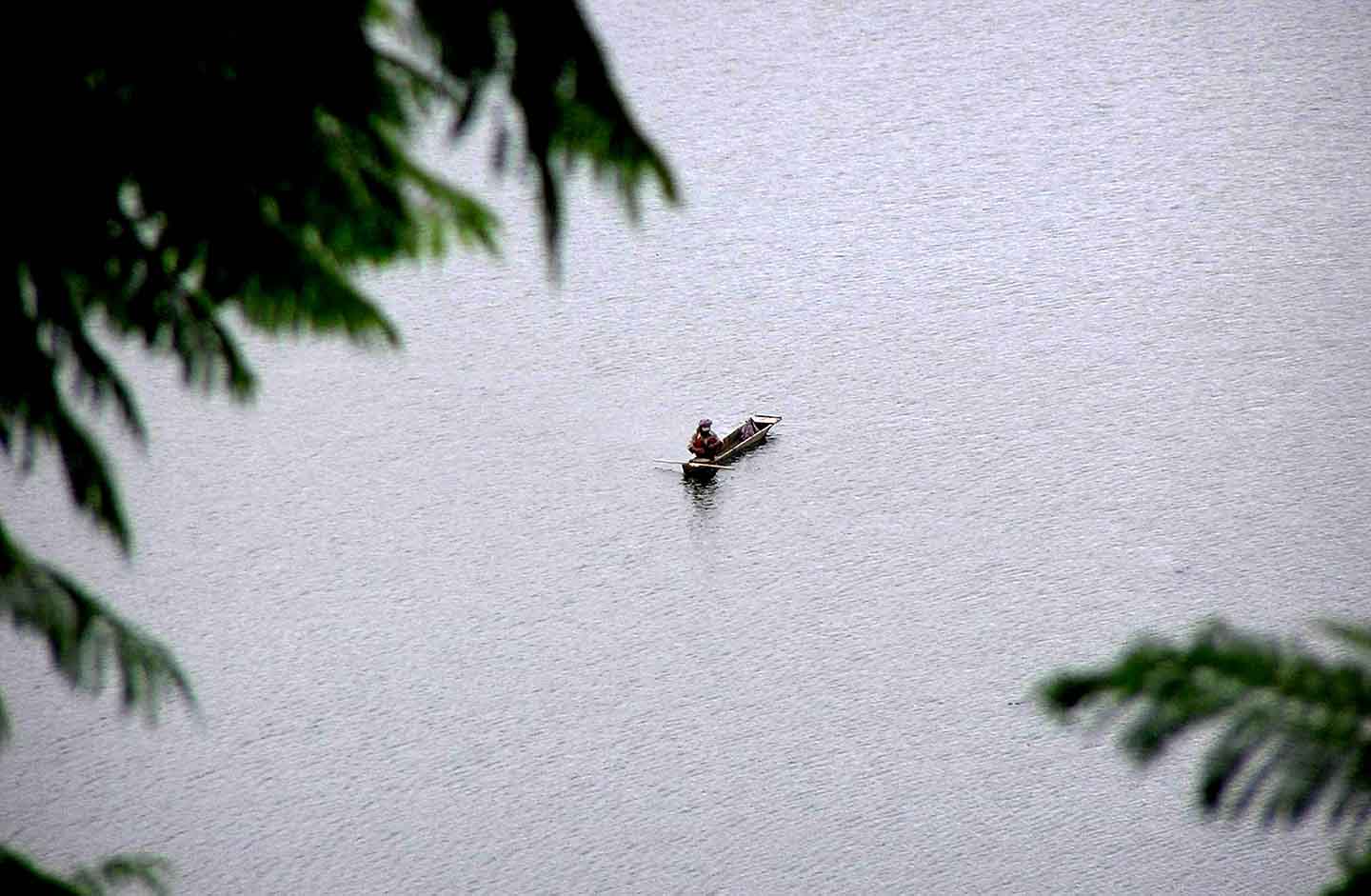
If I had to choose one place that visually stayed with me the most, it would probably be Loktak Lake. It was incredibly scenic. What fascinated me the most was seeing houses situated on the floating phumdis and watching people travel by boat between their homes and the mainland. Seeing people actually living that way was completely new to me. It felt almost unreal at first. I remember thinking, I could actually live like this! There was something incredibly beautiful and peaceful about the whole landscape. Loktak made me realise that nature isn’t always something that exists separately from people’s lives. For many people, it is part of their home, livelihood and everyday existence.
The biggest thing I noticed is that people know how to slow down. Perhaps the most personal observation I took from Manipur was the pace of life. People seemed much calmer and less rushed. In cities, we are constantly running from one thing to another. But in Manipur, I felt that people knew how to slow down and simply live. I genuinely loved that. At the same time, I noticed that people seemed quite physically active. From children to older people, I saw people involved in outdoor activities and sports. Manipur’s strong sporting culture was very visible.
What surprised me even more was that I did not see children constantly occupied with phones. I saw them playing, moving around and participating in physical activities. I don’t know whether this is directly because of the sporting culture, but it was certainly something I noticed. It made me think about how much our own lifestyles have changed and how easily we have become sedentary.
I also developed a much greater appreciation for Manipur’s sporting culture. Sports seem to be deeply connected with the identity of the state, including traditional forms and indigenous sporting practices. I also got to experience Manipuri dance and art forms. The costumes, movements and storytelling were beautiful. Many of the traditional performances have strong connections with Radha and Krishna, and I particularly enjoyed the visual beauty of the costumes and the expressions used in the dances. It made me realise that culture isn’t something that belongs only in museums. It is something that people continue to practise and carry forward.
At the same time, my experience was not only positive observations. I also saw things that surprised me and made me think. Even though Imphal is the capital city, some parts of the city appeared considerably less developed than I had expected. That was probably one of my biggest surprises. Coming from the South, I had a certain image of what a capital city would look like, so seeing Imphal made me think about the different challenges faced by the region.
I also noticed that roads could be extremely dusty. Whenever buses or bikes passed, the dust would rise considerably. For someone sensitive to dust, it could be quite uncomfortable. The architecture was also different from what I am used to seeing in South India. Many houses were single-storey structures with sloping roofs rather than multi-storey buildings. Commercial buildings were more likely to have multiple floors. These differences initially stood out to me, but over time I started seeing them as part of the region’s distinct character and environment rather than simply comparing everything with where I come from.
Another thing that stood out to me was the visible presence of security forces. I noticed army personnel at many places while travelling around the state. Coming from a place where I am not used to seeing such a visible military presence in everyday life, this was quite striking. Learning about Manipur’s geographical location, its proximity to Myanmar and the security challenges of the region helped me understand why internal security is such an important issue here. It also made me realise that the experiences of people living in different parts of India can be very different. Things that may feel distant or theoretical to us can be a very real part of everyday life for people in border states.
I also found the existence of women’s police stations particularly interesting. It was something I had not personally encountered before, and I appreciated the focus on creating a dedicated space for women to approach the police.
My experience with Manipuri food was probably the most mixed part of the trip. Fish is clearly an important part of the local diet, but since I don’t eat fish, I couldn’t really experience one of the major staples of Manipuri cuisine. I did enjoy some of the vegetarian dishes, especially a bamboo-based curry and a dal-like preparation. But the sweets were definitely a highlight for me. I particularly loved the sweet made using black rice. I also enjoyed the pineapple-based sweet. So, while I wouldn’t say I loved every meal, I definitely found the food interesting because it introduced me to flavours and ingredients that I don’t normally experience.
I genuinely enjoyed my 14 days in Manipur, and if I get the opportunity, I would love to go back not just as a visitor, but to explore more of the state and understand it even better. As my 14 days in Manipur came to an end, I realised that I was returning with much more than photographs and souvenirs. I was taking back stories, conversations, friendships, experiences and a deeper understanding of a part of India that I had previously known largely from a distance.
The journey taught me that the diversity of India cannot truly be understood from books, classrooms or news reports alone. It has to be experienced — by travelling, listening, interacting and seeing how people live, celebrate, work, preserve their traditions and face the challenges of their everyday lives.
From the Sangai deer and the floating phumdis of Loktak Lake to the history of the INA, the women of Ima Market, the sporting culture, traditional dances, temples and memorials, every experience added another dimension to my understanding of Manipur. Even the things that surprised or challenged my expectations became meaningful because they encouraged me to look beyond comparisons and understand the region on its own terms.
Most importantly, the programme strengthened my belief that national integration begins with understanding one another. India is not simply a country made up of different states; it is a shared home, made richer by the histories, cultures, traditions and aspirations of its many communities. Programmes that give young people an opportunity to experience this diversity firsthand can help replace unfamiliarity with understanding and distance with connection.
I am deeply grateful to the Ministry of Development of the North Eastern Region for giving me the opportunity to experience Manipur in such a meaningful way. I came to Manipur with expectations shaped by what I had heard. I left with memories shaped by what I had experienced.
If I get the opportunity, I would love to return to Manipur — not merely as a visitor, but as someone who now feels a genuine connection with the land and its people, and who wants to discover even more of this remarkable part of India.
Manipur gave me more than a journey. It gave me a new perspective on the diversity, resilience and unity that make India what it is.

The writer is a B.A Third-year student majoring in English Literature at Tagore Govt Arts & Science College, Pondicherry