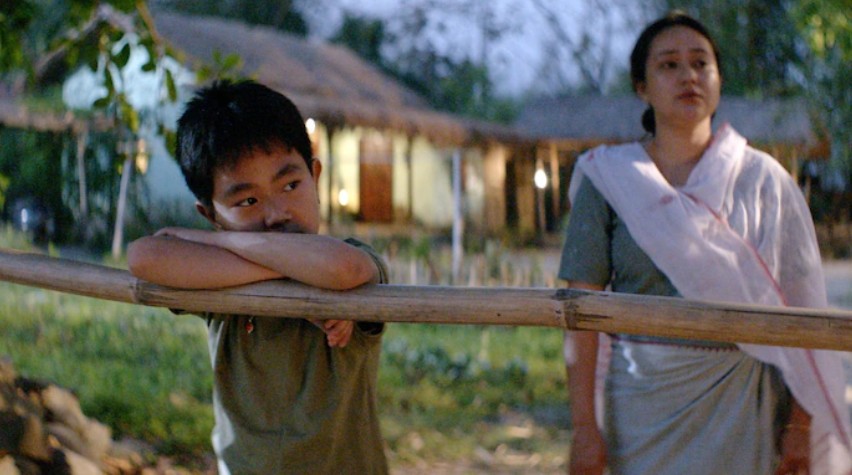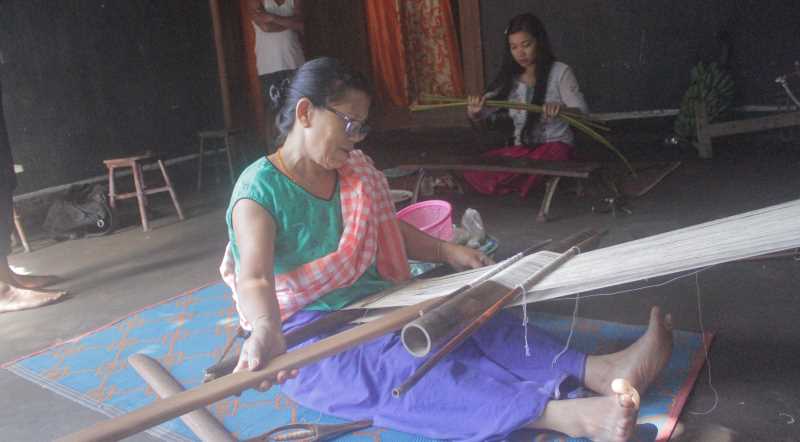
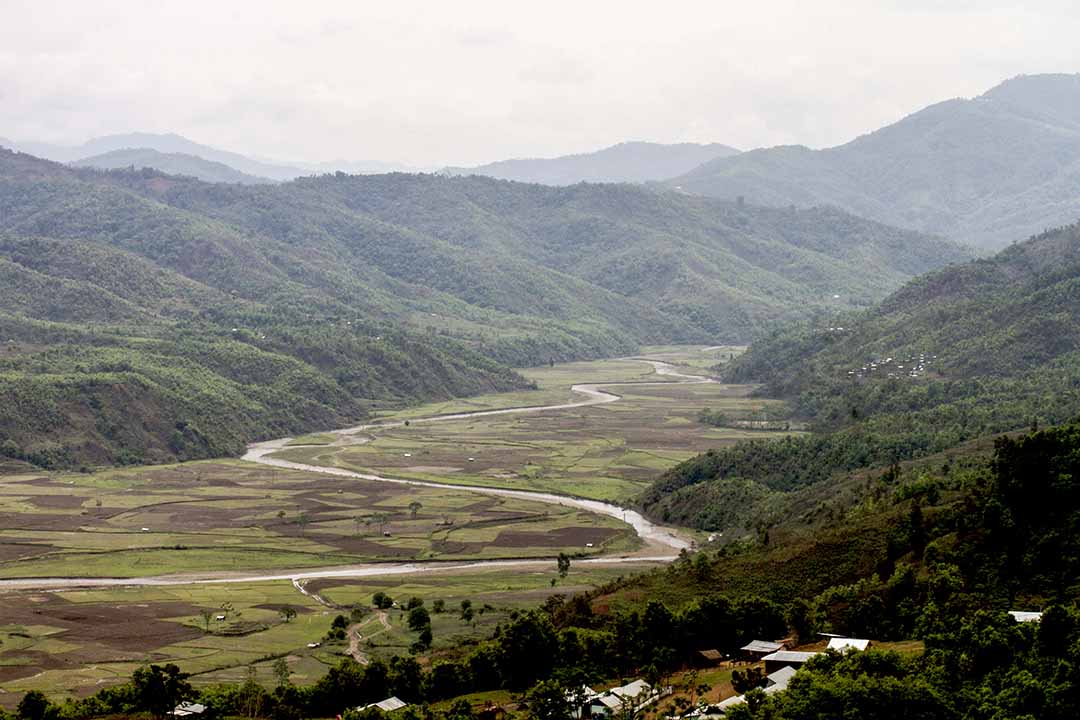
Having lived, taught and studied in the Maram area of Senapati district for six months, I observed closely how daily life, market rhythms and local decision-making intertwine. I got opportunities to interact with leaders, common people, students, youth, and elders, which allowed me to see Maram from multiple perspectives and understand the aspirations and challenges faced by different groups. Conversations with farmers, artisans, shopkeepers and local leaders in different villages made one thing clear: a strong community and an agricultural base exist alongside persistent frictions of market access and infrastructure. The daily movement of people between fields, markets and community gatherings illustrated the strength of local cooperation, while also exposing the challenges of limited roads, poor storage facilities and fluctuating market prices. I saw how village authorities played a critical role in community welfare, organising labour, mediating disputes and shaping decisions on resource use, reflecting both tradition and adaptability in governance. Women, in particular, carried significant responsibilities, balancing agricultural work with household management and craft production, yet they often lacked direct access to larger market networks. These realities, drawn from first-hand engagement, underscored that Maram’s prospects cannot be understood merely as geographic advantage but as the lived experience of communities striving for better opportunities. That direct experience informs this article’s emphasis on practical, evidence-based pathways for Maram to convert geographic proximity into sustainable commercial growth.
Maram lies within Senapati district in north central Manipur and occupies a position on the Imphal to Kohima corridor. The Imphal to Kohima route follows National Highway 2, an important arterial linking key population and market centres across Assam, Nagaland and Manipur (National Highway 2 (India), n.d.). Villages around Maram sit within a short drive of the district headquarters at Senapati; distance estimates for Maram Centre to Senapati are typically reported in the range of 17 to 27 kilometres, depending on the specific village and route (Senapati District, n.d.-a; OneFiveNine, n.d.). This locational advantage matters because shorter and more reliable transit times reduce transport costs, lower post-harvest spoilage of perishables and expand the catchment for visitors and buyers. Maram’s proximity to Dzuko Valley adds an eco-tourism dimension, making the area suitable for integrated agro-tourism and cultural tourism circuits between Kohima and Imphal (Wikipedia contributors, n.d.-b). With improved road reliability and logistics infrastructure, Maram could function as a micro hub on route corridors that are part of broader regional connectivity ambitions.
The Maram Naga community is the principal social group in the area and Maram Khullen is among the larger traditional villages in the district (Wikipedia contributors, n.d.-c). Ethnographic and census-era sources indicate that Maram language speakers and community counts are substantially larger than some informal estimates, and for formal planning it is best to reference census and district documents (Senapati District, n.d.-a). Women carry a central role in the agrarian economy across Manipur’s hill districts. They perform much of the cultivation, post-harvest processing and handicraft activity, and they are often the leading actors in market vending and household food provisioning. Local women’s organisations and cooperatives, already active in skill melas and community development, provide a strong platform to scale women-led value chains through training, access to credit and linkage to markets (The Assam Rifles, 2024; The Hindu, 2023). Community governance through village councils remains a central institutional form for land and resource decisions, and inclusive engagement with these bodies is essential when planning land-use changes or infrastructure projects.
Recent years have seen national and state interventions that directly affect Maram’s prospects. The Maram to Peren stretch, linked administratively under NH 129A, has been subject to phased construction works, widening and two-laning in packages documented by NHIDCL and related forest-clearance records (Gadkari, 2024). State-level inaugurations and district announcements in early 2025 highlighted a cluster of civic projects including rural development facilities, hostels and small-scale tourist circuit works aimed at strengthening local infrastructure and services (The Sangai Express, 2025). On the digital front, BharatNet is a central government initiative that seeks to provide high-capacity broadband to gram panchayats and rural institutions, with the national aim of enabling robust digital services and e-commerce in rural India (IBEF, n.d.). Local rollout schedules vary by state and district, therefore district IT and BBNL state cells should be consulted to confirm timelines for specific villages in Senapati. If implemented as envisaged, digital connectivity would allow artisans and producers in Maram to connect to urban buyers, integrate with e-marketplaces and access market information, while physical investments in aggregation and cold-chain infrastructure would reduce spoilage and raise realisable prices.
Maram’s economic opportunity is in building linked value chains around hill agriculture, bamboo and forest products, crafts and emerging tourism. Manipur shows comparative strengths in horticulture, bamboo and niche forest produce, and district-level planning documents including NABARD’s Potential Linked Credit Plan can be used to prioritise bankable MSME and farm projects (NABARD, n.d.). Post-harvest losses for perishable crops remain a recognised constraint across the region, and targeted investment in small cold stores, pack-houses and aggregation centres can materially reduce these losses and increase farmer incomes (ResearchGate, n.d.-a). Cross-border trade is an opportunity in principle since Moreh provides India’s formal land gateway to Myanmar and the Act East framework emphasises improved trade links with Southeast Asia (East Asia Forum, 2023). However, formalising and scaling cross-border trade requires customs facilitation, sanitary and phytosanitary standards, and regulatory alignment. For Maram, an initial focus on serving Imphal and Kohima markets with higher-value horticulture and processed products, coupled with tourism packages around Dzuko Valley and cultural homestays, offers a pragmatic path to build scale and market credibility before deeper cross-border engagement.
Transforming proximity into commerce will require careful attention to risks. Hilly topography raises construction and maintenance costs, and slope stabilisation, geo-technical screening and ongoing maintenance budgets must be built into project design (Gadkari, 2024). Dzuko Valley and adjacent ecosystems are ecologically sensitive, and tourism development must be regulated by capacity limits, waste management and restoration measures to avoid degradation (Wikipedia contributors, n.d.-b). Village councils and customary land rights are central, so inclusive zoning and negotiated land-use plans are essential to avoid disputes and to ensure benefits reach local holders. Several previously cited monetary and percentage figures for local markets could not be verified from primary district data. For operational planning, NABARD PLP, district statistical handbooks and official DIPR releases should be used in place of unsourced estimates. Addressing these risks requires phased pilots, robust local consultation and a transparent monitoring framework that tracks social, environmental and economic indicators.
Maram’s trajectory finds resonance in international examples where small towns leveraged targeted investments to become trade gateways. Experiences from Savannakhet in Laos and Lao Cai in Vietnam show that special economic zone infrastructure, dry ports and customs facilitation can transform rural nodes into active corridors when accompanied by firm governance and private-sector engagement (Invest Laos, n.d.; Vientiane Times, 2022). For Maram, this means combining infrastructure upgrades with climate resilience measures such as landslide-resistant road design, sustainable forestry practices and climate-smart agriculture to safeguard investments against increasingly volatile weather patterns. Governance reforms to address bureaucratic delays and transparent fund flows will be critical to sustain investor confidence. If digital connectivity, logistics investment and inclusive policy instruments align over the next decade, Maram could evolve into a resilient, people-driven trade and cultural corridor that links parts of Manipur, Nagaland and, selectively, Myanmar, while preserving its ecological and social capital.
Maram’s position along NH 2 and its proximity to Imphal and Kohima present a grounded and evidence-based basis for building a micro hub of trade, agro-processing and eco-cultural tourism. Realising this potential depends on sequencing investments such as pilot aggregation and cold-chain infrastructure, women-centred value-chain development, digital market integration and carefully regulated tourism. Projects already announced at the district level create a timely window for action, but success will require inclusive consultation with customary institutions, protection of fragile ecosystems and measurable governance transparency. With calibrated investment, climate-sensitive design and an emphasis on local ownership, Maram can convert proximity into prosperity and in doing so serve as a model for other hill regions in the Northeast.
References
East Asia Forum. (2023). Harnessing economic potential in India’s northeast. East Asia Forum. https://www.eastasiaforum.org
Gadkari, N. (2024, February 15). NH129A upgrades and Maram–Peren road development [X post]. X (formerly Twitter). https://x.com/nitin_gadkari/status/1758234893089177772
India Brand Equity Foundation (IBEF). (n.d.). Manipur: State report and economic growth trends. IBEF. https://www.ibef.org/states/manipur
Invest Laos. (n.d.). Savan–Seno Special Economic Zone (SEZ). Ministry of Planning and Investment, Lao PDR. https://investlaos.gov.la/where-to-invest/special-economic-zone-sez/savan-seno-special-economic-zone
NABARD. (n.d.). Potential Linked Credit Plan-Senapati District. NABARD. https://www.nabard.org
National Highway 2 (India). (n.d.). In Wikipedia. Retrieved September 29, 2025, from https://en.wikipedia.org/wiki/National_Highway_2_%28India%29
OneFiveNine. (n.d.). Maram Centre village data. Retrieved September 29, 2025, from https://www.onefivenine.com/india/villages/Senapati/Tadubi/Maram-Centre
ResearchGate. (n.d.-a). Problems of border areas in North East India. ResearchGate. https://www.researchgate.net/publication/335040601
ResearchGate. (n.d.-b). Opportunities of border trade in North East India. ResearchGate. https://www.researchgate.net/publication/348812489
Senapati District, Government of Manipur. (n.d.-a). About district. Retrieved September 29, 2025, from https://senapati.nic.in/about-district/
The Assam Rifles. (2024, July 10). Skill melas in Senapati: Youth empowerment programmes [X post]. X (formerly Twitter). https://x.com/assamrifles/status/1811010039282116640
The Hindu. (2023, November 14). Naga council in Manipur seeks to enforce trade embargo. The Hindu. https://www.thehindu.com/news/national/other-states/naga-council-in-manipur-seeks-to-enforce-trade-embargo/article67416365.ece
The Sangai Express. (2025, January 21). Chief Minister N. Biren Singh highlights transformative projects in Senapati district. The Sangai Express. https://www.thesangaiexpress.com/Encyc/2025/1/21/Chief-Minister-N-Biren-Singh-highlights-transformative-projects-in-Senapati.html
Vientiane Times. (2022, September 15). Savannakhet SEZ attracts $584m investment, 193 firms. Vientiane Times. https://www.vientianetimes.org.la/sub-new/Previous_220/freeContent/FreeConten2022_Savannakhet220.php
Wikipedia contributors. (n.d.-b). Dzükou Valley. In Wikipedia. Retrieved September 29, 2025, from https://en.wikipedia.org/wiki/Dz%C3%BCko_Valley
Wikipedia contributors. (n.d.-c). Maram people. In Wikipedia. Retrieved September 29, 2025, from https://en.wikipedia.org/wiki/Maram_people
Yatra.com. (n.d.-a). Distance between Imphal and Kohima. Yatra.com. https://www.yatra.com/distance-between/distance-from-imphal-to-kohima.html

Dr. Aniruddha Babar is a senior academician, policy analyst, writer, and researcher currently serving in the Department of Political Science, St. Joseph College, Ukhrul, Manipur. He is also the Co-Founder and Deputy Director of the Centre for North-East Development and Policy Research (CNEDPR), St. Joseph College, Manipur