
The earliest known mention of the name Gosai in Manipur appears during the reign of Meidingu Charairongba (1697–1709 A.D.), as recorded in the royal chronicle Cheitharol Kumbaba (Khelchandra & Ibungohal, 2005: 68). Yet, the precise origin and significance of the title Gosai, especially in the context of Brahmin figures like Shanti Das Mahanta (also known as Shanti Das Gosai), Nabakishore Goswami, and Chandra Goswami, remain subject to historical ambiguity.
While the etymological roots of the title Gosai are uncertain, it is widely accepted as a religious honorific conferred upon spiritually prominent individuals, particularly among Brahmins. Similarly, the title Goswami—not necessarily a hereditary surname—was bestowed on ascetic figures of elevated religious standing, often transcending caste and region.
The Migration of Shanti Das
According to Bamon Khunthoklon, a traditional manuscript chronicling the arrival of Meitei Bamons, Shanti Das Mahanta, also referred to as Lamboiba, arrived in Manipur during the reign of Meidingu Garibniwaz (1709–1748 A.D.). He is said to have migrated from Sylhet (present-day Bangladesh) and married Pamheiba Chanu Wangamlon, a Meitei princess. Notably, he reportedly left no
descendants (Bamon Khunthoklon, Munan Meitei: 9).
This account is corroborated by the Meitei Ningthourol, which states that in 1716 A.D., Shanti Das Gosai, a preacher of the Ramanandi sect from Narsingh Tilla in Sylhet, came to Manipur (Bormani, 2000: 106). Scholar Padma Shri Khelchandra Singh affirms this narrative in his Ariba Manipuri Sahityagi Itihas (1992: 35), while the Cheitharol Kumbaba refers to him as “Guru Mahanta” (Khelchandra/Ibungohal, 2005: 86, 93). Noted historian Professor Gangmumei Kabui, referencing Sanamahi Laikal, describes his arrival thus: “After the departure of Guru Gopal Das, the new preceptor appears to be Shanta Das Mahanta Beiragi from Narsingh Tilla of Sylhet in Bengal.” (History of Manipur, Vol. I, 1991: 252)
Migration of the Gosaimayum (Goswami) Families
In contrast, the present-day Gosaimayum/Goswamimayum families trace their ancestry to a different lineage altogether. According to Bamon Khunthoklon, Chandra Goswami migrated from Shantipur (West Bengal) during the reign of Meidingu Narasingh as regent (1834-1844 A.D.). His ancestry is linked to the renowned Advaita Acharya Prabhu (1434–1559 A.D.), a principal figure of the Bhakti movement and disciple of Chaitanya Mahaprabhu. The lineage follows through Advaita’s second son, Krishna Mishra, down to Isworchandra Goswami, also known as Chandra Goswami.
Isworchandra Goswami married Adhikarimayum Chanu Leima, a close relative of Maharaj Narasingh, and their descendants form the contemporary Gosaimayum families (Bamon Khunthoklon, Munan Meitei: 11). These families are predominantly concentrated in the Wangkhei and Kongba regions of Imphal East district, Manipur. The Cheitharol Kumbaba also records that a daughter of Thakur Tantradhar was married to a “Gosai” during this period (Khelchandra/Ibungohal, 2005: 273). Historians widely agree that this “Gosai” was Isworchandra Goswami, as no other individual bearing that title is known to have migrated during Narasingh’s
reign.
Isworchandra’s father, Nabakishore Goswami, had earlier arrived in Manipur during Gambhir Singh’s reign (1825–1834 A.D.) but eventually returned to Bengal. Isworchandra later returned, settled permanently, and adopted the honorific Gosai, possibly following his father’s spiritual path. Whether the title was adopted before or after his final migration remains unclear. However, it is
evident that only his descendants remained and became established as the Gosaimayum/Goswami families of Manipur. Others, like Shanti Das, either died childless or returned to their native place.
Profession-Based Surnames and Title Adoption in Manipur
In line with Manipur’s long-standing tradition of assigning surnames based on occupation and social function, many migrant Brahmins and Kshatriyas took on names reflective of their status or duties. The term Gosai, when adopted as a surname by descendants of Chandra Goswami, evolved into Gosaimayum, meaning “lineage of Gosai.” This is consistent with naming conventions such as: Guruaribam, Gurumayum, Phurailatpam, Shamurailatpam, Bishnulatpam, Hanjabam, Kshetrimayum, and Lairikyengbam etc.
For instance, Thakur Sarbananda Bannerjee from Kanauj was appointed Bamon Hanjaba (chief of Brahmins) during Garibniwaz’s reign. His descendants adopted Hanjabam as their surname. However, not all who held the Hanjaba title inherited the surname—underscoring that title and lineage were not always synonymous. Similarly, although Shanti Das Mahanta may have been referred to as Gosai, this did not confer clan affiliation. His original surname could well have been Mahanta, Das, or something else entirely. The title alone does not establish lineage.
Distinction Between Religious Titles and Lineage-Based Surnames
It is imperative to distinguish between Gosai/Goswami as spiritual titles and Gosaimayum/Goswami as hereditary clan names. In Hindu religious tradition, Gosai or Goswami was an honorific often unrelated to familial descent. In Manipur, surname adoption was governed
by cultural and legal codes, such as those in the Loiyumba Shilyen (Yumnak Mashil), which categorized surnames based on functional and professional roles. The use of Goswami as a religious title continues to transcend genealogical boundaries. A modern example is Satsvarupa Dasa Goswami, a disciple of ISKCON founder A.C. Bhaktivedanta Swami Prabhupada, who adopted the title Goswami without any ancestral link to the Goswami clan. Hence, sharing a spiritual title like Gosai does not equate to sharing ancestry.
Conclusion
There is no credible historical evidence linking Shanti Das Mahanta—referred to as Gosai—to the present-day Gosaimayum/Goswami families of Manipur. His spiritual stature and royal marriage notwithstanding, he left no descendants, as noted in Bamon Khunthoklon. Historian Prof. Gangmumei Kabui records that Shanti Das was assassinated along with Maharaj Garibniwaz in 1748, effectively ending his personal lineage in Manipur.
In contrast, the Gosaimayum (Goswami) families trace their lineage to Chandra Goswami, who, as noted earlier, arrived in Manipur in 1834—more than a century after the arrival of Shantidas Gosai in 1716. Moreover, their places of origin were geographically distant, separated by over 500 kilometers: Chandra Goswami the progenitor of Goswami/Gosaimayum clan in Manipur hailed from Shantipur in West Bengal, while Shantidas Gosai came from Sylhet in present-day Bangladesh.
It is, therefore, historically inaccurate and deeply regrettable that certain narratives continue to claim descent from Shanti Das Gosai. Such assertions lack scholarly basis and serve only to cloud the authentic lineage of the Gosaimayum families, whose origins are well-documented and distinct.
In sum, Gosai and Goswami as religious designations must be carefully distinguished from Gosaimayum and Goswami as hereditary clan identities—each representing separate and significant legacies within the rich cultural history of Manipur.
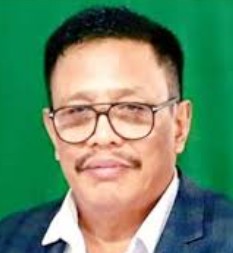
The writer is an author and political activist