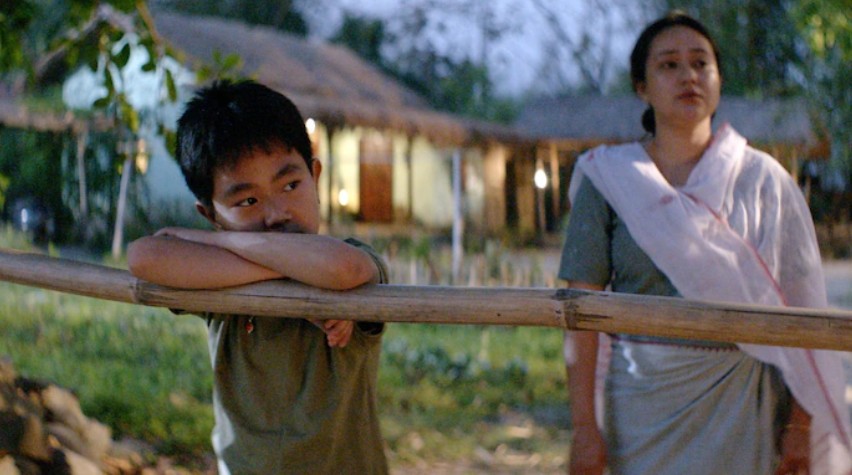
Manipur, a north-eastern Indian state that shares a long frontier with Myanmar, is a region of stark contrasts: rich biodiversity and cultural vitality coexist with entrenched structural underdevelopment, particularly in its border hill districts. Ukhrul, Kamjong, Chandel, Churachandpur, Tamenglong, Senapati and Pherzawl occupy most of Manipur’s 22,327 square kilometres yet host a minority of its population, primarily Naga and Kuki tribal communities. Official figures show the state’s per capita income at about ₹79,797 in 2020–21, but disparities between the valley and the hills are wide, with the latter lagging behind in income and opportunities (NITI Aayog, 2025). These districts remain heavily dependent on subsistence agriculture, especially jhum or slash-and-burn cultivation, which delivers low yields, degrades soils and provides little surplus for markets. Weak connectivity, fragile institutions, and recurrent ethnic tensions exacerbate underdevelopment, and persistent out-migration of educated youth depletes the human capital essential for long-term progress. The imbalance between natural wealth and human deprivation underscores how geography and governance interact to create marginalisation. Unless addressed, these contradictions will continue to erode trust in the state and weaken national integration. The question, therefore, is not whether development is needed but how it can be pursued in ways that are both inclusive and sustainable.
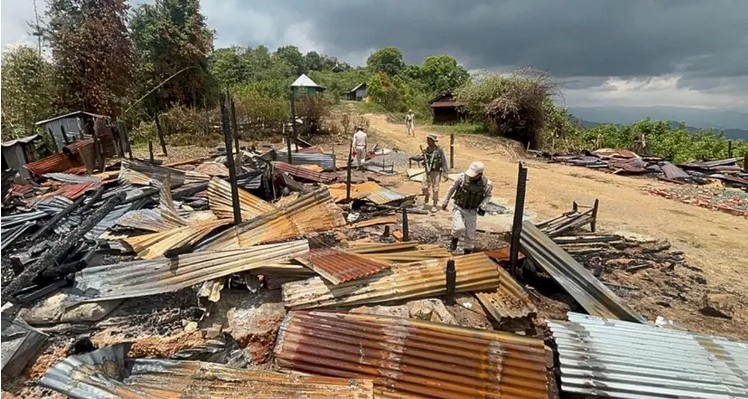
The hill economy suffers from interlocking constraints that reinforce one another in a vicious cycle. Rugged terrain and poor transport links raise transaction costs and restrict market access, while lack of all-weather connectivity discourages traders and investors. Rain-fed agriculture and minimal irrigation infrastructure reduce resilience to erratic rainfall, exposing communities to food insecurity and poverty traps. Customary land regimes complicate formal investment, and recurrent insurgency and extortion deter enterprise, creating an atmosphere of uncertainty. Recent conflict has displaced thousands of households and stalled projects worth several thousand crore rupees, while smuggling and illicit cross-border trade undermine formal economic activity (Chatterjee, 2025; Bajpai, 2025). Poppy cultivation has emerged as a particularly disruptive factor: official monitoring identified 4,568 hectares of land under poppy in 2023-24, linking hill livelihoods to narcotics networks and criminal financing (Lok Sabha, 2024). These pressures corrode trust, displace licit activity and weaken incentives for returnees or outside investors. In such a context, underdevelopment cannot be understood as a mere lack of infrastructure but must be seen as an entrenched political economy shaped by insecurity and exclusion. Tackling these structural barriers demands not piecemeal fixes but integrated solutions that align local aspirations with national priorities.
Migration patterns further underline the systemic weaknesses of the hill districts. Data show significant out-migration of students and young workers, where literacy rates average 65 per cent compared with 80 per cent in the valley (NITI Aayog, 2025). With limited higher education and job opportunities locally, youth seek livelihoods in metropolitan cities such as Delhi and Bangalore or abroad, often in employment below their qualifications. Conflict further pushes migration, while cultural disconnection and family pressures amplify the trend. Educated unemployment has at times fed frustration and even recruitment into insurgent groups (Singh, 2016). The COVID-19 pandemic exposed vulnerabilities when returnees found little local support or opportunity, leaving them disillusioned. The outflow of human capital also creates a demographic imbalance, as older populations are left behind without adequate care or economic support. This dynamic not only weakens the economic base but also erodes social cohesion and cultural continuity. Migration thus becomes both a symptom and a cause of underdevelopment, locking the hills into a cycle of dependency. Unless the incentives to stay and return are created, the best talents will continue to leave, and with them the prospects of revival.
Infrastructure development is therefore indispensable if this cycle is to be broken. Roads, broadband and energy access reduce costs, broaden markets and make return migration feasible, creating the backbone for all other reforms. Recent initiatives such as the sanctioning of 57 roads and drainage projects worth ₹7,300 crore in tribal areas, and 40 HADP projects worth ₹84.29 crore in Tamenglong and Noney, signal attention to hill disparities (Laishram, 2025; Press Information Bureau, 2017). The North East Special Infrastructure Development Scheme (NESIDS) has funded over ₹3,400 crore of projects across the region (Press Information Bureau, 2024). Yet implementation remains uneven, with valley areas attracting greater investment (Haokip, 2023). Transparent governance and community participation are essential to ensure that sanctioned funds translate into functioning infrastructure. Connectivity improvements, aligned with the Act East Policy, can unlock cross-border trade via Moreh and enable digital work platforms that offer alternatives to migration. Infrastructure is not just about building roads or bridges; it is about connecting people, opportunities and markets in a way that generates trust. When infrastructure serves local needs and is implemented transparently, it also becomes a tool for peacebuilding. Thus, physical connectivity must go hand in hand with social connectivity if real transformation is to occur.
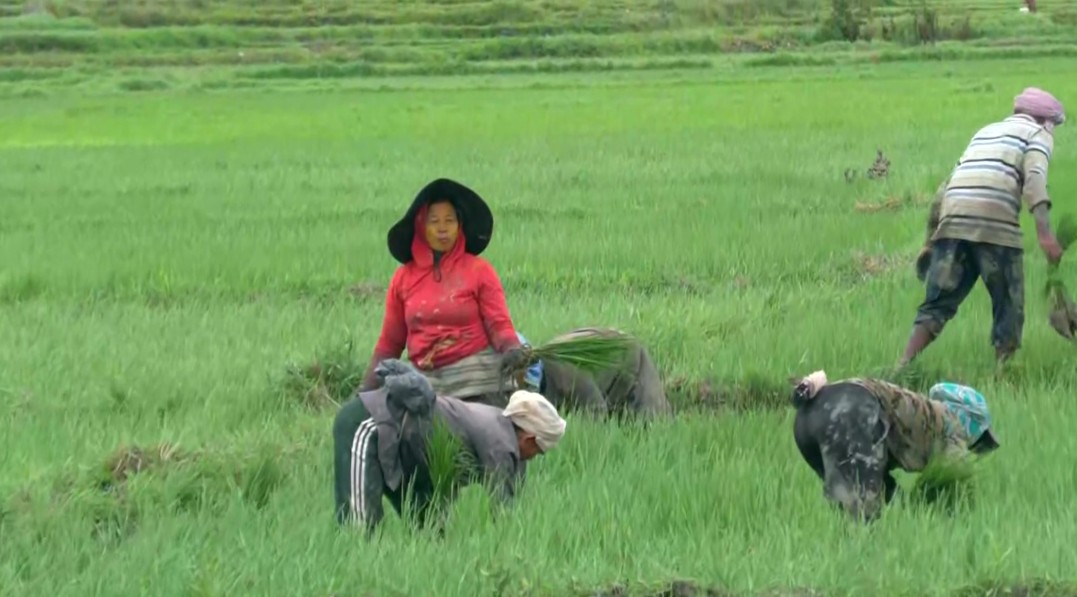
Agriculture must also be repositioned at the heart of transformation. The present reliance on jhum is ecologically damaging and economically insufficient for sustaining households. Manipur’s Department of Horticulture identifies 2,77,064 hectares of land suitable for horticulture, with potential in fruits, vegetables and spices (Thakur, 2025). National schemes such as the Mission for Integrated Development of Horticulture (MIDH) and One-District-One-Crop initiatives encourage specialisation and value addition (MIDH, 2025). Farmer producer organisations and cooperatives can improve bargaining power, while investments in micro-irrigation, nurseries, soil health and post-harvest processing strengthen sustainability. Linking agro-products to export chains through border infrastructure enhances economic returns. Transitioning households towards agroforestry and sustainable farming requires compensation mechanisms and guaranteed markets to mitigate risks during change. Agriculture, if modernised, can provide dignified livelihoods that reduce the compulsion to migrate. It also creates the basis for food security, which is a prerequisite for stability in fragile areas. Moreover, by linking agriculture with agri-tourism and processing industries, the sector can become a true driver of rural prosperity.
Tourism offers complementary opportunities that leverage the hills’ cultural and ecological wealth. The districts contain ecotourism assets such as Ukhrul’s Khangkhui Lime Caves, alongside vibrant festivals like Lai Haraoba that reinforce cultural identity (Singh, 2025). Homestay models provide income diversification and strengthen local pride, giving families direct economic benefit from cultural preservation. However, insecurity deters investment and visitors, making peace a precondition for tourism growth. Community-driven tourism management, safety guarantees, and conservation-linked models are necessary to protect fragile ecosystems and reassure investors. Border towns like Moreh can integrate trade and tourism if stabilised, offering multi-dimensional returns. Digital marketing platforms expand reach, while training in hospitality equips youth for service industries. Tourism, if managed sustainably, generates jobs, attracts returnees and reinforces cultural capital. It also builds soft power for Manipur, projecting a narrative of resilience and cultural richness to the outside world. For this to happen, tourism planning must ensure that benefits are widely shared and do not exacerbate inequalities. In this way, tourism can become not just an economic sector but a bridge between communities and the world.
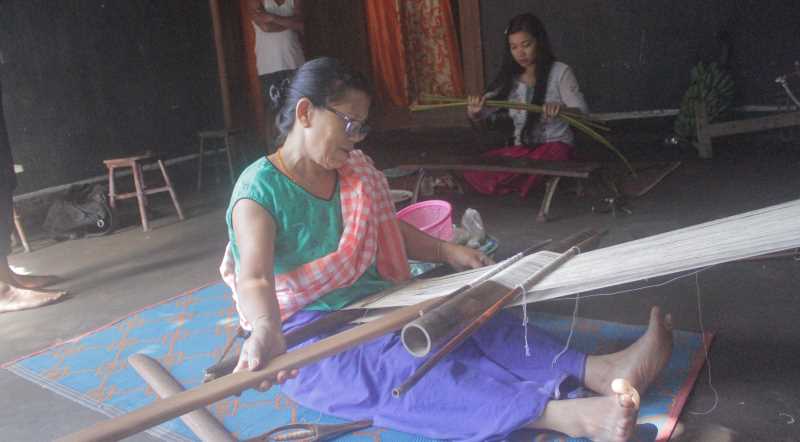
Industrial and entrepreneurial development is equally critical for building diversified economies. The Uttar Poorva Transformative Industrialisation Scheme (UNNATI-2024), approved with a large multi-crore outlay, aims to attract manufacturing and services to the North East by offering capital incentives and interest subventions (Ministry of Commerce & Industry, 2024). For Manipur’s hills, success depends on tailoring industrial clusters to local strengths such as bamboo products, food processing and handicrafts. Complementary local infrastructure, clear land-access policies and protection from extortion are required to draw investment. Microfinance, PM MUDRA loans and skill-building programmes can empower local entrepreneurs. If implemented with accountability, these frameworks can build resilient local economies that provide alternatives to migration. Industry is not only about large factories but also about enabling small and medium enterprises to thrive. Local entrepreneurship generates employment closer to home and creates multiplier effects across the community. Moreover, when youth can see pathways to innovate locally, they are more likely to remain or return. Therefore, entrepreneurship must be treated as both an economic and a social strategy for empowerment.
Policy frameworks must simultaneously protect social capital and encourage reintegration of migrants. Vision 2030 sets inclusive development goals for Manipur, but delivery has been disrupted by ethnic conflict (Department of Planning, Manipur, 2019). Peacebuilding and accountability are prerequisites for sustainable economic engagement, for without stability no amount of investment will succeed. For returnees, reintegration requires respect and opportunity: start-up grants, tax incentives, mentorship networks, affordable land for business, and recognition of external qualifications can motivate contributions (Shamani, 2025). Success stories of returnees should be showcased to inspire others, while flexible work policies allow migrants to balance urban connections with rural reinvestment. Strengthening local governance institutions and customary councils builds belonging, making return more attractive. Migrants returning with global experience can inject innovation, but they need an enabling environment to succeed. Reintegration policies must therefore be designed with empathy as well as efficiency. When returnees feel valued, they become role models and catalysts for broader transformation.
Environmental resilience underpins economic sustainability. Deforestation, soil erosion and watershed degradation undermine productivity and raise disaster risks, threatening the very base on which agriculture and tourism depend. Programmes that create green jobs in restoration, afforestation and erosion control simultaneously protect ecosystems and generate livelihoods. Poppy eradication campaigns must include viable alternative livelihoods to avoid humanitarian crises, for coercive approaches alone may push communities deeper into insecurity. Evidence shows that community-led conservation through village councils is more sustainable than top-down enforcement (Lok Sabha, 2024). Embedding environmental safeguards in agriculture, tourism and infrastructure protects long-term productivity. Environmental security also builds human security, ensuring that communities are less vulnerable to climate risks. A resilient ecology, in turn, strengthens cultural attachment and provides long-term incentives for return migration. Thus, ecological and economic strategies must be pursued in tandem.
Practical steps can accelerate transformation and demonstrate early wins. Bundling road and broadband corridors that link hill clusters with district markets and Moreh would cut isolation and attract private investment. A horticulture value-chain programme, combining MIDH’s technical support with UNNATI-linked processing and cold-chain facilities, could create large employment effects. A Returnee Innovation Fund could provide seed capital and mentorship to migrants who return, showing that the state values their expertise. Integrated poppy-substitution programmes, with cash transfers and guaranteed crop offtake, would reduce illicit dependence and enhance community stability. Finally, community policing and transparent grievance mechanisms would rebuild trust in governance. Each of these interventions must be piloted carefully and monitored to ensure that resources are not captured by elites. Successful pilots can then be scaled up, creating a virtuous cycle of trust and delivery. In this way, incremental progress can build momentum for deeper transformation.
Manipur’s hill districts need not remain peripheries. With bamboo resources, medicinal flora, cultural richness and ecological diversity, they possess latent comparative advantages that, if nurtured, can form the basis of sustainable growth. Harnessing these requires political will, accountable governance and a long-term view that links short-term stabilisation with medium-term transformation. Infrastructure, agriculture, tourism and entrepreneurship provide economic foundations, while returnee engagement and community participation supply human and social capital. If pursued coherently, these strategies can transform the hills into resilient, prosperous and culturally vibrant regions, integral to India’s North East and to national prosperity. A successful revitalisation would not only improve the lives of hill residents but also enhance India’s credibility in managing border regions. It would send a strong message that marginalised spaces can become centres of opportunity when trust, policy and community align. Ultimately, the future of Manipur’s hills will depend on whether local voices are empowered to shape the course of their own development.
References
Bajpai, A. (2025). Manipur’s silent economic emergency unfolds amid ethnic unrest. Business North East. https://www.business-northeast.com/manipur-economic-collapse-amid-unrest
Chatterjee, S. (2025). Cross-border migration and its impact in Manipur 2012–2024. IRJHIS. https://irjhis.com/paper/IRJHIS2504025.pdf
Department of Planning, Manipur. (2019). Manipur Vision 2030: Leaving no-one behind: Achieving inclusive growth and the Sustainable Development Goals. Planning Department. https://planningmanipur.gov.in/media/filer_public/05/b8/05b8621c-943a-4682-ae5f-d02e7db7b5c9/manipurvision2030_fullnew.pdf
Haokip, T. (2023). A comparative analysis of hill and valley in Manipur. Institute for Social and Economic Change Working Paper 513. https://www.isec.ac.in/wp-content/uploads/2023/07/WP-513-Thangjahao-Haokip-and-Marchang-Reimeingam-Final.pdf
Laishram, S. (2025). Improved road connectivity fuels growth and upliftment in Manipur’s hill districts. Economic Times Infra. https://infra.economictimes.indiatimes.com/news/roads-highways/transforming-manipur-how-road-connectivity-is-driving-economic-growth-in-hill-districts/122040423
Lok Sabha. (2024). Statement on forest areas affected by poppy cultivation in Manipur (Starred Question No. 299). Ministry of Environment, Forest and Climate Change. https://sansad.in/getFile/loksabhaquestions/annex/183/AS299_6ZDAkk.pdf
Ministry of Commerce & Industry, Government of India. (2024). Cabinet approves Uttar Poorva Transformative Industrialization Scheme (UNNATI-2024). Press Information Bureau. https://pib.gov.in/PressReleaseIframePage.aspx?PRID=2012362
Mission for Integrated Development of Horticulture. (2025). Operational guidelines. Government of India. https://nccd.gov.in/uploads/MIDH_Operational_Guidelines_2025_478eb946da.pdf
NITI Aayog. (2025). Macro and fiscal landscape of the State of Manipur. https://www.niti.gov.in/sites/default/files/2025-03/Macro-and-Fiscal-Landscape-of-the-State-of-Manipur.pdf
Press Information Bureau. (2017). Hill Area Development Programme launched in Assam for balanced regional development. https://pib.gov.in/Pressreleaseshare.aspx?PRID=1595906
Press Information Bureau. (2024). North East Special Infrastructure Development Scheme (NESIDS): Sanctioned projects. https://www.pib.gov.in/PressReleasePage.aspx?PRID=2077905
Shamani, R. (2025). How to stop brain drain 2.0 pain. The Economic Times. https://m.economictimes.com/opinion/et-commentary/how-to-stop-brain-drain-2-0-pain/articleshow/118256247.cms
Singh, K. (2025). Tourism issues and prospects in Manipur: A case study of Moreh town. All Subject Journal. https://www.allsubjectjournal.com/assets/archives/2024/vol11issue8/11210.pdf
Singh, M. (2016). Educated unemployment and insurgency in Manipur. Institute for Defence Studies and Analyses Policy Brief. https://www.idsa.in/system/files/policybrief/educated-unemployment-and-insurgency-in-manipur-issues-and-recommendations
Thakur, V. (2025). Prospects of rural and urban horticulture in Manipur. ResearchGate. https://www.researchgate.net/publication/322765449_Prospects_of_Rural_and_Urban_Horticulture_in_Manipur

Dr. Aniruddha Babar is a senior academician, policy analyst, writer, and researcher currently serving in the Department of Political Science, St. Joseph College, Ukhrul, Manipur. He is also the Co-Founder and Deputy Director of the Centre for North-East Development and Policy Research (CNEDPR), St. Joseph College, Manipur