October is the season of mellow fruitfulness in Manipur. For the still largely agrarian society, this is the season miles after miles of the rice paddies ripen golden yellow awaiting harvest, bringing a sense of restful satisfaction to its population. But ironically, October is also its cruellest month. This is the month a ghost from the past returns to haunt. High decibel debates explode on local TV, newspapers and the noisy town squares of social media, in lament and scorn, recalling the coerced merger of Manipur to India on October 15, 1949.
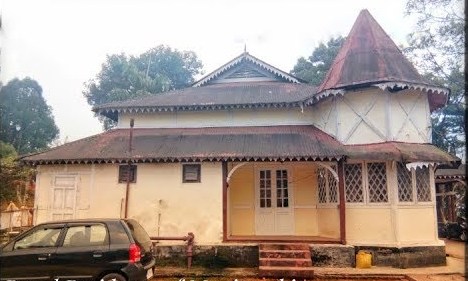
This year, the debates were hotter. In an ill-timed move, Manipur government on October 8 demolished an aging residence of the erstwhile Manipur royalty, Redlands, in Shillong the then capital of Assam. After a controversy broke out, the government clarified the demolition was only meant to renovate the bungalow.
The Redlands building, standing on a 1.93 acres estate on a scenic hillside in Laitumkhrah, is where the last king of Manipur, Maharaja Bodhachandra Singh, was held under house arrest during a routine visit, till he agreed to sign the Manipur merger document on September 21.
Every October, expectedly dogeared arguments on the legality of the king signing the agreement overflow. Manipur was a constitutional monarchy by then, governed by an assembly since 1948, democratically elected under a 1947 constitution.
The king, according to his personal assistant, Sanasam Gourahari, cited in Col. Haobam Bhuban’s The Merger of Manipur, had promised the Governor of Assam Sri Prakasa and his advisor, Nari Rushtomji, that he would sign but requested to be allowed to return to his state first to consult his ministers, but this was never conceded. His request that agreement would not come into effect immediately, but after he has returned to his people was however met.
Rushtomji, in his book Enchanted Frontiers, sketches a picture of the urgency they were in. He and Sri Prakasa had earlier travelled to Bombay to consult the then ailing Sadar Patel on the matter. Patel was on his sick bed when they were ushered into his room, and the only other furniture in the room was another bed parallel to Patel’s where they were asked to sit.
The Governor nervously briefed Patel that of the two princely states left to merge with India in the Northeast, Tripura is unlikely to be a problem but Manipur may be. Patel’s softly queried “whether we had not a Brigadier in Shillong”. Nothing else was said and after an awkward spell of silence “Patel’s daughter Maniben signalled the interview was over”.
The Shillong episode did not have to take the turn it did for in all likelihood, Manipur would have agreed to a merger. It had already signed the Instrument of Accession on August 11, 1947, handing over charges of defence, external affairs and communication to the new Indian Union. Technically it remained independent, but a negotiated settlement was expected. There was also a section of its population campaigning for complete merger. But India at the time was in a hurry to finalise its national boundaries.
Much water has flowed down the rivers of Manipur ever since, but in the state’s troubled and insecure moments, the ghost of Redlands never fails to return to become a convenient handle to shift blames for its ills, in a manifestation of the Freudian ego defence mechanism of “rationalisation”.
Freud’s other essay Mourning & Melancholia is a prescription for exorcising these demons of the subconscious mind. In mourning, the griever confronts and bids farewell to his troubled past without forsaking its memory altogether. In melancholia, the grief itself begins to be a gratification, trapping the griever perpetually and destructively in the grief.
In the cinema world, Alfred Hitchcock’s Marnie, 1964, and Christophere Noland’s Inception, 2010, deal with this painful inner struggle poignantly. In both, the protagonists trapped in melancholia, find freedom only after they have taken courage to seek and confront the sources of their anxieties and reconcile. In this reconciliation, an empathetic arbiter is an asset.
The Redlands is one, but there are more demons for Manipur to confront and exorcise itself of. Only by this can it rid itself of what have become burdensome, proverbial, albatross around its neck.
This article was first carried in The Telegraph. The original can be read HERE

Editor, Imphal Review of Arts and Politics and author