
The North-East of India has long stood at the confluence of strategic promise and developmental neglect, a region endowed with extraordinary cultural capital and natural resources yet constrained by chronic infrastructure deficits, weak market linkages, and fragmented state capacity. As of 2021, nearly 25 percent of the North-East’s population lived below the national poverty line, road density remained 40 percent below the all-India average, and unemployment among educated youth in states such as Nagaland exceeded 21 percent, one of the highest in the country (NITI Aayog, 2021). These structural constraints have historically limited the region’s ability to convert human and natural capital into sustainable economic growth, leaving large segments of the population dependent on subsistence agriculture, informal trade, and remittances. Against this backdrop, the Government of India launched the Prime Minister’s Development Initiative for North Eastern Region (PM-DevINE) in the Union Budget of 2022–23 as a distinctive vehicle for targeted infrastructure and social sector interventions in the eight states of the North-East. Operationalised through the Ministry of Development of North Eastern Region (DoNER) and designed as a 100 percent central-sector scheme with no requirement of state share, PM-DevINE seeks not merely to finance but to directly address critical development gaps through a portfolio of regionally contextual projects. The scheme is envisaged as a mechanism to integrate marginalized areas into national development trajectories, strengthen human capital, and enhance resilience against both economic and ecological vulnerabilities. By providing direct funding, PM-DevINE reduces bureaucratic intermediaries and allows projects to be conceptualized, approved, and executed in alignment with both local needs and national priorities.
The scheme began with an allocation of 1,500 crore rupees in 2022–23, expanded to 2,200 crore rupees in 2023–24 and further to 2,800 crore rupees in 2024–25 (Government of India, 2023; Government of India, 2024). This represents roughly 22–25 percent of the annual DoNER budget, making PM-DevINE its single largest instrument, compared to just 10–12 percent under the earlier Non-Lapsable Central Pool of Resources (NLCPR) during its peak years (DoNER, 2022). The enhanced allocation underscores the central government’s recognition of the North-East’s persistent developmental deficits and the need for accelerated investment in human development, physical infrastructure, and livelihood creation. While Assam has secured nearly 700 crore rupees for a network of cancer hospitals under PM-DevINE and Meghalaya has received 300 crore rupees for major road connectivity projects, Nagaland’s flagship allocation of 200 crore rupees for a multi-speciality hospital appears modest in scale, raising questions about proportionality and balance across the region (DoNER, 2023). The explicit design choice of 100 percent central funding was intended to ensure fiscal feasibility for resource-constrained North-Eastern states, many of which face budgetary rigidity due to limited own-revenue capacity and heavy dependence on central devolution. By eliminating the need for state contributions, PM-DevINE encourages rapid project initiation, though it also necessitates strong mechanisms for state-level ownership, oversight, and accountability to avoid passive reliance on central authorities.
Nagaland and Manipur offer particularly illuminating cases to analyse the early trajectory of PM-DevINE. Both states have endured structural development deficits but also possess latent potential in areas such as bamboo processing, healthcare, and rural connectivity. The sanctioned projects under PM-DevINE in these states are, therefore, not merely budgetary allocations but experiments in tailoring central-sector support to state-specific developmental needs. The selection of projects reflects a strategic approach aimed at harnessing comparative advantages of each state, such as Nagaland’s potential for medical infrastructure and tourism-linked health services, and Manipur’s rich bamboo resources which can generate both employment and eco-friendly industrial output. Early assessments indicate that the design and prioritization of these projects involve a careful balancing of short-term deliverables with long-term developmental goals, emphasizing social inclusion, economic diversification, and environmental sustainability.
In Nagaland, one of the flagship approvals has been the sanction of a 200-crore rupees, 200-bedded multi-speciality hospital in Kohima. This project illustrates the scheme’s attempt to rectify chronic health deficits. With only 0.26 doctors per 1,000 people, Nagaland ranks among the lowest in India (National Health Mission, 2022). Hospital bed availability stands at 1.3 per 1,000 population, far below the WHO norm of 3.5, while maternal mortality in rural Nagaland is nearly 250 per 100,000 live births compared to the national average of 113 (Office of the Registrar General & Census Commissioner, 2020). While the Kohima hospital project addresses infrastructure gaps, sustaining it will demand recurring expenditure on staff, medicines, and equipment. Given that Nagaland spends only 4.3 percent of its GSDP on health, lower than the national average, questions remain about whether state budgets can maintain the assets once central support diminishes. Additionally, the project is expected to catalyse regional development by improving health outcomes, reducing disease burden, and creating employment opportunities for medical and allied personnel. The hospital can serve as a training hub for rural health practitioners and potentially attract medical tourism, further integrating Nagaland into the broader economic landscape. Challenges related to skilled personnel retention, procurement logistics, and integration with existing state health systems must be actively managed to ensure long-term impact.
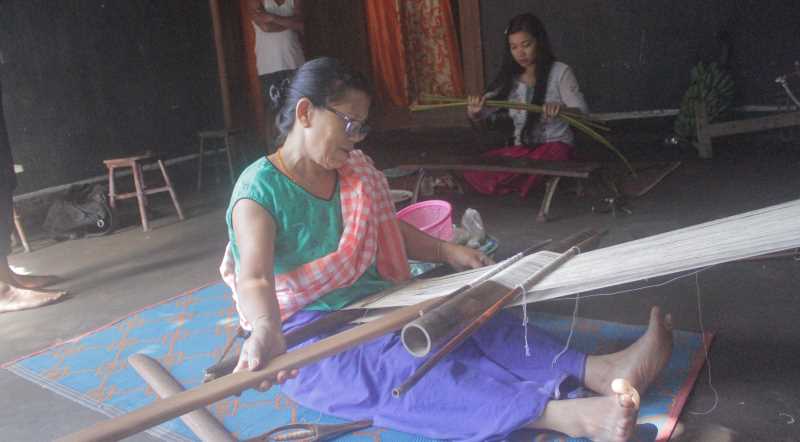
Similarly, Manipur has seen PM-DevINE support directed towards enhancing bamboo-based industries and skill development centres. With bamboo covering 14,000 square kilometres, nearly 27 percent of its area, Manipur is ideally placed to become a hub for bamboo-based industries (North Eastern Development Finance Corporation Limited \[NEDFi], 2022). The state already employs an estimated 80,000 artisans in bamboo crafts, with a potential market value of 500 crore rupees annually if value addition and formal marketing chains are scaled (NEDFi, 2022). To ensure scalability, PM-DevINE has encouraged convergence with credit support from institutions such as NEDFi, which in 2022 disbursed over 500 crore rupees in project financing across the region. Bamboo processing hubs in Manipur are being developed with public-private partnership frameworks that blend public capital with private entrepreneurial participation. Beyond industrial growth, these initiatives aim to strengthen rural livelihoods, promote gender-inclusive employment, enhance skill development, and foster environmental sustainability through eco-friendly production practices. PM-DevINE support also includes technological interventions for improved processing efficiency, market linkages, and branding, ensuring that artisans gain access to regional, national, and international markets.
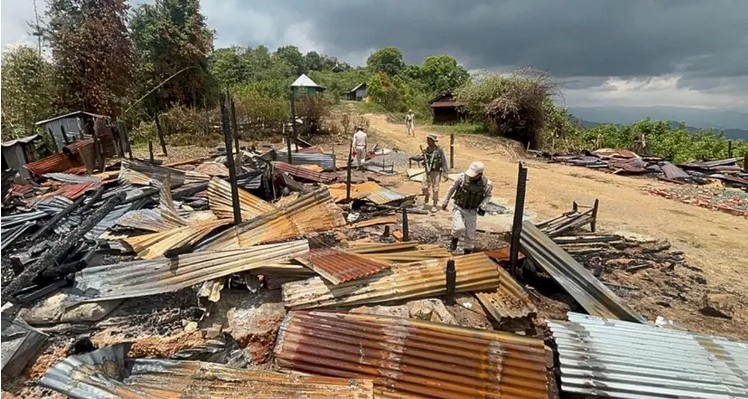
Yet, while such sectoral choices appear well-aligned, the deeper question lies in implementation modalities. Procurement under engineering, procurement, and construction (EPC) contracts, while intended to streamline execution, faces cartelisation risks, limited bidder participation, and disputes over risk-sharing clauses. Past projects under NLCPR faced average delays of 2.8 years and cost overruns of nearly 18 percent, reflecting institutional weaknesses that PM-DevINE must actively overcome (DoNER, 2022). In Manipur, especially in hill districts, project execution often collides with insurgency-related disruptions, extortion demands from underground groups, and unresolved land ownership disputes. Such challenges not only delay timelines but also inflate costs, undermining the efficiency gains PM-DevINE is designed to deliver. The creation of a dedicated monitoring cell within DoNER, combined with NITI Aayog’s dashboard-based real-time progress tracking, has been proposed as a mitigation strategy. Enhanced local-level capacity building, streamlined regulatory approvals, and participatory project management with community oversight are additional measures required to ensure that implementation bottlenecks do not negate the developmental potential of the scheme.
Environmental and climate resilience must also be emphasised. The North-East is prone to earthquakes, floods, and landslides, making disaster-resilient infrastructure critical (UNDP India, 2022). Linking PM-DevINE with India’s Nationally Determined Contributions under the Paris Agreement, such as enhancing renewable energy share, disaster-resilient urban design, and sustainable mobility can align local projects with global climate goals. In Manipur, for instance, bamboo-based industries are inherently carbon-mitigating, given bamboo’s high sequestration potential. In Nagaland, energy-efficient healthcare infrastructure can substantially reduce both costs and emissions. Digital infrastructure is another emerging focus, with PM-DevINE financing fibre-optic connectivity projects in Nagaland and Manipur, crucial for e-governance, telemedicine, and digital education. Similarly, renewable energy pilots, such as micro-hydel projects in remote villages, are being linked to PM-DevINE, ensuring that growth is both inclusive and environmentally sustainable. Integrating environmental assessments into project planning, implementing climate-resilient construction techniques, and monitoring long-term ecological impacts are vital to safeguarding investments and ensuring that infrastructure contributes to sustainable development objectives.
The governance architecture of PM-DevINE is another area warranting scrutiny. While central funding ensures fiscal sufficiency, it also raises concerns of limited state ownership. Unlike the North Eastern Council, which provides a platform for states to articulate priorities, PM-DevINE projects are centrally curated with only consultative inputs from states. This top-down design risks overlooking micro-level specificities, particularly in ethnically diverse and politically sensitive regions such as Eastern Nagaland or hill districts of Manipur. The Eastern Nagaland Peoples’ Organisation has repeatedly argued for direct funding mechanisms to ensure equitable resource flow, a demand partially echoed in the design of PM-DevINE but not fully institutionalised. The Comptroller and Auditor General has suggested creating a dedicated audit track for PM-DevINE, while DoNER is piloting third-party evaluations using independent think-tanks. Citizen-facing monitoring dashboards, already in development, could empower village councils and civil society to track expenditure and progress in real time (DoNER, 2023). Strengthening institutional coordination, clarifying roles between central and state agencies, and promoting capacity building at the local governance level will be critical to enhancing transparency, accountability, and responsiveness in project execution.
Inclusion, both social and gendered, is another concern. Women’s self-help groups are often cited as beneficiaries, but explicit gender targets are absent (NITI Aayog, 2021). Female labour force participation in Nagaland and Manipur hovers at 23–25 percent, compared to the all-India average of 32 percent, while literacy gaps persist at nearly 13 percent between men and women in rural areas (NITI Aayog, 2021). Embedding targeted skill-development and credit access for women could substantially improve inclusion. Similarly, tribal councils and customary village authorities play critical governance roles in these states; bypassing them could undermine both legitimacy and sustainability of interventions. Gender-sensitive project design, mentoring, leadership development for women, and proactive engagement with marginalized communities can enhance equitable outcomes, ensuring that benefits of PM-DevINE accrue to the most vulnerable populations.
Notwithstanding these challenges, PM-DevINE has already sanctioned more than 15 projects in its initial phase across the region, with Nagaland and Manipur featuring prominently. These projects cut across healthcare, education, connectivity, and livelihood promotion, reflecting an attempt to move beyond traditional brick-and-mortar infrastructure towards a more integrated development matrix (DoNER, 2023). Unlike earlier schemes, PM-DevINE embeds a convergence principle, requiring projects to demonstrate complementarity with ongoing central and state programmes. In theory, this should reduce duplication, though in practice the challenge will lie in coordination across ministries and departments. Continuous monitoring, timely feedback loops, adaptive project management, and integration of social, economic, and environmental indicators are essential for translating sanctioned projects into tangible developmental outcomes.
From a macroeconomic perspective, PM-DevINE represents an important counter-cyclical intervention. The North-East has been disproportionately hit by pandemic-induced shocks, with per capita income contraction sharper than the national average. For example, Nagaland’s gross state domestic product contracted by nearly 6 percent in 2020–21 against the national contraction of 5.7 percent (NITI Aayog, 2021). Targeted capital expenditure through PM-DevINE could thus have multiplier effects in employment generation and demand revival. The bamboo sector in Manipur, for instance, could stimulate rural non-farm incomes, while healthcare investment in Nagaland could catalyse both construction-phase employment and longer-term medical tourism. Coupled with skills development and market linkages, these investments can foster inclusive economic growth, enhance human development indicators, and reduce regional disparities in line with India’s broader development agenda.
PM-DevINE is both a financial infusion and a governance experiment for the North-East. Going forward, establishing citizen-facing monitoring dashboards, mandating social audits through Village Councils, and linking disbursements to verified milestones will be essential to sustain transparency and trust. This will ensure PM-DevINE matures from a centrally funded scheme into a participatory model of regional development. Its success in states such as Nagaland and Manipur will not only determine the credibility of DoNER as a development ministry but also set precedents for how India addresses the complex challenge of integrating peripheral regions into the national growth story. By embedding lessons on local governance, gender equity, climate resilience, and convergence across sectors, PM-DevINE can evolve into a replicable framework for addressing developmental imbalances in other marginalized regions of the country.
The implementation of PM-DevINE in Manipur and Nagaland demonstrates the transformative potential of a centrally funded, targeted, and contextually nuanced development initiative. While the scheme has successfully sanctioned projects in healthcare, education, infrastructure, and livelihoods, challenges related to state ownership, implementation capacity, environmental resilience, and social inclusion remain salient. Strengthening local governance participation, integrating gender and social equity measures, embedding climate-conscious practices, and ensuring sustainable operational mechanisms are critical to achieving long-term impact. PM-DevINE offers a blueprint for balancing national priorities with regional specificities, demonstrating that holistic, participatory, and adaptive development approaches can catalyse inclusive growth, reduce structural disparities, and enhance human development in India’s North-East. The initiative’s future success will depend on sustained commitment, transparent monitoring, and proactive engagement with local communities to ensure that developmental gains endure and foster broader societal transformation.
References
- Government of India. (2022). Union Budget 2022–23: Speech of Finance Minister. Ministry of Finance. Retrieved from [https://www.indiabudget.gov.in](https://www.indiabudget.gov.in)
- Government of India. (2023). Union Budget 2023–24: Expenditure profile. Ministry of Finance. Retrieved from [https://www.indiabudget.gov.in](https://www.indiabudget.gov.in)
- Government of India. (2024). Union Budget 2024–25: Expenditure profile. Ministry of Finance. Retrieved from [https://www.indiabudget.gov.in](https://www.indiabudget.gov.in)
- Ministry of Development of North Eastern Region (DoNER). (2022, October 12). Cabinet approval of PM-DevINE. Press Information Bureau. Retrieved from [https://pib.gov.in](https://pib.gov.in)
- Ministry of Development of North Eastern Region (DoNER). (2022). Evaluation of Non-Lapsable Central Pool of Resources (NLCPR) and North East Special Infrastructure Development Scheme (NESIDS). Government of India.
- Ministry of Development of North Eastern Region (DoNER). (2023, March 20). Projects sanctioned under PM-DevINE. Press Information Bureau. Retrieved from [https://pib.gov.in](https://pib.gov.in)
- National Health Mission. (2022). Rural Health Statistics 2021–22. Ministry of Health and Family Welfare, Government of India.
- North Eastern Development Finance Corporation Limited (NEDFi). (2022). Annual report 2021–22. Retrieved from [https://www.nedfi.com](https://www.nedfi.com)
- NITI Aayog. (2021). North Eastern Region District SDG Index and Dashboard, Baseline Report 2021–22. Retrieved from [https://www.niti.gov.in](https://www.niti.gov.in)
- Office of the Registrar General & Census Commissioner. (2020). Sample Registration System (SRS) Statistical Report 2020. Ministry of Home Affairs, Government of India.
- Scott, J. C. (1998). Seeing like a state: How certain schemes to improve the human condition have failed. New Haven: Yale University Press.
- Sen, A. (1999). Development as freedom. New York: Knopf.
- UNDP India. (2022). Climate vulnerability assessment for adaptation planning in India’s North Eastern states. United Nations Development Programme.

Dr. Aniruddha Babar is a senior academician, policy analyst, writer, and researcher currently serving in the Department of Political Science, St. Joseph College, Ukhrul, Manipur. He is also the Co-Founder and Deputy Director of the Centre for North-East Development and Policy Research (CNEDPR), St. Joseph College, Manipur