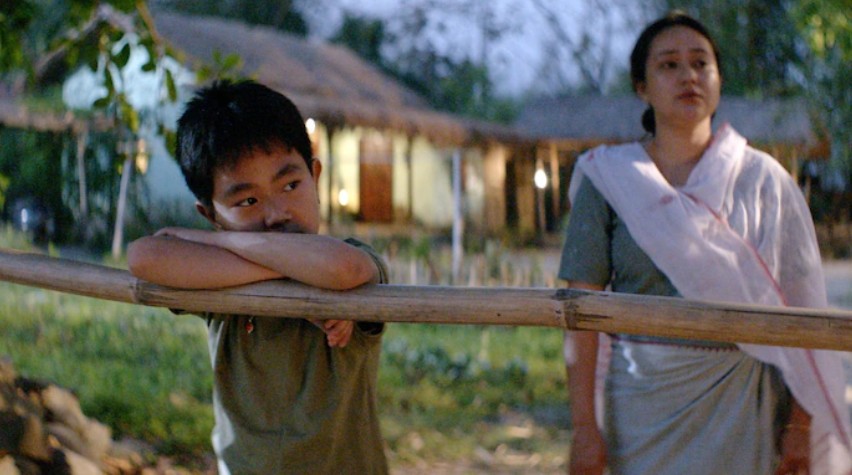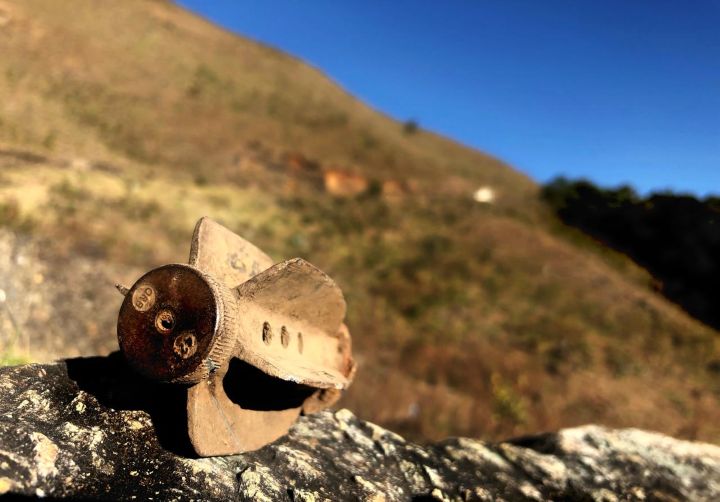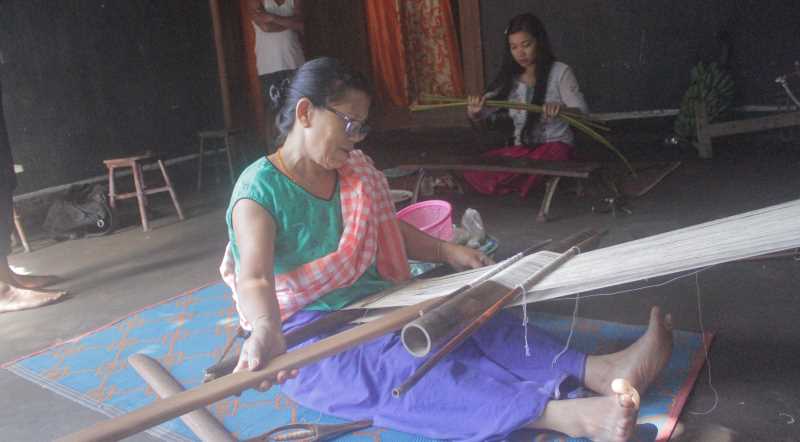

Oitharei steps into one of the most painful and unresolved moments in Manipur’s recent history. The ongoing conflict between the Kuki and Meitei communities forms its backdrop. From the very beginning, the film makes its position clear. It does not chase spectacle. It avoids melodrama. There is no attempt at easy emotional release. Instead, the film tries something harder. It watches how violence quietly enters daily life. How it changes routine, language, and relationships without dramatic announcement. The effect is slow and unsettling.
This intent deserves recognition. In a regional cinema space still crowded with exaggerated family drama and predictable emotional turns, Oitharei chooses restraint. There are no unnecessary songs. No musical interruptions designed to soften the impact or guide emotion. Silence is allowed. Ordinary sounds are trusted. The film understands that holding back can sometimes feel more honest than excess. The technical side reflects this confidence. The camera is patient. Sound design stays alert but never loud. Editing is controlled. Nothing feels rushed. Nothing feels indulgent. The film does not try to prove its importance. It carries itself quietly, with discipline.
Yet Oitharei is ultimately shaped not only by what it attempts, but by what it avoids confronting fully. Again and again, the film approaches difficult truths and then pulls back. It gestures toward realism but hesitates when it must fully inhabit the consequences of violence. This tension appears early. Ngongo, a taxi driver, calls out for passengers near Kangla Fort as evening arrives. He keeps repeating one word. “Sekmai.” The destination is unclear. For outsiders, the word means little. For local viewers, it splits into meanings. Awang Sekmai in Imphal West. Nongpok Sekmai in Thoubal.
This ambiguity matters. Awang Sekmai lies close to an unofficial buffer zone. A place tied to some of the worst violence. The film makes a quiet but sharp point here. Geography is no longer neutral. Space carries fear. Even direction feels unsafe. Ngongo’s taxi becomes a moving enclosure. A simple but effective choice. Inside this small space, the film shows the human cost of violence through conversation. Passengers come and go. Stories appear casually. Trauma is never announced. It arrives indirectly.
Ngongo speaks about his sister and her husband from Moreh. When violence began, his sister returned home. Her husband now lives in a relief camp. He refuses to return. The film never shows their house. It does not need to. What stays with us instead is smaller. The animals left behind. Cats. Dogs. Ngongo recalls how his sister breaks down when she thinks of them. This moment feels deeply true. Trauma often enters through such details. Quiet. Ordinary. Crushing.
When Ngongo later says, “How will a taxi driver like me do? We can’t do anything even if we are worried and unhappy,” the line feels bare. It is not a speech. It is resignation. This becomes the film’s emotional center. Ordinary people trapped inside a political disaster they cannot control. The state has failed. Survival replaces resistance.
Up to this point, the film holds its ground. Then it begins to slip.
A strange young woman boards Ngongo’s taxi near Manipur University. She gives no destination. She barely speaks. When the ride ends, she leaves without paying. She says she has no money. This woman, later named Leima, is meant to embody psychological collapse. She stands for displacement, grief, and loss.
But here the film contradicts itself. Leima’s appearance is carefully maintained. Makeup is visible. Grooming is deliberate. Her face looks prepared for the camera. Not worn down by fear or neglect.
This matters. Trauma often shows on the body. People stop caring for routine. Speech breaks. The body carries abandonment. By keeping Leima visually polished, the film weakens its own realism. We are asked to believe in devastation that never touches the surface. What we get is not lived suffering, but a simulation of it.
The problem deepens during a stop near Ngongo’s home. He chats with a shopkeeper from his locality. The exchange is light. She jokes about him eloping with a girlfriend. The rhythm turns playful. Meanwhile, Leima has quietly re-entered the taxi. The scene suggests fragile normalcy continuing under catastrophe. But the film never asks what this normalcy costs. Humor appears, then disappears, without reflection. Violence does not fully alter daily life here. It only hovers nearby.
Later, Ngongo demands a higher fare. Leima refuses again. Tension rises. As she steps out, Ngongo notices she is pregnant. The tone shifts. Guilt enters. Responsibility follows. When Leima sits on a bridge, the film hints at suicide, then retreats. She does not jump. She sits silently.
This pattern repeats. The film approaches disaster, then backs away.
Ngongo speculates about Leima’s husband. A drunkard. A drug user. He mentions vigilante groups “teaching such men a lesson.” The line is disturbing. It shows how violence reshapes moral thinking. But the idea is dropped as soon as it appears. When Leima admits she is hungry, Ngongo gives her bread. He records her and posts the video on Facebook, asking if anyone recognizes her. This is one of the film’s strongest observations. Social media becomes an emergency welfare system. A replacement for failed institutions.
Calls come in. A couple claims to know Leima. Another caller warns Ngongo not to trust them. He says they want Leima’s unborn child. The meaning is clear. Displacement invites exploitation. But the execution falters. The couple’s cruelty is exaggerated. Expressions become theatrical. Violence turns into performance. In conflict cinema, cruelty is most frightening when it feels ordinary. Here, it becomes a spectacle.
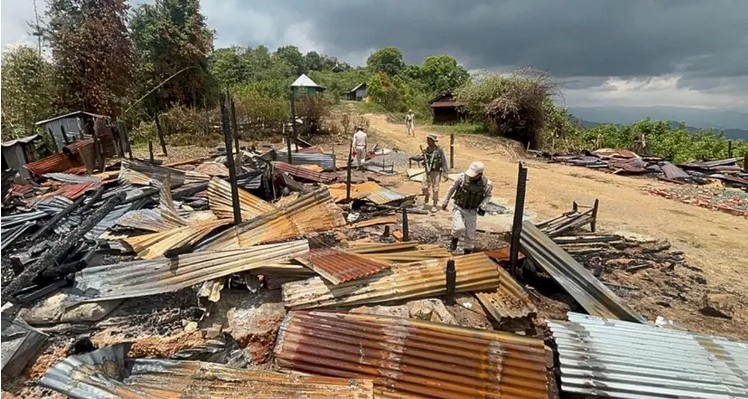
Ngongo’s brother-in-law arrives from the camp. A brief scuffle happens. The couple retreats. More of Leima’s past surfaces. They decide to take her to a relief camp in Moirang. Once again, the film tells instead of showing. We hear about camps. We hear about loss. We rarely see its physical marks. Burned homes stay off-screen. Scarred land is absent. This weakens the film’s political weight.
Italian Neorealist cinema treated realism as responsibility, not style. Ruins mattered. Not for beauty, but to prevent abstraction. Oitharei gestures toward this tradition but avoids its risks. At the Moirang camp, Leima’s story finally unfolds. Her husband stayed behind to protect their land. When violence erupted, everyone fled except him. He video-called Leima. He was alone.
The call is devastating. Technology collapses distance into fear. Moments later, another man answers. From the opposing community. His words are chilling. “Your Tamo has now become ours.” The meaning is clear. Sanajaoba has been captured. Violence arrives through interruption. A broken call. A stolen voice. This explains Leima’s silence and dislocation. Yet the film reveals this late, almost reluctantly.
Later, news arrives that Sanajaoba’s body has been found. It must be identified. That night, displaced people slept close together. Not from familiarity, but shared loss. Grief becomes communal. Resolution does not. The next morning, Ngongo and others travel back toward Imphal. Movement resumes. Closure does not. Life continues because it must. This could have been the film’s boldest ending. Grief in motion. Trauma unresolved. Instead, the film moves toward formal closure. The body is identified. Loss is confirmed. And this is where the film falters most.
Neorealism denies easy hope because hope without change becomes an illusion. By ending with childbirth, Oitharei offers reassurance where discomfort should remain.
The question is not what new life begins. The question is what kind of life waits.
By softening trauma, exaggerating cruelty, hiding physical destruction, and resolving uncertainty, Oitharei pulls away from the realism it seeks. It speaks honestly, but stops short of full confrontation. What remains is a film made with care and conviction. Its restraint is admirable. Its intent is sincere. But in the end, Oitharei chooses comfort over risk. And that hesitation becomes its quiet truth.

The writer is a media scholar and professional