
The phrase “Nero was fiddling while Rome was burning” has long stood as a powerful metaphor for leadership failure in times of crisis. It evokes the image of a ruler detached, passive, or indifferent while catastrophe engulfs his people. In contemporary India, this phrase resonates deeply when one reflects on the ongoing crisis in Manipur since May 2023—a conflict that has fractured communities, displaced thousands, and shaken the very foundations of coexistence in the region.
A State in Flames: The Manipur Crisis Since 2023
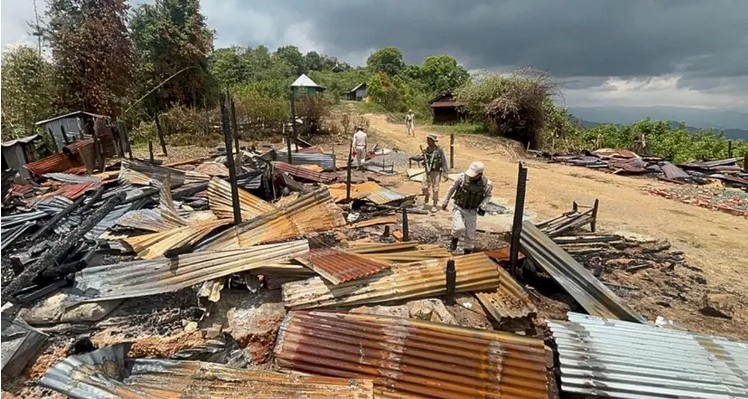
Manipur, once known for its rich cultural diversity and fragile yet functional coexistence, has been plunged into a prolonged period of violence and unrest. What began as ethnic tensions between the Meitei and Kuki-Zo communities escalated into widespread clashes, arson, killings, and displacement. Entire localities were reduced to ashes, sacred spaces desecrated, and thousands forced into relief camps.
The crisis is not merely episodic violence—it reflects accumulated mistrust, administrative lapses, and competing political aspirations. Even today, large parts of the state remain divided, both physically and psychologically, with buffer zones separating communities that once shared markets, schools, and social spaces.
The Role of SoO Militants: From Suspension to Escalation
A deeply contentious dimension of the crisis is the role of Suspension of Operation (SoO) militant groups. Originally brought under ceasefire agreements to reduce insurgency and facilitate peace, these groups now stand accused—particularly by sections of the Meitei community—of aggravating the violence.
Allegations of armed mobilization, territorial assertion, and involvement in violent confrontations have raised serious concerns about the effectiveness and intent of the SoO framework. What was envisioned as a bridge toward peace is increasingly viewed as a loophole that enabled instability. The resulting sense of insecurity has only widened the divide between communities.
Diverging Aspirations: Integrity vs. Separation
At the core of the conflict lies a fundamental political contradiction.
The Meitei community asserts the indivisible territorial integrity of Manipur, viewing any proposal for separation as a direct threat to historical identity and political continuity. For them, Manipur is not merely an administrative unit but a civilizational entity.
Conversely, many within the Kuki-Zo community demand a separate administrative arrangement, arguing that their safety, identity, and future can only be secured through autonomy. In the aftermath of violence, this demand has intensified rather than diminished.
Thus, the crisis has evolved into a clash of existential visions—unity versus separation—leaving little room for middle ground.
Militarisation of Civilian Life: Fear, Force, and Psychological Trauma
Inserted into this already volatile situation is an overwhelming presence of security forces. While the deployment of armed forces is often justified as necessary to restore law and order, the lived reality for civilians tells a more complex and troubling story.
Public emotions, by their very nature, cannot be suppressed through bullets, tear gas shells, or lathi charges. Such measures may temporarily disperse crowds, but they cannot heal grievances or rebuild trust. Instead, they often deepen alienation.
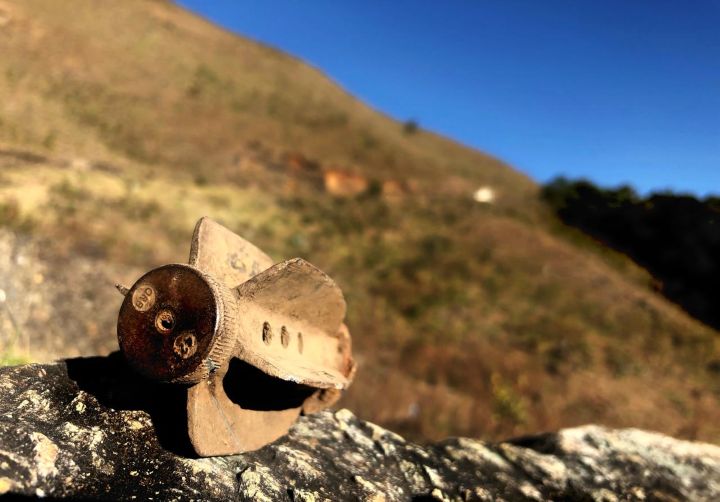
Today, large parts of Manipur resemble a heavily guarded conflict zone. Security personnel frequently outnumber civilians in sensitive areas. Convoys of armed forces move through towns and villages in bulletproof vehicles such as mine-protected vehicles (MPVs), armoured personnel carriers (APCs), and reinforced troop carriers. These vehicles—designed for war-like conditions—have become a routine sight on civilian roads.
For the ordinary citizen, this constant militarised movement is not reassuring—it is intimidating.
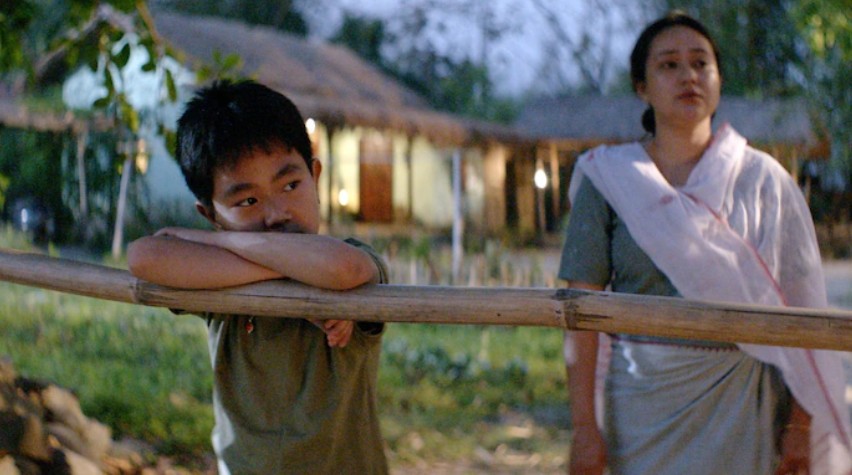
Children grow up watching convoys instead of classrooms. Elderly citizens hesitate to step out of their homes. Markets function under the shadow of armed patrols. The psychological toll is immense: a persistent climate of fear, anxiety, and uncertainty.
This “fear psychosis” is perhaps one of the most underreported consequences of the crisis. Even in the absence of active violence, the atmosphere remains tense. The sound of vehicles, the presence of armed personnel, and the unpredictability of sudden restrictions create a sense of living under siege.
The pressing question, therefore, is not merely about control—but about normalcy. How long will it take for Manipur to return to a life where security is felt, not imposed? How long will citizens continue to live between checkpoints and curfews?
Silence at the Centre: A Modern Echo of Nero
In this context, the role of national leadership becomes crucial. Critics have pointed to the perceived silence of Prime Minister Narendra Modi during the most intense phases of the crisis.
While administrative steps and security deployments have been undertaken, many believe that the absence of a sustained, visible, and empathetic engagement from the highest level of leadership has contributed to a sense of abandonment.
The comparison to Nero is symbolic but striking. Just as Nero was accused of detachment during Rome’s burning, the central leadership is seen by some as distant while Manipur continues to suffer.
Leadership is not only about decisions—it is about presence, reassurance, and moral authority. A direct intervention, consistent communication, and visible solidarity could have altered public perception significantly.
Global Voice vs. Local Silence
This perception is further intensified by India’s active engagement in global issues. The Prime Minister has repeatedly called for peace in international conflicts, including the ongoing crisis in the Middle East.
Such global positioning reinforces India’s image as a responsible international actor. However, it also raises a difficult question: can a nation effectively advocate for peace abroad when unrest persists within its own borders?
The contrast between global diplomacy and local distress has become a point of reflection—and criticism—for many observers.
The Pre-Merger Status Debate
Amidst the turmoil, a significant section of the Meitei community has revived the demand for restoring Manipur’s pre-merger status. Before its merger with India in 1949, Manipur had its own constitutional and administrative framework.
Supporters of this demand argue that the merger altered the political destiny of the state and contributed to present challenges. They view restoration as a means of reclaiming autonomy and safeguarding identity.
While the demand is rooted in historical sentiment, it also introduces complex constitutional questions. Nevertheless, its emergence signals deep dissatisfaction and a search for alternative political pathways.
Human Cost: Beyond Politics
Beyond debates and narratives lies the undeniable human cost. Thousands remain displaced. Families are divided. Education is disrupted. Economic activities have stalled.
Relief camps offer shelter but not dignity. Children grow up in uncertainty. Trauma, grief, and loss have become part of daily life.
No political resolution can be meaningful unless it addresses these human realities.
The Way Forward: Beyond Force and Silence
The crisis in Manipur cannot be resolved through force alone, nor can it be ignored into submission. Sustainable peace requires:
- Inclusive and sustained dialogue among all communities
- Re-evaluation of SoO agreements to ensure accountability
- Reduction of visible militarisation in civilian areas over time
- Strong and empathetic leadership engagement
- Rehabilitation, reconciliation, and psychological healing initiatives
- Peace is not merely the absence of violence—it is the restoration of trust.
Conclusion: A Test of Leadership and Humanity
The metaphor of Nero is ultimately a warning. It reminds us that indifference in times of crisis can be as damaging as the crisis itself.
Manipur today stands not only as a site of conflict but as a test—of governance, of empathy, and of national integrity. The continued suffering of its people raises a fundamental question: how long can a society endure before silence becomes complicity?
A burning Rome demands action, not observation. And a wounded Manipur demands not just control—but care, courage, and commitment.

The writer is an educationist, presently serving as an Assistant Teacher at Don Bosco High School, Langjing. He is actively engaged in literary writing and social commentary, and has nurtured many young minds who are growing to become future pillars of society. His work is driven by a commitment to ethical values, civic awareness and dignity across all professional spaces.