
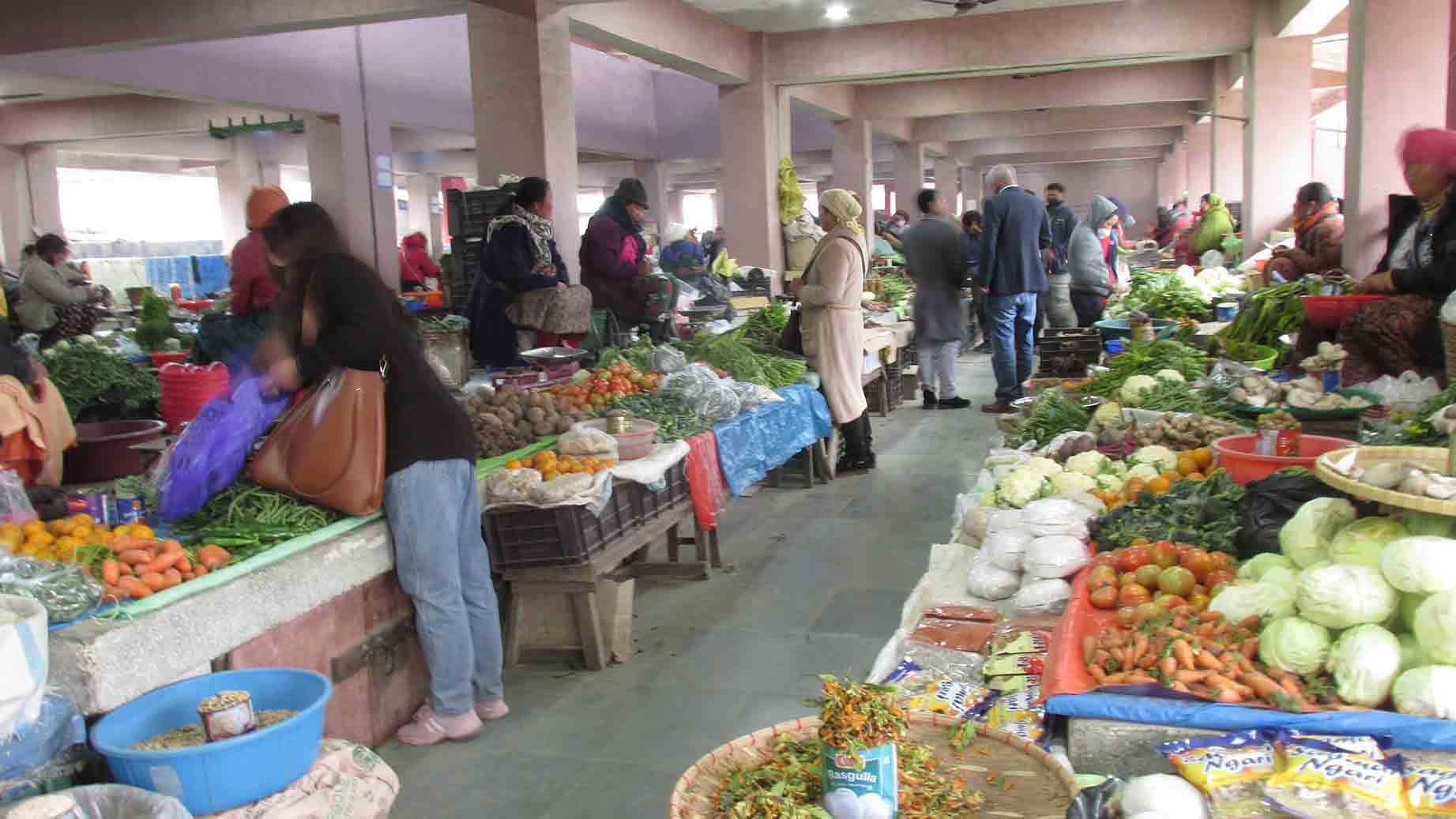
Ukhrul, a district in Manipur is known for its stunning natural beauty. The Tangkhul Naga people, who are the predominant inhabitants of this hilly region, have historically depended on the forest for their socio-economic and cultural life.
The traditional economy of the Tangkhul people was agrarian, with their social life and customs intricately linked to the agricultural cycle. Early Tangkhul society was self-sufficient, with villages functioning as independent units based on a community life where activities like farming and house-building were often done in groups. This traditional way of life, where the land and nature provided for all their needs, is a central theme in the works of various Tangkhul writers.
Ukhrul, is blessed with rich natural resources. Its extensive forests, diverse wildlife, and geological wealth, including limestone and chromite deposits, suggest a thriving economy. However, a closer look shows a troubling reality: many people depend on subsistence farming, and the district’s economic growth has lagged behind its potential. This gap between the resource-rich environment and a largely underdeveloped economy illustrates a classic “paradox of potential,” which deserves thorough economic exploration.
The idea of the “resource curse” helps explain this paradox. The resource curse hypothesis claims that regions with abundant natural resources often grow slower economically than those with fewer resources (Sachs & Warner, 1995). Several factors contribute to this situation, such as price fluctuations, neglect of other sectors, and weak institutions. Although Ukhrul may not follow the traditional model of a resource-rich area, the basic economic principles still apply.
Ukhrul has vast natural resources. A report by the Geological Survey of India (GSI) indicates significant limestone reserves in the Hungpung area, along with known chromite deposits (GSI, 2011). Additionally, according to the Forest Survey of India’s State of Forest Report, the district’s forest cover is extensive, offering a variety of timber and non-timber products (Forest Survey of India, 2021). The region also shows potential for mineral water bottling and various agro-based industries due to its rich flora and fauna. In a well-run economy, these resources could form the backbone of a thriving community.
Sadly, Ukhrul’s history of industrial development is marked by failure and lost potential. A key example is the Hundung Cement Factory. Initially seen as a way to transform the local economy, it ultimately became a symbol of failed development. The factory faced many problems, including outdated technology, poor infrastructure, management difficulties, and socio-political challenges (Singh, 2015). This situation teaches a vital lesson in development economics: having resources is not enough. Without solid governance, infrastructure, and a supportive business environment, resources can become burdens rather than benefits. The factory’s failure has left the district with environmental damage and a sense of disappointment, reinforcing the paradox.
So, why is this potential still untapped?
From an economic viewpoint, several factors are at play. First, inadequate infrastructure poses a major challenge. Poor roads, especially in remote areas, sharply increase the cost of moving raw materials to processing sites and finished products to markets. This limits industrial projects and discourages private investment. Unreliable and costly electricity also stifles industrial efforts. According to the Power Department, Manipur, while electrification in rural areas is improving, issues of reliability and quality persist, which are crucial for any manufacturing business (Manipur State Power Distribution Company Limited, 2023).
Second, governance and institutional issues create significant barriers. Complicated land ownership rules based on customary law often make large-scale projects difficult and contentious. A lack of clear and open policy regarding resource extraction and revenue sharing can lead to conflicts and opportunistic behavior, common issues tied to the resource curse. A study by the Centre for Research and Policy Development (2018) found a need for strong institutions to manage natural resources in the Northeast, highlighting the importance of community involvement and fair benefit-sharing agreements.
Third, market failures and limited market access hinder the commercialization of many resources. For example, although Ukhrul’s forests produce a variety of non-timber products, the absence of processing units, weak value-chain connections, and restricted access to formal markets means that most of these goods are either consumed locally or sold cheaply to middlemen. This situation deprives local producers of realizing the full economic value of their resources.
Lastly, the district’s economic structure is a barrier. Around 64-70% of the population works in agriculture and agriculture allied sector (Census 2011). This reliance makes the economy vulnerable to changes in agricultural productivity. The limited growth of the non-farm sector, particularly in manufacturing and services, offers few alternative job opportunities, especially for educated youth. This results in a “demographic curse,” where a young, educated population cannot find good jobs, leading to migration and a loss of talent.
To move forward, Ukhrul needs a new economic strategy that learns from past failures. The focus should be on sustainable, community-centered, and value-adding methods that convert natural wealth into real economic benefits for residents. Instead of large-scale harmful projects, creating a network of small and medium enterprises (SMEs) could help process local products and resources. This could involve food processing for horticultural goods, handicraft clusters, and mineral water plants. Such an approach would generate more widely distributed employment while minimizing environmental harm. Also, investing in road connectivity, reliable electricity, and digital infrastructure is essential. These foundations support all other economic activities.
Establishing a clear, open, and community-inclusive policy framework for managing natural resources is critical. This framework should involve local communities, traditional institutions, and the state to ensure equitable benefit sharing and address environmental concerns. Additionally, creating a “District Resource Management Authority” with representation from all parties could be a positive step. Moreover, encouraging sectors like eco-tourism and skill-based services is vital to create alternative jobs and reduce dependence on a single sector.
In conclusion, the paradox of potential in Ukhrul is solvable rather than insurmountable. By learning from previous mistakes, adopting a new development approach that focuses on sustainability and local empowerment, and investing in essential infrastructure and governance, Ukhrul can access its true economic potential. It is time to transform the “resource curse” into a “resource blessing,” ensuring that the district’s natural wealth benefits everyone for generations to come.

The writer is Assistant Professor and Head Department of Economics, St. Joseph College, Ukhrul.