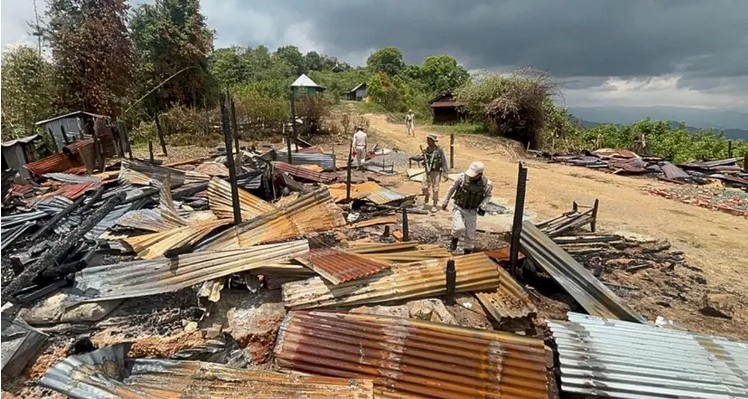

There are times when celebration becomes not just inappropriate but profoundly immoral. Manipur in late 2025 is undeniably one of those moments. The state has been living through the longest and most devastating violent conflict in its recent history. What began on May 3, 2023, with Kuki-Zomi militants’ coordinated attacks across multiple districts, spiralled into full-scale violent conflict involving ethnic groups belonging to Kuki-Zomi and Meiteis. Thousands were driven from their homes, hundreds killed, entire neighbourhoods burnt, and communities segregated behind walls of mistrust, fear, and military-enforced buffer zones. Two and a half years later, the wounds remain open.
Yet, in this climate of displacement, uncertainty, and unresolved trauma, the Manipur Government – under the Governor’s Rule administration popularly known as President’s Rule – has chosen to proceed with the twelfth edition of the Manipur Sangai Festival. It has declared that, even if scaled down and limited to the valley, the festival will showcase normalcy, foster tourism, and uplift the economy. This insistence has provoked widespread public anger. For a large section of Manipuri society, including the internally displaced persons (IDPs), civil society coalitions, women’s groups, and student bodies, the festival has become a symbol of state indifference rather than resilience. The Coordinating Committee on Manipur Integrity (COCOMI) and the Committee on Protection of Meetei Victims (COPMeV) have publicly condemned the government’s decision, and have called for a complete boycott. Thadou Inpi Manipur (TIM) also has joined the call for a complete boycott of the festival.
Their objections are not mere emotional reactions but grounded, reasoned critiques. They ask how a tourism festival can be justified when normalcy has not returned, when the displaced are still living in makeshift shelters, when key highways including National Highways – NH-2 and NH-37 remain dangerous and inaccessible, and when the very citizens of the state cannot travel freely across their homeland. They view the festival’s Rs. 15-crore expenditure not as an investment in tourism but as an extravagance undertaken at the expense of the suffering population. The Sangai Festival, many argue, cannot attract visitors – domestic or foreign – when Manipur itself remains out of reach. And the Festival is staged on a Wounded Land.
This article critically analyses the situation and argues that there is indeed nothing to gain from organising the Sangai Festival under present circumstances, except wasting public funds and deepening the mistrust between the state and its people.
When Normalcy Has Not Returned: The Political Reality Behind the Festival
The government’s justification for holding the festival rests on a narrative that Manipur is stabilising and that peace has begun to return. Yet every observable condition on the ground contradicts that claim.
Manipur remains deeply divided. The buffer zones enforced by Central Security Forces have effectively turned parts of the state into ethnic enclaves. Meiteis cannot cross into several hill regions and move even on National Highways; Kuki-Zomi residents cannot enter the valley except under heavy escort, and even then, only through controlled routes such as Imphal airport. These restrictions, imposed in the name of preventing renewed violence, have hardened into de facto internal borders. They fragment the state into segregated territories and strip citizens of basic mobility.
This enforced separation undermines every functional requirement of a tourism festival. Festivals assume openness, movement, and interaction. The Sangai Festival traditionally showcased the diversity of Manipur, bringing together communities from all districts. Today such convergence is structurally impossible. Tourists cannot travel freely; residents cannot move across districts; cultural troupes cannot cross buffer zones; traders cannot transport goods across the state. To claim that a festival can flourish in such conditions is to ignore that Manipur itself is not accessible to its own people.
Highway connectivity, a lifeline of tourism and the state economy, remains fractured. The National Highways – NH-2 and NH-37 – are blocked or restricted to Meiteis, depending on the zones and the fluctuating security climate. These two highways connect the valley to the hills, to the rest of India, and to Myanmar. Without them, no interstate tourist movement is possible. No road-based logistics – food supply, hotel inventory, artisan transport, or cultural equipment – can function normally and smoothly.
Moreover, the return of the Protected Area Permit (PAP) regime has once again shut the door on foreign visitors. For years, Manipuri civil society and diaspora communities fought to remove this bureaucratic barrier because it discouraged outsiders. Accordingly, for the first time PAP was relaxed in an order of the Union Ministry of Home Affairs (MHA) issued on December 30, 2010 initially for one year with effect from January 1, 2011 and later extended from time to time and the relaxation has been extended till December 31, 2022 and further extended from time to time. Now PAP is back in place from December 17, 2024, making it cumbersome for foreigners to obtain clearance and, in many cases, impossible for even Manipuris married to foreigners to bring their spouses home. This eliminates any prospect of attracting international tourists – a core justification for the festival.
No matter how the government dresses it up, a festival without access, without mobility, and without safety is not a tourism event. It is a government function disguised as one.
IDPs Still Languishing: The Moral and Humanitarian Case Against the Festival
Perhaps the most compelling argument against holding the Sangai Festival lies not in economics or infrastructure but in humanity. Thousands of IDPs remain trapped in relief camps across the valley, displaced from homes in Moreh, Churachandpur, Kangpokpi, and other districts. They continue to live in over-crowded structures, lacking privacy, sanitation, stable food supply, livelihood opportunities, and long-term rehabilitation plans.
Two and a half years after they fled violence, most have not been allowed to return to their homes. Many villages have been razed; bulldozed; others lie abandoned under the shadow of Kuki-Zomi militants. Children continue their education amid uncertainty; many committed suicides in relief camps; elderly survivors battle illness in cramped shelters; families mourn the dead with no closure, justice, or restitution.
In such a climate, the idea of celebrating a festival appears grotesquely disconnected from reality. The contrast between the glowing stages, bright lights, cultural showcases, and food stalls on the one hand, and the grim living conditions of those who lost everything on the other, creates a moral chasm.
Unsurprisingly, the IDP communities have strongly rejected the festival. In the days leading up to the event, relief camps held mass demonstrations. Thousands attempted to march toward the venue to register their opposition. What followed was deeply distressing – security forces stopped them with barricades, tear gas, mock bombs, and lathi charges. People who had already lost homes, property, and family members now found themselves beaten, choked, and dispersed simply for demanding dignity.
It is difficult to imagine a clearer failure of governance. Instead of addressing displacement, the state has chosen to suppress the displaced. Instead of listening to their pain, it has attempted to silence their voices. Instead of prioritising resettlement, it has prioritised a festival.
The contrast could not be more disturbing.
COCOMI’s Demands Ahead of Any Celebration
In response to the government’s unwavering push to hold the festival, COCOMI articulated a set of demands. These were not radical positions but reasonable conditions that any responsible government would consider fundamental prerequisites before attempting to organise a large-scale public event.
COCOMI insisted that the first step must be the restoration of fundamental rights and freedom of movement of all the citizens across the state. No society can celebrate while its citizens remain confined behind militarised buffer zones. The right to move freely – to travel to work, visit family, conduct business, or simply cross into neighbouring districts – is not a privilege but a constitutional entitlement. Until this right is restored, any celebration amounts to an endorsement of restricted life.
The second demand was the safe return of all IDPs to their homes. Without rehabilitation and restitution, the social fabric cannot heal. The displaced must be given the chance to rebuild their lives, restore their homes, return to their lands, and reclaim a sense of normalcy. Celebrating while tens of thousands remain homeless would be an insult to their suffering.
The third demand was the re-establishment of peace and normalcy. Peace is not declared through festivals; it is achieved through dialogue, justice, disarmament, and reconciliation. Manipur remains deeply fractured, and holding a festival does nothing to mend those fractures. The state must focus on restoring law and order, reducing armed tensions, dismantling militias, and ensuring safety for all communities.
Finally, COCOMI demanded an end to coercion, suppression, and heavy-handed policing of civilian voices. A festival loses all legitimacy when its own citizens are beaten for questioning it. The state must create an environment where dissent is respected and democratic expression is protected.
These demands form a foundation upon which celebrations could one day be rebuilt. But the government has chosen to disregard them entirely, pushing ahead as if public opinion were irrelevant.
Economic Analysis: A Rs. 15-Crore Investment That Will Not Yield Returns
The state government has argued that the Sangai Festival will stimulate economic activity. However, the circumstances make such claims untenable.
Tourism festivals require attendees, but Manipur’s present conditions guarantee extremely low footfall. With the highways unsafe, PAP restrictions limiting foreign entry, fear of violence looming large, and widespread calls for boycott by civil society, there is little chance that domestic or international tourists will choose to visit.
Local participation is equally constrained. All the communities from the Manipur Hills cannot travel to the venue and Meiteis from the Manipur Valley cannot travel to the Mao Gate where Cherry Blossom and Flower Festival 2025 is being held as a part of the Sangai Festival; artisans from conflict-affected areas cannot bring their goods; performers from segregated districts cannot cross buffer zones. Even within the valley, many residents are boycotting the festival in solidarity with the displaced.
This means the core engines of festival revenue – crowd spending, artisan sales, hospitality income, and inter-district cultural exchange – will be absent. The festival, instead of generating profit, will drain public resources.
The Rs. 15-crore expenditure could instead fund permanent shelters, provide relief supplies, repair damaged schools, rebuild burnt houses, support livelihood schemes, or strengthen healthcare access in the relief camps. When measured against these urgent humanitarian needs, the festival’s cost is indefensible.
The Real Political Motive: Manufacturing the Illusion of Normalcy
Behind the state’s determination to proceed lies a more strategic motive – the desire to project an image of stability to the rest of India and to the central government. Festivals make for good optics. They create colourful billboards, photographs, videos, advertisements, press releases, and headlines. They allow officials to claim that life has returned to normal, that peace is prevailing, and that the government is in control.
This narrative is not merely misleading; it is deeply harmful. It attempts to overwrite the lived reality of thousands who cannot return home. It erases the daily struggles of not only the families who cannot move freely but also all the citizens who are not government employees. And it undermines the trust between the state and its citizens.
Normalcy cannot be created through cultural spectacle. It must emerge from justice, reconciliation, rehabilitation, and honest governance. Until then, a festival is nothing more than a stage-managed performance, a Festival staged on a Wounded Land.
That this performance has required tear gas and lathi-charge to enforce only underscores its hollowness. A celebration that must be defended from its own people is not a sign of recovery – it is a sign of crisis.
Tourism Cannot Survive in a Frozen Conflict
Manipur today resembles a frozen conflict. “Ethnic territories” have hardened into segregated enclaves. Buffer zones divide communities. Kuki-Zomi militant groups continue to operate in their spheres. There is no meaningful interaction or cooperation across major ethnic lines.
Tourism depends on openness, mobility, and social hospitality. It cannot flourish in regions where inter-community travel is dangerous, where foreigners require restricted permits, where transportation infrastructure is unreliable, and where armed violence remains a threat.
Domestic tourists will not travel to a region where police and protesters clash at festival gates. Foreign tourists will not choose a destination marked on international advisories as unstable. Even local tourists cannot move across districts without fear or restriction.
Under these circumstances, the Sangai Festival cannot revive tourism because the preconditions for tourism do not exist.
Cultural Display Without Inclusion Is Emptiness
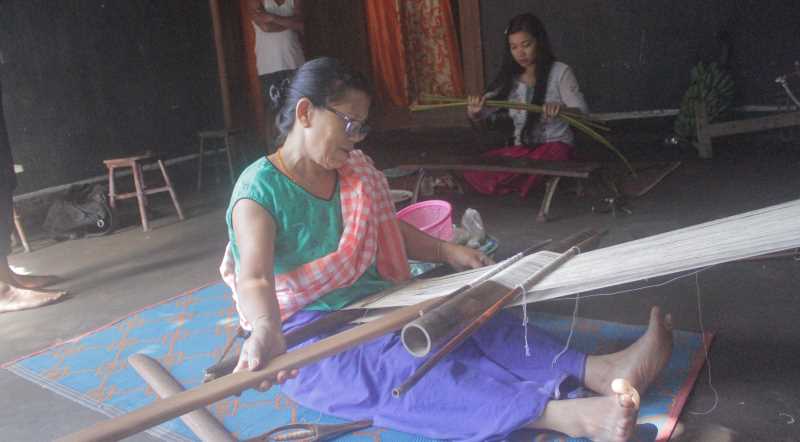
The Sangai Festival was once a celebration of Manipur’s multicultural identity. It showcased tribal dances from the hills, weavers from remote villages, musicians from the valley, artisans from border towns, and culinary traditions that represented the entire state. This diversity gave the festival meaning. It demonstrated unity through culture.
This year, that unity is impossible. All the communities from the Manipur Hills cannot participate. Valley communities refuse to participate. Displaced persons are protesting. Many performers have lost homes, instruments, or family members. The festival has become a one-dimensional, few-select-only event stripped of the very diversity it claims to celebrate.
A cultural festival without the participation of its people becomes a hollow shell. It represents not unity but division, not celebration but absence.
Ethical, Psychological, and Symbolic Harm
The symbolic damage inflicted by the festival is profound. For those who have lost loved ones, the bright lights and cheerful music serve as reminders that their pain is not acknowledged. For those living in camps, the festival appears as a deliberate disregard for their suffering. For those protesting, the state’s heavy-handed response reinforces the feeling that their voices do not matter.
Even the symbol of the Sangai deer, once a representation of Manipur’s uniqueness and fragile beauty, takes on a tragic irony. The animal’s graceful prance becomes a disturbing metaphor for a government that insists on dancing while its people grieve.
Conclusion: Restore the State First and Celebrate Festivals
Given the humanitarian catastrophe, political instability, and economic collapse facing Manipur, holding the Sangai Festival in 2025 serves no public interest. It brings no tourism, generates no revenue, and offers no healing. Instead, it wastes Crores, deepens mistrust, heightens anger, and divides society further.
Manipur does not need a festival at the moment. It needs restoration of rights and mobility. It needs the safe return of displaced families. It needs peace, security, and justice. It needs governance that listens to its people rather than suppresses them.
Only when the displaced return home, when buffer zones dissolve, when highways open, when communities interact again, and when voices of dissent are respected, can Manipur reclaim its festivals with meaning. Only then will the Sangai dance again – not as a show for outsiders, but as a symbol of a healed and united people.

Senior Editor: Imphal Review of Arts and Politics