

India continues to be a good space for filmmaking, being the land of a large number of films and a few films that have found their way to the Oscars and other famed international film festival platforms. When we talk about film institutes, while we often rely on the formal systems available in other cinema-oriented countries, there is a lack of sufficient reputed film institutes in India. While there may be a handful of institutes that offer films or filmmaking as a curriculum, and there are quite limited seats available to prospective filmmakers, many hopefuls will miss the opportunity altogether.
Manipur has produced numerous films over the last several decades but is also lacking an institute that caters to offering film education in a holistic setting. Therefore, filmmakers or aspiring filmmakers in Manipur need to rely on self-teaching or potentially travel outside the state or even to other countries to access film education. Yes, there are many successful filmmakers who did not go to film schools, but it is very important to acknowledge that proper institutes provide young filmmakers a way to learn faster and thus make better films. Many directors and technicians from Manipur had attended reputed institutions in other places, and they are also winning national and international awards.
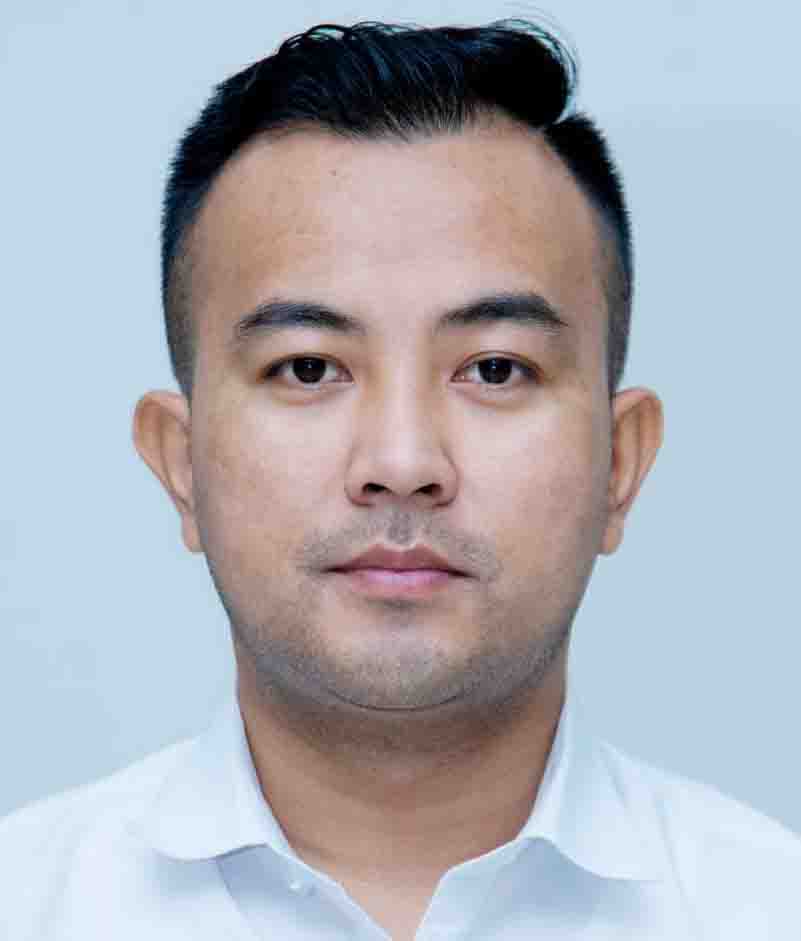
In light of this, the Imphal Review of Arts and Politics (IRAP) conducted an exclusive email interview with Shamurailatpam Bishwajit Sharma, a recipient of the LBU Global Award Scholarship who is presently enrolled in the Northern Film School at Leeds Beckett University, UK, to pursue an MA in Documentary Filmmaking. The 35-year-old director’s cinematic career began with short films like The Artist (2019) and The Linger (2015), both of which were chosen for international film festivals. He was also named one of the 75 Creative Minds of Tomorrow at the International Film Festival of India (IFFI) in 2023.
His journey from growing up in a town in the Bishnupur district to studying filmmaking in the UK is explored in this interview, which also offers insights into how aspiring filmmakers can enroll in such institutions to access the skills of the craft.

IRAP: Can you tell us about your journey into filmmaking and what inspired you to pursue an MA in Documentary Filmmaking in the UK?
Shamurailatpam Bishwajit: My love and fascination with films began in the late 90s when I was a kid watching big Hollywood films screened in the cinema halls of Manipur. I vividly remember watching movies like The Thin Red Line, Jurassic Park, Bodyguard from Beijing, etc. In the early 2000s, I was further inspired by films screened every Saturday night in the auditorium of my residential military school. Those were the days when some of my artistic friends and I started having deep conversations about Hollywood.
However, my serious decision to pursue filmmaking came around 2008–09, when I turned to more meaningful and profound films as a way to cope with disappointments in life. Films became both a source of hope and a dream, guiding me toward where I wanted to be. Since then, it has been a long journey full of ups and downs—a true roller-coaster ride.
My primary interest in filmmaking had always been fiction, though I remained open to documentaries. The decision to pursue the MA documentary filmmaking was shaped by more than just inspiration. First, the 2023 conflict in my home state of Manipur deeply moved me, and I felt the need to respond through the art of filmmaking, which drew me closer to documentaries. Second, I longed for an environment that fostered inclusivity, opportunity, and proper systems for filmmakers—something I found lacking in Manipur and even across India. I wanted to be in a place where creativity could flourish without limits. This course in the UK became that opportunity, and I decided to take it.
IRAP: How did you get into this program? What was the process like, and what prepared you for it?
Shamurailatpam Bishwajit: By the end of 2023, I began looking for top film schools around the world that also offered scholarships. The Northern Film School at Leeds Beckett University was one of the options I shortlisted. There was only one full scholarship available for a deserving student across the entire university, not just the film school. I knew my chances were slim, but I decided to give it a try.
The selection process required me to submit my CV, Resume, portfolio, statement of purpose, and two recommendation letters from established industry professionals I had worked with, followed by an interview. After receiving my offer letter from the Northern Film School, I had to compete for the LBU Global Award Scholarship, which was open to all schools within the university. In the final round, three candidates were shortlisted and interviewed from over a hundred applicants. The process was similar to the above mentioned but included an additional question in the final interview: why I deserved the scholarship, what my ambitions were, and how I planned to give back to my community if I won it.
I answered honestly and from the heart. I believe it was my passion, perseverance, sacrifices, and dedication over the years that were recognized. In the end, honesty was the best preparation I had.
IRAP: What has been the most valuable experience you’ve had in the UK program so far?
Shamurailatpam Bishwajit: I would say the most valuable experience so far has been the culture of the place and the people, even more than the filmmaking knowledge itself. Of course, I’ve learned a great deal from the course, but what I truly appreciate is how the culture here is shaping me into a better person. I believe that personal growth will naturally reflect in my films as well.
IRAP: Are there opportunities, resources, or learning methods you’ve found in the UK that you think would be difficult to find in India?
Shamurailatpam Bishwajit: In my experience, most people in the UK have a genuine appreciation for art and films. The environment is very nurturing and encouraging, no matter how small or experimental the work may be. People truly value both the practice and appreciation of art, which creates ample opportunities to showcase one’s work.
Beyond the university and film school, there are numerous film communities, networking events, and funding opportunities that serve as excellent resources. The course itself is designed around seminars, workshops, film screenings, discussions, practice, feedback, and a large amount of self-study. The learning is essentially self-driven, with resources, facilities, and guidance provided to support and shape your growth.
IRAP: As a young filmmaker from Manipur, how do you see the current state of film education there?
Shamurailatpam Bishwajit: I don’t think there’s any formal and consistent film education in Manipur except for the workshops that happen intermittently at MSFDS and MSFTI. To my knowledge, the efforts to run formal courses at MSFTI by our senior filmmakers have not been successful enough to the level intended due to the lack of support from the government, if I am not mistaken.
IRAP: Do you think Manipur (and India more broadly) provides enough space for documentary filmmakers to grow?
I believe that for a society to truly appreciate art, it needs a certain level of awareness, sensibility, and intellectual engagement, elements that are often tied to the overall quality of life. In India, and especially in Manipur, most people are still struggling with basic survival needs, which leaves little room for the appreciation of art. In Manipur, this is made even more difficult by its long history of turmoil and conflict.
That said, I do see encouraging new initiatives emerging across the country. However, funding remains a major challenge when it comes to producing high-quality films. More often than not, we have to look beyond India for financial support to bring such projects to life.
IRAP: What differences do you notice between studying filmmaking in the UK and the opportunities available back home?
Shamurailatpam Bishwajit: There are a ton of stories in Manipur that can and need to be told. That’s the only opportunity I see, and it feels more like a responsibility than a means of livelihood. So, there’s always a dilemma about how to survive as a filmmaker in Manipur. You often end up looking elsewhere to earn. The problem is that there is no culture, system, or opportunity to decently do a part-time job while pursuing the primary goal of making films.
In this context, I always remember the words of our late theatre personality Ratan Thiyam: “Manipur is a heaven for art but hell for artists.” So, it’s still a big dilemma in my heart as to where I should be in the future.
IRAP: What advice would you give to budding filmmakers from Manipur or India who want to study abroad in a program like yours?
Shamurailatpam Bishwajit: Today, knowledge is accessible from anywhere in the world with an internet connection. So, it’s really important to understand yourself and what you are looking for. There are very good film schools in India as well, which raises the question – why study abroad? Or even, why go to film school at all?
For me personally, it was always about finding an environment that aligned with my dreams and personality. There’s much more involved than mere knowledge in filmmaking. My advice would be: know yourself and do thorough research. Any film school in any country is different and unique in their own ways including their selection criteria. So, figure it out in advance and prepare accordingly. It’ll also be wiser to study and network where you intend to build your future because it takes time to establish yourself and connect with people.
IRAP: How do you hope to bring your learning and experience back to your own community or region?
Shamurailatpam Bishwajit: I have always thought about this, and it’s been a difficult one really. I am still thinking because anything significant demands collective, visionary and sincere efforts. Perhaps for now, I am happy to share what I know with those who are open and eager to hearing.
IRAP: Looking ahead, what kinds of stories do you want to tell as a filmmaker?
Shamurailatpam Bishwajit: The kind of stories I want to tell keeps evolving and changing as I change and grow as a person. However, personal yet universally resonant stories inspire me the most.
The writer is a media scholar and professional