To approach the political present of Manipur without attending to the long durée of its governance structures is to risk mistaking the episodic for the foundational. This reflection is speculative, an exercise in thinking with rather than against the grain of official narratives, and in turning the critical gaze back upon those of us who write, speak, and act from within this political ecology.
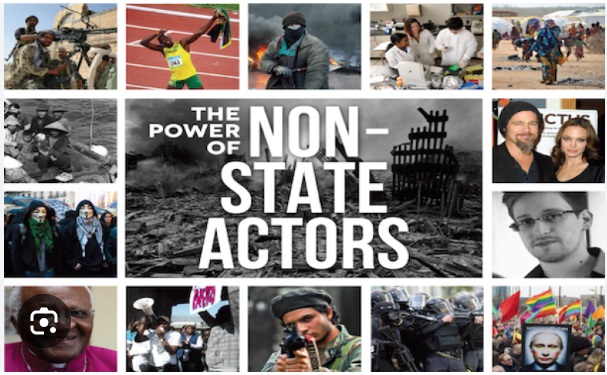
One might begin with Mahmood Mamdani’s insight that modern governance in postcolonial spaces often emerges from a “bifurcated state,” in which centralised authority coexists with decentralised, quasi-autonomous forms of rule. In the Northeast, and Manipur in particular, this bifurcation has historically been mediated by the presence of armed non-state actors, civil society intermediaries, and ethnic representative bodies. What appears, from the outside, as antagonism between these forces may, on closer examination, resemble what Partha Chatterjee calls “political society”, a dense mesh of negotiations, accommodations, and informal recognitions that make everyday rule possible.
If such a relationship exists in Manipur, it may not be an aberration but rather the underlying architecture of state functioning and government formation. Hypothetically, successive governments, regardless of party, have navigated power not simply through formal electoral victory but through calibrating relations with select non-state actors. The BJP’s arrival in power in Manipur did not, by this reading, inaugurate a rupture but brought into sharper relief the alignments between the centre’s Hindu majoritarian ethos and a state-level majoritarianism that can be read as Meitei-centric. Whether this is a matter of ideological synchrony or pragmatic convergence remains open to interpretation.
From such a vantage, one might speculate that the layered majoritarianism of present-day Manipur mirrors the centre’s own logic of governance: the production of legitimacy through claims to protect a dominant cultural-political community while managing minorities as subjects to be accommodated, contained, or pacified. The Indo-Naga ceasefire of the late 1990s could be seen, in retrospect, as a moment that amplified Meitei anxieties about political marginalisation, producing what some scholars might interpret as an intensified ethno-nationalism in the valley. This, in turn, has arguably shaped the contours of state–non-state negotiation ever since.
In this speculative frame, the distinction between “civil society” and “insurgent front organisation” is less a fixed boundary than a shifting continuum. James C. Scott’s notion of “infrapolitics”, the dispersed, often hidden forms of negotiation between power and its subjects, offers one way to think about how such organisations operate. Groups that appear independent may, at times, draw on resources or symbolic capital from armed movements; those same movements, in turn, may adopt bureaucratic or civic idioms that align them more closely with state apparatuses. It would be difficult, under these conditions, to speak of pure opposition.
Recent developments suggest that the state itself may have learned to reproduce, or even manufacture, its own “civil society” actors, valley-based cultural bodies, youth organisations, and volunteer associations that resemble autonomous community groups but whose emergence aligns suspiciously with moments of political crisis. Such formations, if indeed shaped by state initiative, could serve to channel dissent into predictable, negotiable forms. Whether such tactics originated in Imphal and were later refined in Delhi, or vice versa, is a question worthy of further inquiry.
If this hypothesis holds, then intellectuals occupy a particularly ambiguous position. As Mamdani reminds us, the postcolonial state often co-opts intellectual labour to legitimise its interventions. In Manipur, scholars, journalists, and cultural producers have, at various points, mediated between state and non-state, provided interpretive frames for policy, or amplified particular ethno-political claims. While often undertaken in good faith, such engagements risk entangling intellectuals in the very apparatus they critique. This is not an accusation but a recognition that the demand for relevance can draw critical voices into proximity with power.
Here, self-criticism becomes unavoidable. If we, as part of civil society or the intellectual class, have been quick to identify the dangers of centralised Hindu majoritarianism, have we been equally willing to interrogate the majoritarian impulses closer to home? Have we conflated tactical alliances with principled politics? Have we allowed the ritualised antagonism between state and non-state to pass for genuine contestation?
Framing these as questions rather than verdicts is deliberate. To assert them as facts would invite predictable denials; to pose them as speculative inquiries invites engagement. Yet the underlying suggestion is sobering: the endurance of the state–non-state relationship may not be despite conflict but because of it. Each side legitimises the other’s continued existence; neither benefits from the total elimination of the other. The antagonism is productive.
If so, then the current crisis, whether described in terms of ethnic violence, governance breakdown, or democratic erosion, is less the failure of a particular regime and more the exhaustion of a political model. Movements that once defined themselves against the state have been drawn into its circuits of negotiation and co-optation. The state, for its part, has absorbed the tactics and idioms of the non-state, further blurring the line between ruler and rebel. In such a configuration, “victory” for either side is not the point; managed stalemate is.
The speculative danger, then, is that this arrangement may prove self-reinforcing. So long as civil society, whether organic, insurgent-linked, or state-manufactured, operates within the parameters set by this symbiosis, its capacity to generate transformative politics is limited. Breaking the cycle would require imagining solidarities and institutions that do not depend on either the state’s patronage or the non-state’s protection. Whether such imagining is possible, or even desired, remains an open question.
In the meantime, perhaps the most honest stance is to admit the limits of our own positioning: that in speaking about the entanglement of state and non-state in Manipur, we are also speaking about ourselves, our organisations, and our complicities. To blur the lines between description and self-description is not simply a methodological choice; it may be the only way to speak truth in a political environment where truth itself is always already negotiated.

The writer is an independent researcher holding a Ph.D. from the CSLG at Jawaharlal Nehru University (JNU), New Delhi. His research focuses on questions of constitutionality, governance, and indigeneity in India’s Northeast, as well as issues related to insurgency and counterinsurgency.