
We watch films. We enjoy them. And then we forget them. Sometimes, we treat them as nothing more than momentary entertainment. But that isn’t quite true. Films represent more than entertainment; they are active records of a society’s values, politics, art, and daily life. Without preservation, an entire visual history of cultures could disappear into history. Cinema is among the most potent means of cultural expression, conveying the hopes, struggles, and identity of peoples over time. Yet time erodes so many films through neglect, insufficient storage, or technological obsolescence.

The focus here is mostly on celluloid films, not the digital formats that are so easily stored on computers or cloud-based servers. This creates an additional urgency for film archiving and restoration, beyond simply documenting works of art, collecting memory, and preserving the memory of communities and nations. While countries such as the US, France, Italy, and India have established a global infrastructure for preservation, local cinemas like Manipur have a rightful claim to a historical past of equal significance; it, too, must be preserved.
Luckily, work has been initiated on that front in the state. Since 2021, headed by secretary Sunzu Bachaspatimayum, the Manipur State Film Development Society (MSFDS) has been championing preservation. Additionally, the S.N. Chand Cine Archive & Museum which opened in April 2021, by the MSFDS, creates a forum for the preservation and commemoration of Manipuri cinema, which is an excellent legacy for future generations to study and remember cine and filmmakers of the past. Most importantly: the visual history.
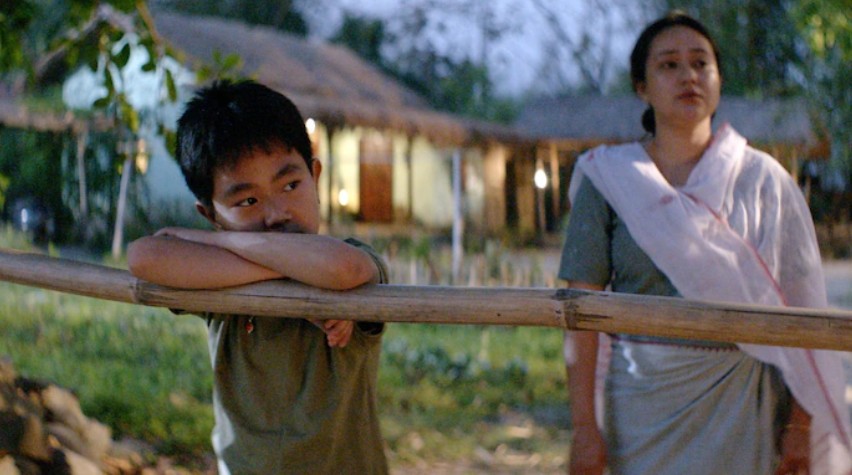
In the short period of the last five years, the MSFDS archival project had a remarkable amount of work accomplished. Through the preservation of Ishanou, a film by Aribam Syam Sharma, not only was a significant piece of cinema preserved, but it was also recognized internationally, screening as a part of the parts of the 78th Cannes International Film Festival, in 2023, as a part of the Cannes Classics.

“Restoration work continues on Imagi Ningthem (1982), and Brojendragee Luhongba, the first feature film directed by a Manipuri filmmaker, has been digitized in 4K format. The surviving reels of Mainu Pemcha have also been digitized, though the complete reel remains lost,” says Film Archivist Rajkumar Johnson.
Significantly, Imagi Ningthem had already gained international recognition for Manipuri cinema when it won India’s first Grand Prix at the Festival of Nantes. Currently, MSFDS is working to restore an additional 132 delicate reels, which include 10 feature films and 5 documentaries. The digitization process is taking place at the National Film Archives of India under the National Film Heritage Mission. This partnership indicates that the regional and national preservation organizations are beginning to work together.
At the center of Manipur’s film preservation movement is Sunzu Bachaspatimayum, secretary of the Manipur State Film Development Society (MSFDS). He has spent the last 5 years leading a careful initiative to rescue Manipur’s threatened film culture, until now quietly.
Under his leadership, MSFDS has begun digitizing some of the state’s most important films, including Operation Sangai (2000), Lamja Pasuram (1974), Keibul Lamjao National Park (1984), The Maram (1994), Hayengna Kanaginoo (2000), Kombirei (1988), Mayophygee Macha (1994), Nongju Ahing (2002), Kanaga Hinghouni (1996), Sambal Wangma (1993), and Meichak (2000), among many others. Other rare works, including Chinglenshana, Meiree, and several 8mm prints, are in preparation for digitization as well.

Sunzu underlines that digitization is the first and would probably be the most important step in the preservation process. Films are preserved in a digital format before being restored – the restoration of films takes time and money. The first Manipuri feature film by a Manipuri director, Brogendrogee Luhongba – has been digitized, and awaits restoration. “The main mission since we opened the S.N. Chand Cine Archive & Museum in April 2021 has been to digitize as many films as possible before they potentially disappear,” he states.
The urgency is undeniable. Over the many years, countless films and negatives have already vanished. Historically, producers viewed films only as consumer entertainment; they would show them in a theater, make a certain amount of revenue, and eventually let them succumb to dust when profits waned, either folding the reels or tossing them in a bag, or storing them in unsafe places. What earlier could be disregarded as dispositional entertainment has become an irreplaceable cultural memory instead: a visual record of the timeless nature of Manipuri identity, society, and art.
When MSFDS began their archival initiative around the year 2020, the team reached out to producers in the state. Volunteers were able to go and collect the old reels after filmmakers agreed to the project. Unfortunately, due to years of improper storage, the majority of the films were damaged beyond repair. Some were found on top of roofs or terraces, decomposing.
In addition to keeping the films, the MSFDS is archiving artifacts, and other elements from early Manipuri cinema. The archive contains an 8mm camera, a Bolex 16mm camera, an 8mm projector, along with a number of 35mm projectors, and other old equipment, once owned by filmmaker K. Ibohal Sharma. In addition, they are beginning to catalog film posters, and other related memorabilia with an eye towards helping understand and connect people with the overall cinematic past of Manipur.
While most efforts currently are directed to celluloid, there is a major concern over digital preservation. Sunzu acknowledges that if digital films are not properly archived, then they are also at risk of being lost. MSFDS has already created a format for preserving digital works, and has requested local filmmakers to deposit their films with them in safe keeping. But, they have had little response from the filmmaker community, as only three filmmakers have deposited their films.
Preservation is not limited to physical films alone. MSFDS has also begun to record the oral history of significant film figures to preserve the memories of the past that are otherwise decaying. Interviews have been recorded with some significant film initiators such as Dr. Arambam Lokendra, R.K. Bidur, Kshetrimayum Rashi, Banka Sharma, Aribam Shyam, Tomba Kangabam, Yengkhom Roma, and Ngangbam Swarnajit. The process is ongoing; MSFDS sees this as necessary to preserve the voices of Manipuri cinema for future generations. Currently, the S.N. Chand Cine Archive & Museum is for academic and scholarly purposes, and only a handful has visited at this time; however, it remains open for the public.
Infrastructure and capacity-building are a priority area of MSFDS. Supported by Tata Trust and in conjunction with the Film Heritage Foundation, Mumbai, the archive was able to set up a film conservation lab, vacate space for a film vault, and two rewinding tables. Sunzu expresses the importance of this relationship, “Working with the Film Heritage Foundation helps us follow best practices in film preservation, even if we don’t have adequate funding yet. It just makes sure our archive is up to standard.” In addition, there are now plans to fund the salaries of three film archivists over the course of two years, enhancing the human resources required to write this preservation work.
Moving forward, MSFDS would like to expand their facilities to a 50-seater theatre, a conference hall for workshops, and additional archive materials from Hyderabad. Sunzu emphasizes protecting celluloid and digital films, “We must protect and preserve these films for the future generation. We are clear about our aim: to remain a leading state in film archiving.”
The archive currently has a public gallery, a main exhibition hall, and a screening space, and will be adding post-production facilities with the new archivists at the helm. Grant funding is being provided for materials and basic archival equipment, which Sunzu calls the beginning for “one of the most functional and best-practice archives in India.”
With these projects, Manipur is leading the way in film archiving through restoration, digitization, oral history, and outreach, for the continued circulation and existence of cinematic heritage within the region.

The writer is a media scholar and professional