
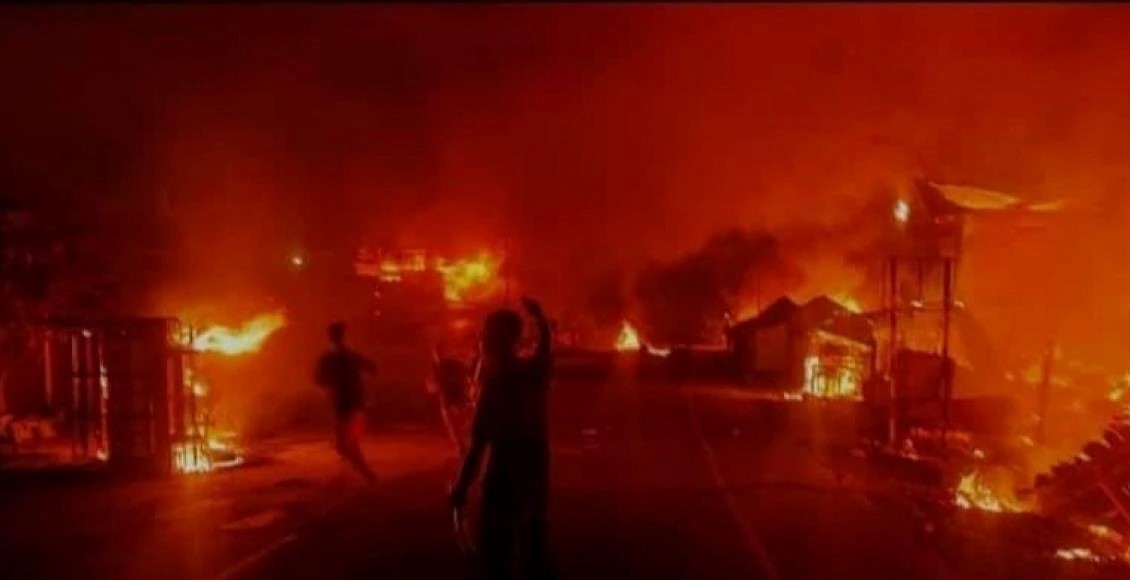
On May 3, 2023, violence against government properties and Meiteis erupted in Manipur’s Churachandpur district. What began as “Tribal Solidarity March Against Meetei/Meitei ST Demand” under the aegis of the All Tribal Students’ Union, Manipur (ATSUM) in tribal dominated districts of Manipur quickly spiralled into one of the worst episodes of violent conflict the State has seen in decades.
The violent conflict that erupted on May 3, 2023 in Churachandpur, and the bordering areas of Bishnupur district; and later spread in the night of the same day in Kangpokpi, peripheries of Imphal East district bordering Kangpokpi district, Indo-Myanmar Border town of Moreh under Tengnoupal district, peripheries of Central Valley surrounded by Kuki-Zomi dominated hills, and retaliatory or counter attacks against Kuki-Zomis in Imphal, and later violence in Jiribam district had devastated lives – both direct and indirect victims – across the State. Thousands of homes were torched, destroyed and levelled to the ground, over 61,000 people displaced and languishing in relief camps, over 270 deaths, over 32 are still untraceable. The communities ripped apart by fear and mistrust. Meiteis are sieged within Manipur Valley and not allowed to step on the National Highways – NH-2 and NH-37 beyond the Valley with the enforcement of “Buffer Zones” by the Security Forces while the Kuki-Zomis are unable to access the Imphal airport and medical facilities in the State capital, except the recent visit of the leaders of Thadou Inpi Manipur (TIM) who denounce the non-ethnic but political “Kuki” nomenclature. Yet, nearly two and half years later, the crisis remains unresolved, the communities remain divided, and accountability is still elusive. Prime Minister Narendra Modi still remains silent.
Into this silence steps the report of the Independent People’s Tribunal on the Ongoing Ethnic Conflict in Manipur of the People’s Union for Civil Liberties (PUCL). The Tribunal was under the chairmanship of former Supreme Court judge Justice Kurian Joseph. The report released on August 20, 2025 at the Press Club of India, New Delhi documents the origins, nature, and consequences of the devastating violence that began on May 3, 2023, involving the Meitei and “Kuki-Zo” communities.
When the 692-page Independent People’s Tribunal on the Ongoing Ethnic Conflict in Manipur released its report, it was hailed in many quarters and given wide media coverage as a much-needed account of one of India’s most troubling internal crises.
According to the report, the violent conflict is rooted in deep-seated ethnic divisions, socio-political marginalisation, land disputes, and a series of provocative state actions, including the Manipur High Court’s directive recommending Scheduled Tribe (ST) status for Meiteis. This order, perceived as a threat by tribal groups, catalysed protests that were met with violent counter-mobilisation.
“The violence was not spontaneous but orchestrated, enabled by armed Meitei vigilante groups like Arambai Tenggol and Meitei Leepun, and facilitated by state complicity and law enforcement failures,” the report emphasises.
The Tribunal’s report set out to document this tragedy. Its executive summary –comprehensive, searing, and often courageous – presents the conflict as an “orchestrated campaign” largely targeting the “Kuki-Zo” community, with State complicity enabling widespread atrocities. It highlights sexual violence, the collapse of justice, and the failure of relief and rehabilitation.
But for many in Manipur, especially Meiteis, the report fails in a crucial respect. It does not grapple seriously with their own experience of violence – nor with what they see as the central fact of the conflict: that it was not a one-sided pogrom, but a cycle of planned, militant-driven attacks in which Kuki-Zomi militant groups played a central role. In neglecting this dimension, the Tribunal risks reinforcing the very divisions it claims to heal.
The Tribunal’s Story
The report moves with impressive scope. It begins by situating the conflict in Manipur’s complex history including Merger of Manipur with India in 1949: ethnic divides between valley-dwelling Meiteis and hill-dwelling tribes, decades of land disputes, and constitutional grievances. It argues that the immediate spark was the Meitei demand for Scheduled Tribe status, which Kuki-Zomis saw as threatening their protections.
From there, it turns to the violence itself. Chapter Four is its emotional centrepiece, presenting the burning of “Kuki-Zo” villages in the valley as orchestrated rather than spontaneous. Survivor testimonies, photographs of looted police armouries, and reports of mobs allegedly mobilised with political cover create a damning picture. The State government, the report claims, stood by or even abetted this violence.
Later chapters highlight the gendered brutality inflicted on Kuki women, the dire humanitarian crisis in relief camps, the failures of the judiciary, and the internet shutdown that exacerbated impunity. The report ends with a prescriptive agenda: truth and reconciliation commissions, educational reforms, and monitoring by the Supreme Court and international observers.
As an advocacy document for Kuki-Zomis, it is forceful. As a chronicle of “Kuki-Zo” suffering, it is invaluable.
Where It Falls Short
Yet the report also has weaknesses, and acknowledging them is essential if it is to spark meaningful dialogue rather than deepen divisions.
First, the tone is unmistakably accusatory. The Meitei community and the State government are portrayed largely as aggressors, while “Kuki-Zo” groups are mostly cast as victims. Violence by the Kuki-Zomi militants in the hills is mentioned but not examined with equal depth. Nor is the Naga perspective – vital in a State where they form nearly a quarter of the population – explored in detail. This imbalance may reflect the evidence collected, but it risks alienating those who feel their suffering has been minimized.
Second, the reliance on testimonies, while powerful, sometimes leaves the report vulnerable to criticism. Statistical data is cited but not presented with the rigor that an official commission might demand: clear casualty breakdowns, economic loss estimates, or displacement figures disaggregated by community. Without this, detractors can dismiss it as anecdotal or biased.
Third, the prescriptions, though visionary, may strike many as unrealistic. A truth-telling commission in Manipur? Peace indices and civic education curricula in a deeply polarized political environment? These are worthy aspirations, but without a practical roadmap, they risk being dismissed as utopian.
What The Tribunal Leaves Out
Yet what the report does not say is just as important as what it does. For large sections of the Meitei community – and even for some Nagas and other ethnic groups – the Tribunal’s account feels lopsided.
The Missing Narrative of Meitei Suffering
Meiteis were not untouched victims in this conflict. Entire Meitei settlements in Churachandpur, bordering areas of Churachandpur and Bishnupur districts, Kangpokpi, Moreh, Jiribam and in the peripheries of Churachandpur, Kangpokpi, and other hill districts were attacked and destroyed. Hundreds were killed or injured. Thousands fled their ancestral homes, many of which were burnt to the ground, structures were bulldozed. Yet in the Tribunal’s report, these incidents receive cursory mention, overshadowed by the detailed focus on “Kuki-Zo” suffering.
This imbalance creates the impression that the Meiteis were aggressors alone – perpetrators but not victims. For reconciliation to take root, recognition of all communities’ pain is essential. To omit or minimise Meitei losses and sufferings is to deny their trauma, and in doing so, to undermine the report’s credibility in their eyes.
The Question of Militancy
Equally glaring is the report’s silence on the role of Kuki-Zomi militant groups. For years, Kuki-Zomi militant outfits under Suspension of Operations (SoO) agreements with the government have maintained armed camps in the hills surrounding Manipur’s Central Valley where Meiteis settle. When violence broke out, many Meiteis believe these militants launched coordinated attacks on valley settlements and security forces, fuelling the conflict’s escalation.
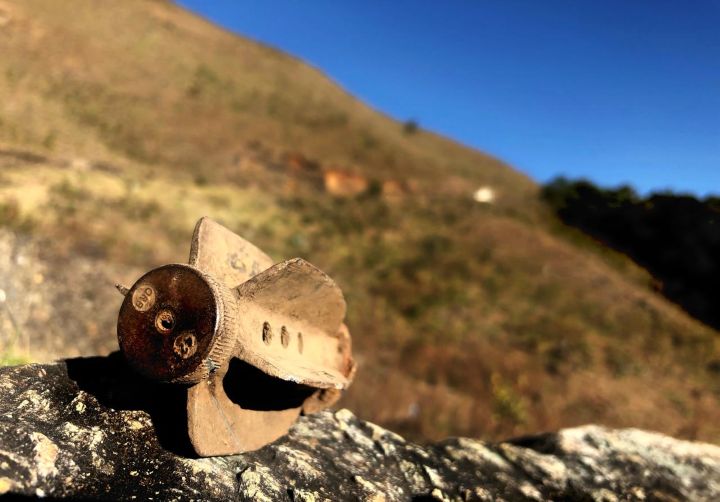
Reports of sophisticated firearms in the hands of Kuki-Zomi militants, ambushes on security convoys, attacks on Meitei settlements using drone-bombings and rocket bombs and the displacement of Meitei villages from Churachandpur, Kangpokpi, Moreh and the foothills are part of the ground realities. Yet the Tribunal’s narrative of “orchestrated violence” does not extend to examining whether Kuki-Zomi groups planned and executed systematic campaigns against Meiteis.
To many in Manipur and neutral observers, this omission feels like a blind spot – or worse, a bias. By presenting Meitei violence as organised while framing “Kuki-Zo” violence as mere retaliation or survival in contrast to general understanding of the conflict situation, the report denies symmetry of agency. In doing so, it risks deepening the sense of injustice among Meiteis, who already feel misrepresented in national and international discourse.
Neglect of Other Voices
The Naga community, too, finds itself largely absent from the Tribunal’s framing, despite forming nearly a quarter of Manipur’s population. Their experience of being caught between two fires, their fears of spillover, and their calls for neutrality receive little attention. A report aspiring to truth and reconciliation cannot afford to marginalise such perspectives.
Why This Matters
At one level, the Tribunal’s omissions could be dismissed as natural or deliberate. People’s Tribunals are not official commissions; they often reflect the priorities of the constituencies that convene them. Survivor testimonies tend to come from those with access to civil society networks, and in this ongoing conflict Kuki-Zomis activists have better organised to facilitate and reach out to the Tribunal.
But at another level, these gaps are more serious. Because the Tribunal frames the conflict as a constitutional crisis, not merely a local riot, it implicitly claims to speak for the nation. Its recommendations – truth commissions, peace education, Supreme Court monitoring – are presented as universal solutions. For such claims to resonate, the narrative must be inclusive. Otherwise, one community’s truth risks being enshrined as the truth, while another’s is dismissed.
This is not only unjust – it is politically counterproductive. Any peace process in Manipur will require buy-in from all sides. If Meiteis see themselves portrayed solely as perpetrators, they will not trust the processes that follow. Reconciliation cannot be built on selective empathy.
Strengths That Should Not Be Ignored
None of this is to dismiss the Tribunal’s efforts and genuine achievements. Its focus on the collapse of the justice system and its insistence that Manipur’s crisis is a national constitutional failure are all valuable contributions. The testimonies it records ensure that the suffering of “Kuki-Zo” women and children will not be erased.
But truth-telling is not a zero-sum game. To affirm one community’s suffering does not require the denial of another’s. Indeed, the most powerful reconciliatory documents – from South Africa’s Truth and Reconciliation Commission to Rwanda’s Gacaca courts – have been those that created space for all narratives, however painful.
What a Fuller Report Would Have Looked Like
Had the Tribunal integrated Meitei experiences more fully and without prejudice, its executive summary might have told a more balanced, and ultimately more persuasive, story. It could have equally emphasised, for instance:
- The attacks on Meitei villages in Churachandpur, Bishnupur, Kangpokpi, Moreh, Jiribam and the foothills by armed Kuki-Zomi militants.
- The perception among Meiteis that the violence was pre-planned, not spontaneous, with Kuki-Zomi militants exploiting the Scheduled Tribe agitation as a pretext.
- The displacement and trauma of Meitei families forced to flee the hills, now living in camps with uncertain futures.
- The ways in which both State failure and militant violence combined to trap civilians in a deadly spiral.
By doing so, the report would have shown that violence in Manipur is not the monopoly of any one community. It is systemic, cyclical, and fuelled by deeper structural problems. That recognition would not weaken its case against State complicity including Central Security Forces; it would strengthen it by showing that the State failed all its citizens, not just one group.
A Review, Not a Rejection
To criticise the Tribunal’s omissions is not to reject the report wholesale. On the contrary, it is to take its spirit seriously. If the Tribunal’s purpose is to bear witness and seek reconciliation, then it must be open to critique. Truth commissions everywhere have faced similar challenges: whose voices are included, whose are excluded, and how competing narratives can coexist.
The Tribunal still has the opportunity to address these gaps. Supplementary hearings, broader community outreach, and equal weightage of inclusion of Meitei and Naga testimonies and perceptions could strengthen its legitimacy.
Conclusion: Toward Inclusive Truth
The People’s Tribunal has performed an important service by drawing national and international attention to Manipur’s tragedy. It has given voice to “Kuki-Zo” survivors and exposed state failures with clarity and courage.
But truth, if it is to heal, must be inclusive. By neglecting the Meitei perception of pre-planned Kuki-Zomi militant violence, and by downplaying their own suffering, the report risks alienating the very communities it must engage. A one-sided truth may win sympathy in Delhi or abroad, but it will not build peace in Manipur.
Manipur’s crisis is too deep, too painful, and too complex for partial narratives. The task ahead is not to compete in victimhood, but to acknowledge all victims, all perpetrators, and all failures. Only then can the State move from blame to reconciliation.
Until then, the Tribunal’s report, for all its strengths, will remain an unfinished document: powerful in its testimony, flawed in its balance, and still searching for the full truth of Manipur.

Senior Editor: Imphal Review of Arts and Politics

1 thought on “Bearing Witness in Manipur Crisis, Whose Truth Counts?”
A truly brilliant analysis of the report of PUCL. The report is bias and there are evidences of lack for sincerity from the part of PUCL team members.
Comments are closed.