Why the next generation must imagine differently
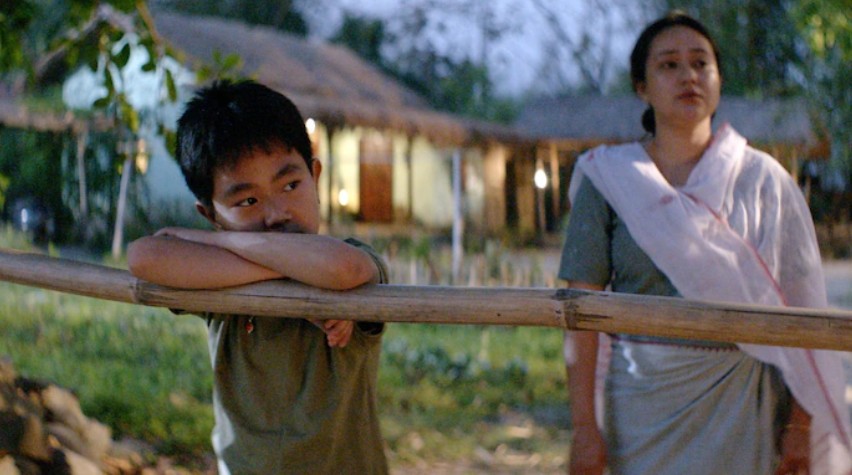
There is something deeply unsettling about the way children in Manipur are slowly learning about the world around them.
Not always through textbooks or classrooms, but through caution. Through overheard conversations. Through the silences adults carry. Through warnings about where not to go, whom not to trust, and which places now feel unfamiliar. Many young people are growing up learning fear before they learn understanding. And perhaps that is one of the quietest tragedies of what Manipur has become.
Because this land was never meant to be understood only through division.
Manipur has always been diverse. Long before politics hardened identities and conflict deepened distances, people here lived with difference as part of everyday life. Communities carried different languages, traditions, food, faiths, and histories. The hills and the valley did not look at the world in the same way, and they never fully did. But there was still interaction. Markets were shared. Friendships formed naturally. Schools brought people together. People visited one another without constantly carrying suspicion in the back of their minds.
It was never perfect. But difference itself was not always treated as danger.
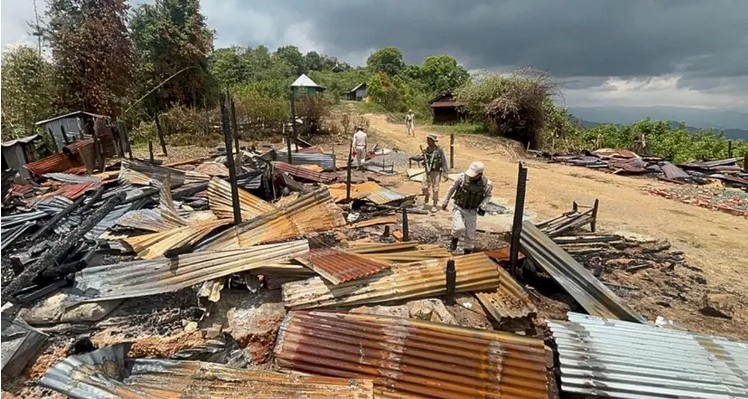
Perhaps that is what feels most painful today. Not only the violence people have witnessed, but the slow erosion of trust that followed it.
And once trust weakens, even ordinary life begins to change shape.
People think twice before travelling. Parents quietly worry about where their children study or whom they spend time with. Conversations become guarded. Communities pull inward, sometimes not out of hatred, but exhaustion. Fear has a way of shrinking societies from within.
What worries me most is not simply the present anger, but the possibility that this anger will become inheritance.
Children absorb more than we realise. They notice tension in conversations. They observe which communities are spoken about with bitterness or suspicion. They learn which grief is acknowledged and which grief is ignored. Over time, they begin carrying emotional maps they never consciously chose for themselves.
And that is dangerous for any society.
Because when fear becomes normal, coexistence begins to feel unnatural.
The difficult truth is that many of the ideas and solutions Manipur has relied on for decades have not brought lasting peace. Political negotiations come and go. Statements are issued. Agreements are celebrated briefly and then forgotten. Yet ordinary people continue living with uncertainty underneath it all.
Maybe that is why the next generation cannot simply inherit the thinking of the generations before them.
Every society reaches moments when old ways of thinking stop leading anywhere meaningful. When that happens, younger people are forced to imagine differently — not because they are necessarily wiser, but because continuing the same patterns becomes unbearable.
The next generation in Manipur may have to ask questions older generations became too wounded, too angry, or too tired to ask anymore.
What would it mean to recognise another community’s pain without feeling that our own suffering is being diminished?
What would it mean to protect identity without turning identity into isolation?
What would it mean to disagree deeply and still refuse to dehumanise one another?
These questions sound simple until they are placed against the realities of Manipur. Too much grief sits beneath every conversation now. Too much memory. Too much distrust. Sometimes people become so occupied defending their own hurt that they no longer know how to make space for anyone else’s.
And yet, if the next generation cannot learn to do this, Manipur risks becoming trapped in an endless cycle where fear simply passes from one generation to another.
No society can live like that forever.
Still, there are small reasons to hope.
Young people today are growing up differently from their parents. Many study outside the state. Many encounter different cultures and ideas through friendships, travel, and the internet. Many are exposed to ways of thinking that go beyond inherited narratives. They are beginning to see that identity and coexistence do not always have to cancel each other out.
That does not mean prejudice disappears. It never fully does. But it may mean that younger people still possess the ability to imagine a future that does not look exactly like the past.
And imagination matters more than we often admit.
Every peaceful society first existed in someone’s imagination before it became reality. Someone had to believe reconciliation was possible even when history suggested otherwise.
Manipur needs that kind of imagination again.
Not the shallow kind that pretends everything is fine. Real peace cannot be built on denial. Communities deserve dignity. Pain deserves acknowledgment. Historical wounds cannot simply be ignored in the name of harmony.
But there is also a difference between remembering suffering and building an entire identity around it.
A society that only remembers its wounds eventually forgets how to dream.
Sometimes it feels as though people in Manipur are carrying a kind of emotional exhaustion they no longer speak about openly. Conflict consumes people slowly. Constant tension, outrage, fear, and uncertainty wear societies down over time. At first, people react passionately. Later, fatigue settles in quietly. Cynicism begins replacing hope. People stop believing change is possible.
And that may be the most dangerous point of all.
Because once hopelessness settles into a society, healing becomes much harder.
The next generation cannot afford to inherit only despair.
They will inherit a wounded Manipur, certainly. But they will also inherit the responsibility of deciding what those wounds eventually become. Permanent identities. Or painful histories that teach people to live differently.
Perhaps change in Manipur will not begin through dramatic speeches or political slogans. Perhaps it will begin more quietly than that. In classrooms where students refuse inherited hatred. In friendships that survive social pressure. In conversations where people choose honesty without cruelty. In young people willing to see complexity instead of reducing one another into stereotypes.
None of this is dramatic. In fact, peace rarely is.
Conflict is loud. Division creates certainty. Hatred simplifies the world into easy categories. But coexistence is slower, quieter, and far more difficult. It asks people to remain human even when fear encourages otherwise.
And perhaps that is the real challenge before Manipur now.
Not whether diversity exists — it always has. The real question is whether the next generation can still learn to live with difference without turning it into permanent distance.
Because no child should inherit a future shaped entirely by the fears of those before them. At some point, someone must become brave enough to imagine a Manipur larger than its wounds.

Sam Khumanthem writes about home, identity, and the quiet complexities of life in Manipur. His work reflects a deep connection to place, shaped by both love and uncertainty.