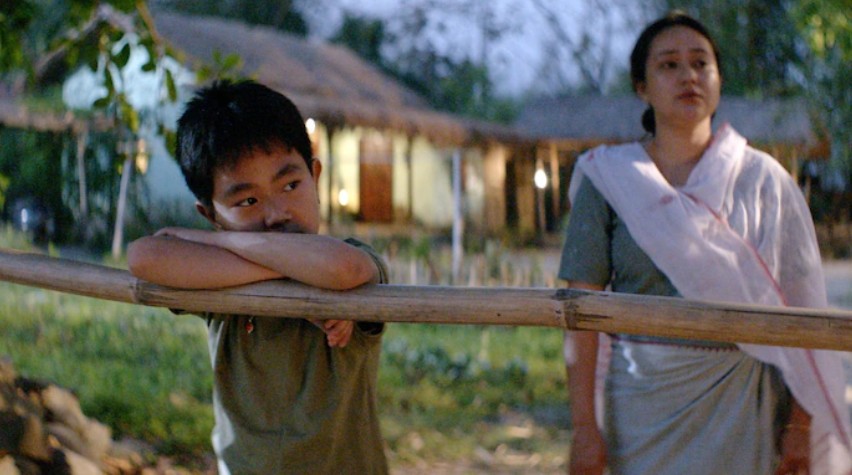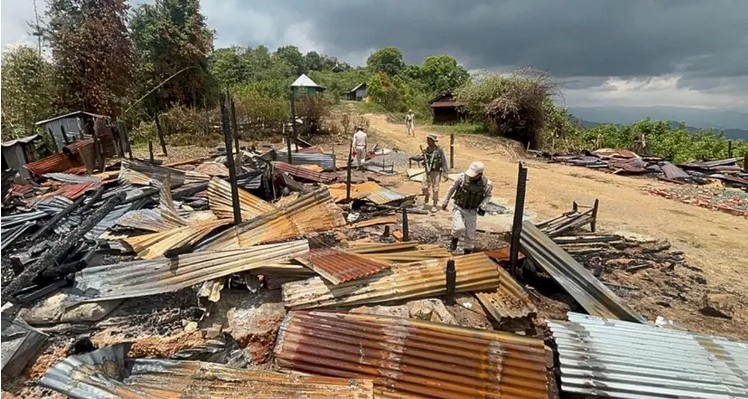

Located at 24.48° N to 25.70° N latitude and 94.50° E to 94.75° E longitude, in the north-eastern region of India, Ukhrul district in Manipur is a land of undulating hills, vibrant traditions, and deep-rooted community values. While historically perceived as peripheral to mainstream development, Ukhrul holds tremendous potential to contribute meaningfully to India’s sustainable future. With the United Nations’ Sustainable Development Goals (SDGs) providing a universal blueprint for inclusive progress, their localisation in districts like Ukhrul is critical to India’s commitment to “leave no one behind.” Addressing localised development disparities, incorporating indigenous wisdom, and aligning national and state policies with ground-level realities are key to embedding SDGs within the region’s socio-economic fabric. As global attention increasingly pivots toward marginalised geographies, Ukhrul can position itself not merely as a recipient of aid but as an active architect of grassroots transformation.
The UN’s 2030 Agenda lays out 17 SDGs that aim to eradicate poverty, reduce inequalities, ensure access to quality education and healthcare, and promote sustainable practices. In India, the NITI Aayog has spearheaded efforts to mainstream the SDGs by introducing performance indices, state rankings, and strategic action plans. Despite this top-down momentum, implementation challenges persist, especially in tribal districts like Ukhrul. Infrastructural deficits, climate change impacts, limited economic opportunities, and socio-cultural resistance to gender equity form the crux of these obstacles. Nonetheless, Ukhrul possesses assets that can be leveraged for sustainable development: resilient community structures, a strong youth demographic, increasing digital penetration, and a growing culture of local leadership in education and civil society.
A robust, multi-level governance structure is essential to drive sustainable development at the district level. State-level frameworks must empower district administrations with operational autonomy while ensuring coherence with national directives. In Ukhrul, decentralising planning to empowered District Planning Committees (DPCs) and Village Development Boards (VDBs) can ensure interventions are context-sensitive. Introducing accountability mechanisms such as citizen report cards, gram sabha audits, and public expenditure tracking systems can further enhance transparency and curb elite capture. Partnerships with academic institutions, civil society, and grassroots organisations can provide technical expertise, bridge knowledge gaps, and promote participatory decision-making. A paradigm shift from compliance-oriented governance to inclusive, trust-based systems is fundamental to ensuring that SDGs resonate in the daily lives of the people.
Localising global goals into culturally and regionally relevant action plans is central to the SDG mission. In Ukhrul, this means tailoring goals such as Climate Action (Goal 13) and Gender Equality (Goal 5) to local contexts. With increasingly erratic monsoons and environmental degradation threatening livelihoods, sustainable forest management, rooted in traditional ecological knowledge, must be integrated with modern conservation techniques. Likewise, the advancement of women requires initiatives that harmonise legal rights with culturally grounded awareness, ensuring that social transformation is both inclusive and respectful. Women’s self-help groups, girl-child education programmes, and awareness campaigns must go hand-in-hand with fostering male allyship and reshaping community narratives around gender roles.
Infrastructure development is a cornerstone of the SDG framework. While programmes like the Pradhan Mantri Gram Sadak Yojana have improved road connectivity, consistent access to clean water (Goal 6), reliable electricity, and quality healthcare (Goal 3) remains a challenge in remote parts of Ukhrul. Technological innovations such as telemedicine, solar-powered water pumps, mobile banking, and offline-first digital services offer immense promise for bridging last-mile service delivery gaps. However, technology alone is insufficient; it must be complemented by digital literacy programmes and community capacity building to ensure no one is left behind in the digital age.
Education and skills development are critical enablers of sustainable development. Though Ukhrul has a higher-than-average rural literacy rate (Census 2011), dropout rates in secondary and tertiary education remain a concern. Strengthening secondary school infrastructure, integrating vocational education into curricula, and promoting local entrepreneurship, especially in agro-based and eco-tourism sectors can align with SDG 8 (Decent Work and Economic Growth). Introducing environmental education and civic responsibility into school syllabi can help embed sustainability as a core value among the youth. Teacher training, digital tools in classrooms, and community learning centres are further interventions that can raise the quality and reach of education.
Given its proximity to the Indo-Myanmar border, Ukhrul also stands to benefit from strengthened inter-district and transboundary cooperation. The district can emerge as a regional hub for sustainable trade, biodiversity conservation, and cultural exchange. Lessons from neighbouring districts in Nagaland and Myanmar can inform cross-border strategies to address shared challenges such as drug trafficking, migration, and ecosystem degradation. Leveraging regional platforms and cooperation agreements can unlock resources, share best practices, and build solidarity in addressing development challenges.
Data-driven governance is another pillar of effective SDG implementation. While the NITI Aayog’s SDG India Index has been instrumental in fostering state-level competition, a similar framework is needed at the district level. Ukhrul must invest in community-based monitoring systems that gather disaggregated data across sectors. Local churches, women’s collectives, and student unions can be roped in to support the design and management of citizen-generated data platforms. These systems will not only inform targeted interventions but also empower communities to co-produce development outcomes.
The private sector and academic institutions must be woven into the SDG framework. Local businesses, artisans, and start-ups should be supported through access to credit, market linkages, and incubation services, ensuring that sustainability is baked into their business models. Universities and research institutions can collaborate with local governments to create evidence-based, context-sensitive policy solutions. Initiatives like organic farming cooperatives, renewable energy pilots, and circular economy models can be piloted with the active involvement of the community and students.
Funding and resource mobilisation continue to be major constraints. Though programmes like the Jal Jeevan Mission and Ayushman Bharat have earmarked significant funds, their implementation in hilly terrains is often impeded by logistical challenges. Special tribal grants must be complemented by local capacity-building efforts to enhance absorptive capacity. Public-private partnerships (PPPs), especially in the domains of clean energy, water management, digital education, and health delivery, offer scalable models to amplify impact. Additionally, exploring community-based financing models and micro-finance institutions can support local enterprise and service delivery.
The role of local governance structures, particularly the Autonomous District Councils (ADC), is pivotal. Though often resource-constrained, these councils have constitutional authority to legislate on land use, local taxation, and forest conservation. Strengthening their institutional capacity through training, budget support, and decentralised planning mandates can make them powerful agents of SDG realisation. Moreover, regular audits, transparency dashboards, and public consultations should be institutionalised within ADC operations.
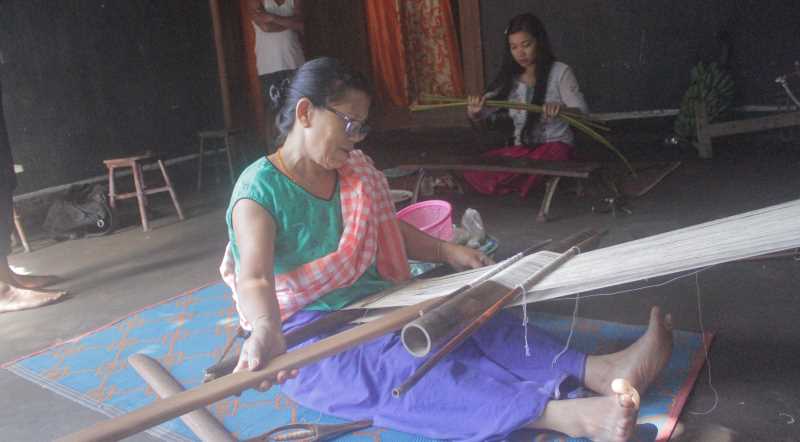
Cultural preservation is not just a moral imperative but a strategic dimension of sustainable development. Ukhrul is home to the Tangkhul Naga community, whose rich customs, dialects, oral traditions, and ecological knowledge form an essential part of the region’s identity. Promoting sustainable cultural tourism, traditional crafts, and language preservation initiatives can reinforce both economic livelihoods and social cohesion. Celebrating indigenous knowledge systems such as seed-saving practices, natural medicine, and communal conflict resolution can enrich modern development frameworks.
Bridging the digital divide is essential to ensure equitable access to opportunities. Expanding fibre-optic infrastructure, improving mobile network reach, and establishing community Wi-Fi hotspots are immediate priorities. To complement this, digital literacy programmes, especially for women, elders, and remote communities must be rolled out. Emphasis should also be placed on climate-resilient agriculture through farmer training, soil health awareness, and crop diversification strategies. Renewable energy projects like mini-hydels and community solar grids can lower dependence on imported fossil fuels and enhance energy sovereignty.
Lastly, academic partnerships must be institutionalised to ensure a continuous pipeline of research, innovation, and evidence-led policy. St. Joseph College, Ukhrul, for instance, can serve as a knowledge hub by collaborating with national and international institutions on SDG-related research, curriculum development, and community outreach due to its unique location near Indo-Myanmar Border. Embedding SDGs into academic syllabi and promoting student-led field projects can deepen local ownership of development.
The Sustainable Development Goals are not merely a global mandate, they are a moral and strategic compass for inclusive, equitable, and participatory development. For Ukhrul district, the realisation of the SDGs depends on integrating global aspirations with local realities. By leveraging community strengths, fostering multi-sectoral partnerships, and honouring indigenous wisdom, Ukhrul can emerge as a beacon of bottom-up transformation. While the path ahead presents complex challenges, it is also filled with hope, energy, and possibility. With sustained commitment, innovative approaches, and collective resolve, Ukhrul can become a model district for SDG localisation, not just for Manipur but for the entire nation.
NB:
“This paper is the result of a series of enriching interactions with my students and friends from the Tangkhul community, whose insights, lived experiences, and cultural wisdom have profoundly shaped its direction and depth. As this paper is part of an ongoing body of work, constructive reviews and discussions are most welcome”.
References
- Census of India. (2011). Provisional Population Totals. Office of the Registrar General & Census Commissioner, India. https://censusindia.gov.in
- Government of India. (2023). Jal Jeevan Mission Dashboard. Ministry of Jal Shakti. https://ejalshakti.gov.in
- Ministry of Health and Family Welfare. (2022). Ayushman Bharat-Pradhan Mantri Jan Arogya Yojana (AB-PMJAY). Government of India. https://pmjay.gov.in
- Ministry of Rural Development. (2022). Pradhan Mantri Gram Sadak Yojana (PMGSY). Government of India. https://pmgsy.nic.in
- NITI Aayog. (2023). SDG India Index and Dashboard 2023–24. Government of India. https://sdgindiaindex.niti.gov.in
- United Nations. (2015). Transforming our World: The 2030 Agenda for Sustainable Development. https://sdgs.un.org/2030agenda
- UNDP India. (2023). Localising the SDGs: Implementation Framework in India. United Nations Development Programme. https://www.in.undp.org
- Manipur State Planning Department. (2022). Manipur Vision 2030: Localising SDGs. Government of Manipur.

Dr. Aniruddha Babar is a senior academician, policy analyst, writer, and researcher currently serving in the Department of Political Science, St. Joseph College, Ukhrul, Manipur. He is also the Co-Founder and Deputy Director of the Centre for North-East Development and Policy Research (CNEDPR), St. Joseph College, Manipur