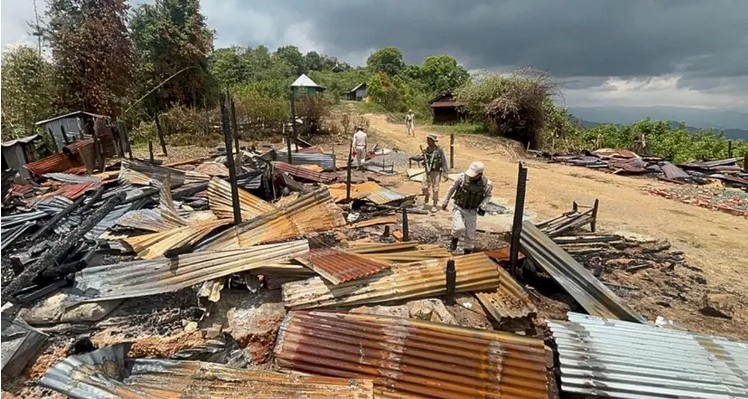
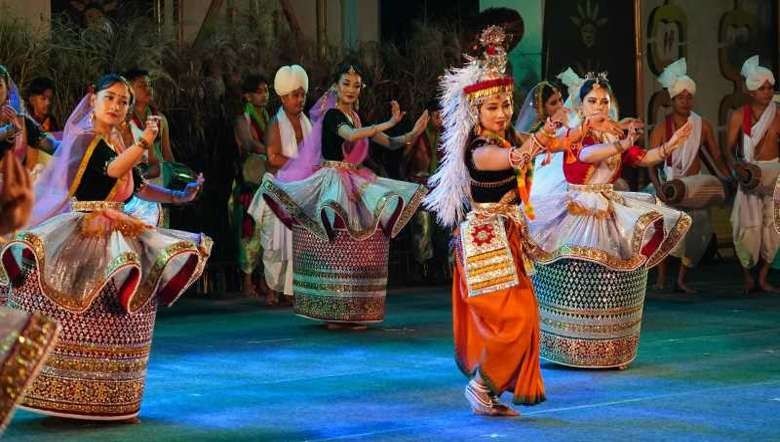
The annual Sangai Festival, is currently being held, but with virtually no public participation on account of a boycott called by several civil society organisations, responding to appeals by internally displaced victims of the ethnic conflict between Meiteis and Kuki-Zo group of tribes who have been living in uncertainty for nearly three years in several relief camps. They are of the view the festivals is untimely and insensitive, given the fact that the conflict remains unresolved and displaced population continue to languish, staring into an uncertain future with little or no hope to lean on.
The plight of the internally displaced persons, IDPs, must at no cost be overlooked or undermined. Losing home and hearths for no fault of theirs is nothing to be trifled, but more than even this is the fact of their and their children’s uncertain future ahead. The IDPs on both sides of the conflict divide must be heard and their wishes and anxieties taken into consideration in any government decisions. Even the decision to hold the Sangai Festival this year should have been with prior consultations with them to taking cognizance of their sensitivities. Only if it was possible for the matter to be reasoned out and resolved should the festival have been held, otherwise there should have been no qualm about foregoing it this year.
The trouble is, the tendency is to see the Sangai Festival as just fun and frolic time. This is understandable for the term “festival” is generally associated with celebration which is also why so many objected to it being held now. The truth is, the celebration with fun and gaiety is just one part of this annual event, but the more substantive part of it is for startups to showcase themselves and their businesses, and also to network with other players in the field. This is why foregoing the festival is also a big loss, not for the missed fun but for the missed opportunities for small-time businesses to declare themselves and build networks and customer bases.
Incidentally the annual Imphal Book Fair also has begun this week and this too is where writers, publishers and literary critics find common grounds to meet, establish links and discuss future possibilities and ideas, and not just buy and sell books. The Sangai Festival should actually be viewed in this same vein, and as a forum for those with entrepreneurial instinct. What could have been done this year is to agree to do away with the fair part of it and but go ahead with it as a confluence point and launching pad for start-ups and small businesses.
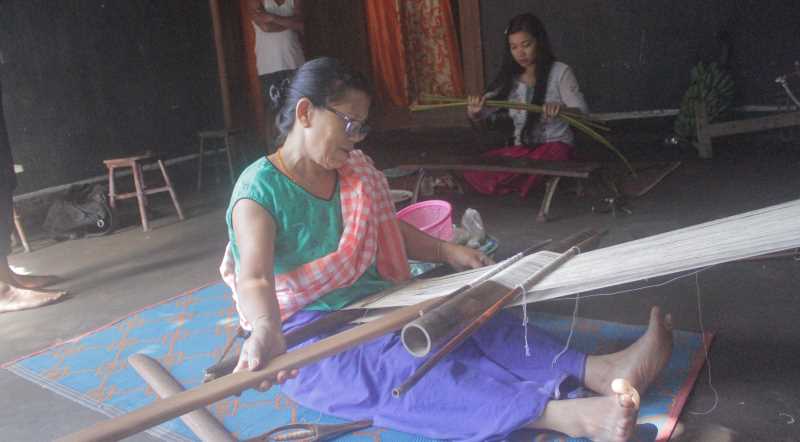
It could indeed also have been a platform for those IDPs making small livings off handicraft products they make to connect with potential investors. The example of the stelar success of the Anand Milk Union Limited, more popularly known by its acronym AMUL, is an example to emulate, even though on smaller scale. AMUL as we all know today make virtually every milk product possible and is household brand not just in the country but outside as well.
The union was launched on December 14, 1946 and got all small-time cattle owners together and the milk each owner produce, however small the amount was sold to it giving each owner a ready market, and in the process, leading to the evolution of a unique enterprise. Today AMUL’s annual turnover is estimated to be Rs. 90,000 crores.
This Sangai Festival could have been where these small handicraft makers to meet and evolve a similar strategy, assisted by the government or else some enterprising venture investors willing to start a cooperative society. As in AMUL’s case, such a body can then organise all the small-time production units inside relief camps, as well as outside, to coordinate and agree to produce things that have a ready market, do quality control, and buy whatever is produced by the small-time producers if they keep the specified standard. Such a cooperative society, or enterprise, can then retail the products in the different markets, in the state as well as outside. The exercise will of course involve skill training and standardisation besides doing market surveys.
With the right enterprise, commitment and venture capital, this can still be done even if the opportunity to discuss and conceptualise such an enterprise during an occasion like the Sangai Festival is lost this time.
What Manipur is going through today is indeed a tragic situation. That an ethnic conflict of the nature we witnessed happened is in itself a tragedy that should not have happened at all, but the fact that no resolution has been reached even after nearly three years is a bigger failing. The answer to the question is why needs to be honest and even self-critical.
Dismantling the buffer zones, opening up the highways for all to travel either way, and together with it opening up the airport and health facilities in Imphal is important. But for such a thing to happen, the responsibility must not be heaped just on the government. The participation of the public too is vital.
Instead of merely spitting fire and brimstone at the government for not using its coercive power to put the state in order, the civil society organisations too could reach out to their counterparts and see where a bridge can be established. At the moment, the only exchanges are marked by belligerent posturings, each waiting for one or the other to blink first and cave in. Instead of this, if one side or the other generously decides to ease up and promises safe passage for the other, just as Jean Paul Lederach predicted in his book “The Moral Imagination”, in all likelihood the gesture will be reciprocated in kind. The thawing of the tension should then follow as a natural consequence.
Diplomacy as they say is the ability to make the impossible possible, and this is where everybody is failing at the moment.

Editor, Imphal Review of Arts and Politics and author