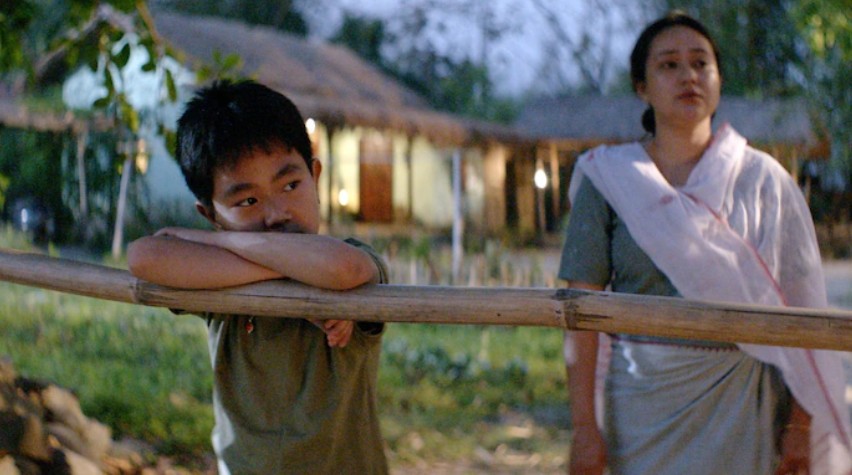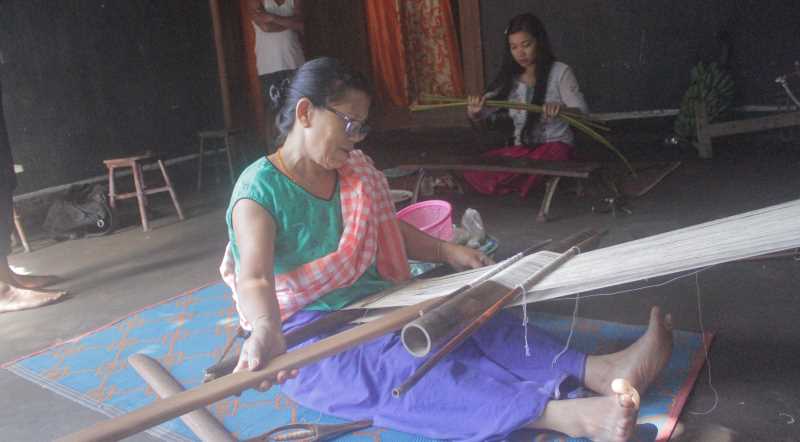

I AM SPECIAL (2017) opens not with theory, context, or explanation, but with loss in motion. At the recent screening of the film at Delhi University, this opening segment focused on Priyakanta Laishram’s mother, Jibanlata Laishram, set a tone of collective silence that persisted long after the film ended. It is a beginning that has reportedly reduced audiences to tears wherever the film has been screened, and not because it manipulates emotion, but because it refuses to soften reality.
Laishram documents the gradual deterioration of his mother’s condition due to Amyotrophic Lateral Sclerosis (ALS) through actual visuals captured over time. This choice carries enormous ethical risk. In less careful hands, such footage could easily slip into voyeurism or emotional exploitation. Instead, the film positions these images as acts of bearing witness. The camera does not dramatise the body’s decline; it records it, patiently and without intrusion. What emerges is not a spectacle of suffering, but a portrait of extraordinary courage of a woman confronting physical loss with quiet resilience and dignity.
This opening is crucial to the film’s political argument. The World Health Organization has repeatedly stressed that disability is not only about physical impairment but about how societies respond to long-term care, dependency, and vulnerability. By beginning with ALS, a condition that progressively strips away bodily autonomy, I AM SPECIAL immediately confronts the audience with a form of disability that cannot be romanticised or resolved. The emotional response it evokes is not pity, but discomfort, empathy, and self-reflection.
Equally significant is how the film addresses the social aftermath of disability. As Jibanlata’s condition worsens, the film subtly reveals a painful reality: the gradual disappearance of people around her. Friends, relatives, and acquaintances withdraw, often justifying their absence as helplessness or emotional incapacity. This withdrawal, which the UN Convention on the Rights of Persons with Disabilities identifies as an attitudinal barrier, is exposed here as a socially accepted form of abandonment. The film does not accuse; it observes. And in observing, it indicts.
A further dimension worth considering is the film’s approach to authorship and proximity. By placing his own mother at the centre of the film’s opening, Laishram collapses the conventional distance between filmmaker and subject. This proximity raises questions often debated in documentary ethics: can intimacy compromise objectivity, or does it deepen truth? I AM SPECIAL argues firmly for the latter. The filmmaker’s presence is not intrusive but accountable; the film does not aestheticise grief, nor does it retreat behind neutrality. Instead, it acknowledges that disability, care, and loss are not abstract social issues but lived, familial realities. In doing so, the film challenges the dominant expectation that social documentaries must maintain emotional detachment to be considered credible.
From this emotionally devastating opening, the film expands into a broader inquiry into disability and social response. The segment on Girish Asotra, a young boy from Chandigarh living with Duchenne Muscular Dystrophy, deepens this inquiry with a different emotional register. Girish’s family had already lost their elder son to the same genetic condition, an unimaginable loss that the film presents without melodrama. Despite this history, the family continues to live with hope rather than resignation.
Girish’s life is entirely dependent on a wheelchair, yet the film refuses to frame him through limitation. Instead, it foregrounds aspiration. Girish dreams of joining the Indian Administrative Service, a detail that carries enormous political weight. In a society and bureaucracy where accessibility remains largely theoretical, this aspiration challenges entrenched assumptions about who is allowed to imagine authority, leadership, and civic participation. The UN CRPD explicitly calls for the inclusion of persons with disabilities in governance and public decision-making; Girish’s dream quietly exposes how distant that ideal still is.
The film’s four fictional narratives further extend its critique of representation. Bhani Khamnam appears as Bhani, a deaf and mute dancer whose expressive body becomes her primary language. Ruchika Sahani portrays Ria, a woman living with bipolar disorder, navigating emotional fluctuation without being reduced to pathology. Tanishka Gujral plays Tanishka, an autistic archer whose focus and discipline dismantle stereotypes around neurodivergence. Nirav Purohit, as Albert, a visually impaired singer, embodies confidence rather than self-pity, reclaiming music as a site of agency.
Laishram’s voiceover narration connects these lives without interpreting them. This is a crucial ethical decision. Rather than translating disability for an able-bodied audience, the film demands that viewers sit with difference without explanation. Such an approach aligns closely with contemporary disability studies, which argue that representation must prioritise autonomy over legibility.
Technically, the film’s multi-location production, spanning Imphal, Mumbai, and Chandigarh, adds to its realism. The cinematography by Da Naoba, Jackson Naoroibam, Monish Aribam, Suzanna Samson, Link Media, and Jash Shah varies in texture and tone. This visual inconsistency mirrors the uneven realities of disability itself, shaped by geography, infrastructure, and access.
The film’s temporal structure further resists convention. Rather than progressing toward resolution or recovery, I AM SPECIAL embraces continuity and uncertainty. Disability is not framed as a temporary disruption to be overcome, but as an ongoing condition shaped by time, adaptation, and persistence. This temporal honesty stands in direct opposition to mainstream cinematic narratives that seek redemption arcs or inspirational closure.
As the first English-language docufiction by a Manipuri filmmaker, I AM SPECIAL occupies a distinct position. Emerging from a region historically marginalised in national film discourse, the work challenges the assumption that conversations around disability, ethics, and accessibility are metropolitan concerns alone. By situating its narratives across diverse geographic and social contexts, the film exposes how region and class intensify inequality.
Ultimately, I AM SPECIAL accomplishes not awareness in the superficial sense, but ethical confrontation. It forces audiences to witness what is usually hidden: bodily decline, emotional endurance, social withdrawal, and unextinguished hope. It asks not how disabled individuals survive, but how society fails to remain present.
Seen especially within an academic space like Delhi University, the film feels urgently relevant. It exposes the distance between disability policy and everyday practice, between representation and responsibility. By beginning with his mother’s unflinching truth, Priyakanta Laishram establishes a moral foundation that the film never abandons.
I AM SPECIAL (2017) is an English-language docufiction written, edited, and directed by Priyakanta Laishram, with production by Harendra Laishram under the banner of Priyakanta Productions.

The writer is MA in English Literature, with a keen interest in cinema and storytelling, exploring films through thoughtful and nuanced perspectives.