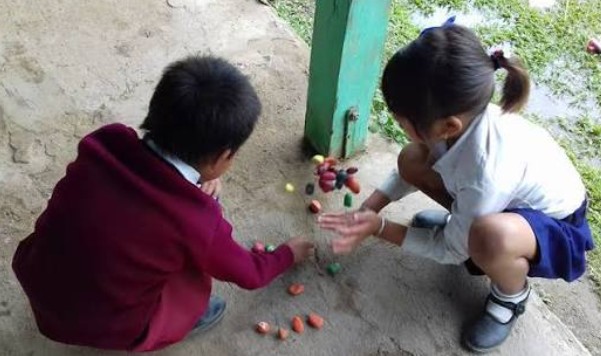

Manipur is now stepping into its third year of unrest. What began in 2023 has stretched into a long, uncertain present. The cost has been steep. Especially for students. From schoolchildren to university scholars, displacement has redrawn lives. Classrooms have vanished. Camp shelters have replaced hostels. Many students have left the state in search of education and safety. Many more remain behind, not by choice, but because leaving costs money. And they do not have it. For them, education has stalled, fractured, or quietly slipped away. In this atmosphere of fatigue and fear, questions about the future of learning in Manipur can no longer be postponed. The Imphal Review of Arts and Politics (IRAP) speaks with Johny Meitei Sagolsem, State Head for the Academia Domain of the All India Professional Congress (AIPC), Manipur.
Excerpts from the interview:
IRAP: As the head of AIPC (Academics) in Manipur, how do you assess the current state of the education sector in the state today?
Johny: It is deplorably pathetic: we lag disastrously in all facets of educational access and achievement. A chasm divides policymakers from institutional heads in crafting and executing viable reforms—bureaucrats proclaim one agenda, educators demand another, and self-styled leaders impose their own whims. The dire consequences inevitably victimize the true stakeholders: our children, deprived of genuine education.
IRAP: What are the most pressing challenges facing schools and higher education institutions in Manipur right now?
Johny: In reality, there is no effective authority overseeing the system. The state education framework is in a state of collapse. Backdoor policies have permeated the system, evolving into an entrenched culture. Proper staffing and recruitment processes are absent; even when recruitment occurs, it bypasses transparent channels. Teachers frequently hold dual positions, with proxies managing their attendance—often substitutes from nearby villages. Numerous student bodies exist in both hilly and valley regions, yet they remain silent on these issues despite full awareness, silenced by financial inducements. They negotiate deals with teachers posted remotely who refuse to serve… You understand the implications -either Machin menba or Phibul Namba. This has now become a lucrative business benefiting all involved parties. Government jobs are effectively commodified, even extending to non-governmental entities.
IRAP: How has the ongoing crisis in the state impacted academic activities, particularly in conflict-affected areas?
Johny: We trail by approximately 2-3 decades in educational development. While exact figures are elusive, the impacts are stark: COVID-19 struck first, followed by the ongoing Meitei-Kuki conflict, which has displaced countless children and students from their homes. The situation appears calmer on the surface, but tensions simmer, liable to erupt unpredictably at any moment. The government shows no genuine intent to resolve it promptly—if it did, the crisis could have been contained long ago, allowing all internally displaced persons (IDPs) to return home. The absence of decisive action suggests authorities are fully aware of the potential triggers and consequences. Economic activities have plummeted by nearly 85%, with remaining sectors at high risk due to their interdependence on the broader economy. In a landscape overrun by beggars, how can any business thrive or find customers for its goods?
IRAP: What is your assessment of their learning conditions and mental well-being?
Johny: The ongoing conflict has severely undermined the mental and emotional health of students and youth. Without peace of mind, stable emotions and temperament are impossible—their dispositions remain compromised and volatile. They are deprived of essential educational resources, systems, and infrastructure. Compounding this, examination patterns, student performance, and evaluation processes have all deteriorated due to diminished teaching and learning services. Thousands of school and college students are currently relegated to relief camps.
IRAP: Are there any initiatives from AIPC or other professional bodies to ensure continuity of education for these displaced students?
Johny: The AIPC, as an integral arm of the AICC (Congress Party), has raised the IDP crisis at the party level to explore support measures. The party has repeatedly advocated for peace and harmony, bringing the issue to the Prime Minister’s attention and amplifying it in Parliament. We have visited numerous relief camps, engaged with affected communities, and distributed essentials via party fronts. Despite our limited resources as a smaller entity, we are trying to push for the establishment of mini-libraries in relief camps at each District Headquarters—though scarce funding prevents coverage of every camp. We have approached several District Magistrates on this initiative and sought meetings with His Excellency, the Governor of Manipur, and other government departments to discuss it, but have received no response. This suggests a lack of genuine commitment to aiding the state’s people. As AIPC is new to the state, our contributions to its services have been limited thus far. However, with time and expansion into additional domains, we anticipate providing a broader range of services to the state beyond the academic sector.
IRAP: What immediate measures do you think the government and educational institutions should take to prevent long-term learning loss among these students?
Johny: The education system, as the bedrock of civilization, must be insulated from external disruptions at all costs. To mitigate prolonged learning losses, prioritize gap assessments, foundational skills, and intensive interventions like accelerated tutoring and experiential modules over extended lectures. We call on all stakeholders—students, parents, teachers, NGOs, civil society, and public/private institutions—to ensure educational continuity. Governments must expedite mobile learning units, digital platforms in relief camps, ed-tech partnerships, and training of camp facilitators as interim educators. Institutions should adapt curricula with flexible assessments, provide catch-up programs for displaced students, and integrate on-site psychosocial support. Beyond distributing free books, launch comprehensive initiatives: counseling, sponsorships, scholarships for career courses, mentorship networks, and community learning hubs. Guided by “better late than never,” let us act decisively—compromising education risks national ruin.
IRAP: How do you see the role of digital or community-based learning models in reaching children who cannot attend regular schools due to the unrest?
Johny: Digital and community-based learning models play a pivotal role in ensuring educational continuity for children displaced by unrest and unable to attend regular schools. These approaches represent an exemplary solution, particularly when conventional schooling is untenable. In such circumstances, we must adopt them extensively as primary alternatives. However, we must remain acutely aware of the digital divide, which often renders these tools inaccessible to students from economically disadvantaged backgrounds. For these vulnerable groups, community-based learning models—leveraging local resources, peer support, and accessible venues—prove ideally suited and highly effective.
IRAP: Many teachers have also been displaced or are under stress. How can the state support educators so that the learning process remains stable and effective?
Johny: Teachers fall into two primary categories—those employed by government institutions and those from private schools—necessitating tailored support strategies. Both groups can be strategically deployed to bolster community-based learning models and advance continuous education policies. Engaging them in educational activities not only alleviates their stress but also sustains their livelihoods. Governments, corporate social responsibility (CSR) initiatives, or local communities can implement direct or indirect incentive programs, such as stipends, performance-based bonuses, or alternative income streams. During the conflict’s early phase—approximately one month in, even before my involvement with AIPC—we proactively recruited numerous private-school teachers. Many continue serving effectively to this day.
IRAP: In your view, what structural reforms are required to strengthen higher education and research opportunities in Manipur?
Johny: Primarily, we require a significant expansion of higher education institutions and universities. Additionally, the system must introduce a broader array of relevant, job-oriented courses to align with contemporary demands, thereby reducing graduates’ reliance on out-of-state employment or prolonged job searches post-graduation. Recruitment processes must remain entirely transparent, free from backdoor practices. While belated, the recent notification for establishing a State Staff Selection Commission (SSC) is a welcome step. Nonetheless, we must prioritize strengthening both the State Public Service Commission and the nascent State SSC to ensure robust, merit-based hiring.
IRAP: Manipur has a strong base of talented youth, yet many migrate outside for better opportunities. What steps can be taken to retain talent within the state?
Johny: The significant out-migration of many youths from the state signals critical deficiencies—whether in resources, infrastructure, employment opportunities, or sustainable income avenues. These individuals are not abandoning their families or homeland by choice but due to systemic gaps. To retain this vital talent, initial steps must prioritize entrusting law-making to educated intellectuals, empowering them to craft enduring policies and strategies tailored to youth potentials, abilities, and skills. Subsequently, forge partnerships with multinational corporations (MNCs) through multifaceted projects, while channeling special funding packages exclusively into income-generating and productive ventures.
IRAP: How can academic institutions become platforms for social healing and reconciliation amid the current divide in Manipur?
Johny: Academic institutions have historically served as pivotal agents in social healing and reconciliation, a role embedded since the founding of ancient centers of learning. This responsibility extends to all social and religious organizations as well. These entities must collaborate seamlessly to bridge divisions and foster unity. At this critical juncture, all decisions on state affairs should be made collectively, eschewing unilateral actions.
IRAP: Do you think the state’s education policy adequately reflects the diverse needs of communities across Manipur’s hills and valley regions?
Johny: No, it unequivocally does not. Rather than apportioning blame to state functionaries amid the evident tragedy unfolding before us, we must confront the stark disparities: these persist not only between Manipur’s hill and valley regions but also within valleys and among hills themselves—manifesting in unequal access to infrastructure, qualified teachers, curricula relevance, and support services. While education’s core principles are universal, effective policies must be adaptable to local contexts, incorporating multilingual instruction, culturally resonant content, and region-specific infrastructure like all-weather schools in hills. Recent assessments reveal hill areas lagging in enrollment (by up to 30%) and learning outcomes compared to valleys, underscoring the policy’s failure to address terrain challenges, ethnic diversity, and socio-economic variances. Comprehensive reforms—such as decentralized planning, community input mechanisms, and targeted equity funding—are urgently needed to ensure inclusive, contextually relevant education for all.
IRAP: How can public–private partnerships or collaboration with national universities help uplift Manipur’s academic landscape?
Johny: Public-Private Partnerships (PPPs) can drive educational advancement if implemented with rigorous oversight, efficiency, and strong mechanisms. However, I approach them pragmatically with caution, not unfounded optimism: they remain impractical in our state currently. Local investors favor high-return sectors like contract works for quick profits over education’s long-term societal benefits. My focus is real-world viability, not theory. CSR funds are unreliable for model institutions or universities amid resource constraints. Still, strategic PPPs with national university collaborations offer transformative potential via incentivized frameworks like tax benefits and performance-linked grants. They serve as “force multipliers” for resource-limited states like Manipur, leveraging private capital/efficiency and national intellectual prestige to bridge gaps faster than state funds alone. National universities (e.g., IITs, IIMs, Central Universities) could adopt regional colleges in backward states for a “trickle-down” excellence effect, enabling skill centers, curriculum synchronization, faculty exchanges, etc., with firm intent and commitment. The key question: which private sectors or corporations would participate?
IRAP: What long-term vision does AIPC (Academics) have for building a more inclusive and resilient education system in the state?
Johny: Well, you know that we act as a “Systems Catalyst” rather than being a service provider. We are not meant for establishing any institution. We act as a change agent to accelerate, facilitate, or spark transformation within complex systems (such as organizations, social structures, etc.) and work to align stakeholders, remove bottlenecks, and foster collaboration to create lasting impact. We are “Enablers of Change” to identify “leverage points”—areas where a small shift can lead to significant, widespread improvements.
We prioritize the goal of improving the system, often working behind the scenes to help others move forward.
IRAP: Finally, what message would you like to share with the students and teachers of Manipur who are striving to continue their educational journey despite these difficult circumstances?
Johny: To the resilient students and dedicated teachers of Manipur: We shall triumph over adversity through the power of education. Redouble your efforts, ensuring it remains a force for unity and progress, never destruction. Only through education can we attain enduring peace of mind—for ourselves and our communities.
The writer is a media scholar and professional