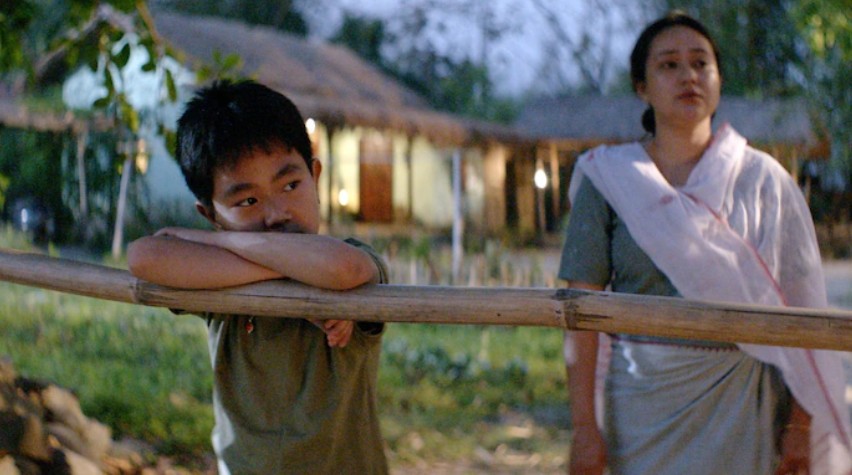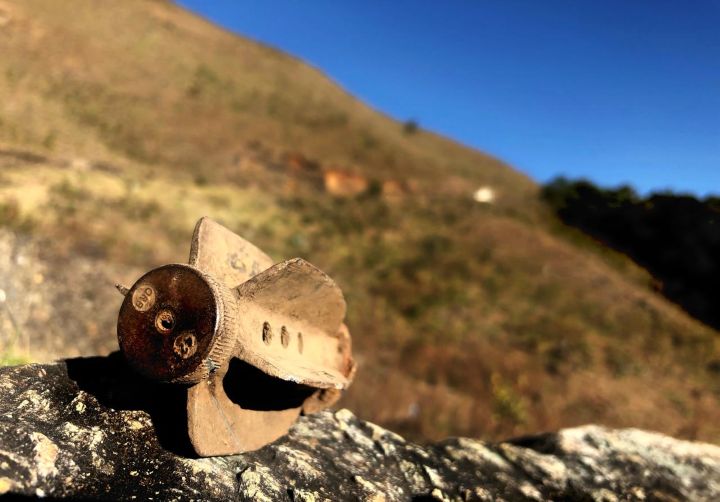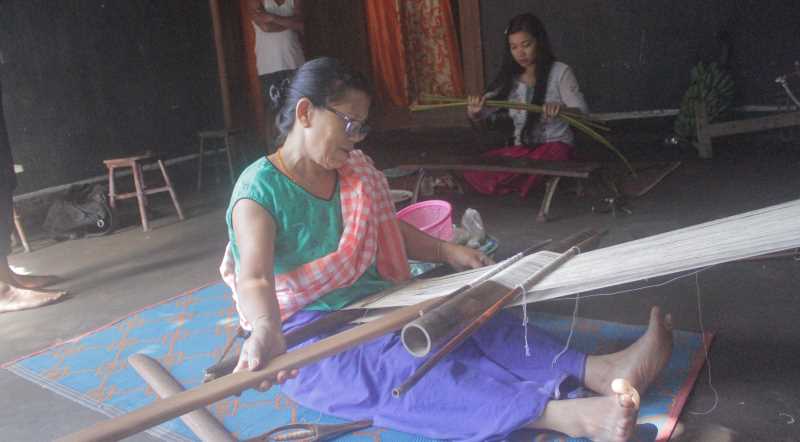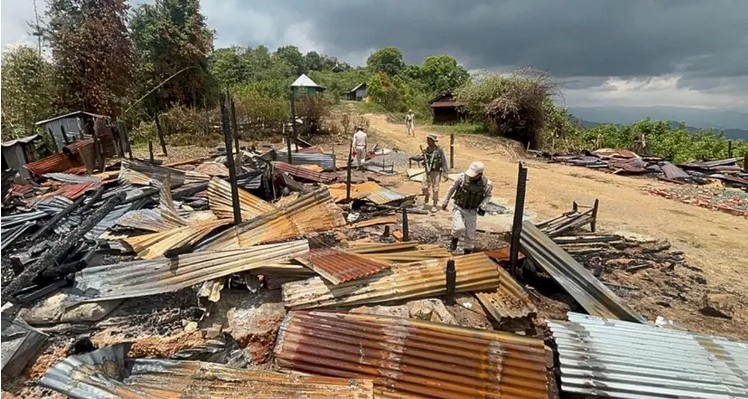

Amidst unease in conflict-stricken nights of Manipur, a young first-time filmmaker Dinesh Naorem set up his camera discreetly and began filming Oitharei (“Save My Soul”). The film, based on actual events, viral snippets of tragedy, and those all-too-real lived trauma of a community torn apart, developed not in comfort of the studio but in raw proximity of a state in struggle. What began as an uncertain improvised endeavor in a threatening and shifting ground, has gone far beyond its chaotic beginnings to a prestigious place in the 56th International Film Festival of India (IFFI), being held in Goa from 20 November to 28 November 2025.
Oitharei finds itself in the distinguished Feature Film category in the robust Indian Panorama program, alongside the Non-Feature title Battlefield, by Borun Thokchom, a National Award-winning filmmaker, representing Manipur. Their selection is of great significance; IFFI is the only film festival in South Asia with the accreditation as a “Competitive Feature Films” festival through the International Federation of Film Producers’ Associations (FIAPF), so to have a screening at the festival is not only a mark of honor but a mark of artistic development. This can be considered as a signpost suggesting that Manipuri cinema is steadily, and unmistakably, raising its own bar.
With that in mind, the Imphal Review of Arts and Politics (IRAP) caught up with director Dinesh Naorem for a candid chat about his path into filmmaking. We talked about the challenges he faced, what this recognition means to him, and the unique aspects of Oitharei that might have helped it reach one of the world’s top film stages.
IRAP: What got you started in filmmaking in the context of Manipuri cinema?
Dinesh: I think since childhood, I have always been interested in the realm of filmmaking. I was captivated by the craft, the ability to tell stories through image, emotion, camera angles and moments altogether. My journey began in earnest when I met my Oja OC Meira, the son of the famous Pabung Chana Lukhoi, at a mass Ningol Chakkouba event. It was by coincidence, but it changed my life. I found the courage and introduced myself, telling him that I wanted to work with him and asked him if I could supply assistance to him in his filmmaking. To my surprise and delight, he said yes. I continued to work with him, assisting him for many few years and learned not only the technicalities of cinema, but also the camaraderie, dedication, and discipline that comes with the work. At one point, Oja felt I had grown enough to take the first step towards my own film. He encouraged me wholeheartedly to begin my own journey, and with his blessings, I started preparing for it. Interestingly, he believed I was ready as early as 2017, but I didn’t want to leap too soon. I spent additional years learning, observing, and absorbing knowledge from various places and people, strengthening my foundation. Finally, with more maturity and confidence, I began shooting Oitharei in 2024. It felt like the natural culmination of years of learning, reflection, and guidance.
IRAP: What uniqueness do you think your film carries that led to its selection in the Indian Panorama section of the 56th International Film Festival of India, Goa?
Dinesh: Oitharei was written by my brother, Lambamayum Premchand. One day he called me and said he had a story in mind and wanted me to hear it. When he narrated it, I immediately felt that it captured the reality of the conflict that started in May 2023. It wasn’t just a storyline — it echoed what ordinary people were going through, and the weight of their hardship came through very clearly.
We’ve all been hearing and reading about the suffering around us through the news, on television, and in the papers, but experiencing it firsthand is something else. I felt a sense of responsibility — and honestly, a bit of gratitude — that I could use cinema to tell this story and to reflect the struggles that so many have lived through. That’s why I decided to go ahead and shoot the film.
As for what makes the film “unique,” I’m not completely sure. I didn’t set out to create something unusual; I simply tried to show the Manipur conflict as honestly as I could. Maybe the jury connected with that sincerity, or maybe the subject spoke to them in its own way. Whatever the reason, I’m grateful the film resonated enough to be selected for the Indian Panorama.
IRAP: Could you elaborate a bit on the film: the story, as much as you can share without giving away spoilers?
Dinesh: The film basically reflects what our state went through during the peak of the Manipur conflict in 2023. I wanted to stay as close to the truth as possible. I didn’t add any extra drama or fictional twists just to make it look cinematic. What you see in the film is drawn from the real incidents we all witnessed: many of them were already circulating on social media in the form of viral videos. Those raw moments, which everyone here had seen and felt, became the foundation of the story.
Even though the film is presented as fiction, its heart is entirely real. I put together fragments of actual events, things people experienced, things they shared, and the memories that still remain with them. It’s like stitching together many small truths to form one complete picture.
The story focuses on some of the major, heartbreaking, and defining incidents of that time — the moments that changed us and stayed with us. Through this film, I’ve tried to honour those experiences honestly and sensitively. I don’t want to give away too much before people watch it, but the film is, in many ways, a reflection of what we collectively lived through.
IRAP: Before shooting began, you must have envisioned a specific way of telling this story and the impact you wanted to achieve. Were you able to reach the point you had imagined? And did you face struggles in the process?
Dinesh: Honestly, I faced a very tough time while making this film. A big portion of the footage got lost during the shoot, and I didn’t get the chance to reshoot any of it. It wasn’t just a few shots, it was a lot. Even now, I still regret losing so much work because some of those moments were very hard to capture.
Because of that loss, I had to make a few compromises in the final film. But at the same time, I also feel I was blessed in many ways. Some of the footage we managed to retain, and some that we shot afterward, turned out even better than what I had imagined in the beginning. That’s why I often say Oitharei feels like a gift from God.
Despite the setbacks, almost every day of shooting gave me something I had hoped for, and sometimes even something greater. So yes, there were struggles, but there were also moments that made me feel deeply grateful.
IRAP: How long did it take to complete your film, and when did you begin shooting?
Dinesh: The entire filming process took roughly three months, and I began shooting in 2024. If I count only the actual shoot days, it comes to about 18 working days, but each of those days was incredibly long and exhausting. Since the entire story unfolds over a single night, from one evening to the next morning, we had to shoot everything at night. That alone created its own challenges, from lighting and logistics to making sure continuity was maintained in an environment governed almost entirely by darkness.
On top of all that, the Manipur conflict was at its peak when we were shooting. We couldn’t travel freely or use the main roads because movement was often unsafe or restricted. We had to wait for brief windows of calm, shoot whenever the situation allowed, and then seek permission again and again. We were constantly racing against the uncertainty of the moment.
But I strongly felt that if we didn’t shoot the film during that exact period, I wouldn’t be able to show the world the real intensity of what was happening. The atmosphere itself, the tension, the silence, the fear, the uncertainty, became part of the film’s truth. Shooting amid the live conflict gave the visuals a rawness that cannot be recreated now, especially as the violence has slightly reduced. The entire process was filled with unpredictability, but it was necessary if I wanted to tell this story with complete honesty.
IRAP: Now that your film has reached IFFI, do you have any upcoming projects or films set for release anytime soon?
Dinesh: Yes, there is. One film called Ethanungda has already been completed. It’s produced by Binarani Jewellery, and it should be released soon. I’m quite happy with how the film turned out, and I hope people will connect with it when they watch it.
I also have a few other ideas and projects that I want to start. They are still in the early stages — some are just thoughts I’m trying to shape properly. I don’t know how things will move forward, but I always leave that part to God. Whatever is meant to happen will happen. For now, I’m just looking forward to working on more stories and continuing my journey in filmmaking.
The writer is a media scholar and professional