
Sikkim’s development journey over the last few decades has emerged as an important reference point for many states in India, particularly for those in the North-East that share structural challenges of geography, demography and limited connectivity. Despite its small size and rugged Himalayan terrain, Sikkim has demonstrated that carefully crafted policies, consistent political will, and inclusive planning can transform developmental bottlenecks into opportunities. The state’s pioneering focus on ecological sustainability, community-driven tourism, organic agriculture, and decentralised governance has not only strengthened its economy but has also built a strong reputation for innovative policy experimentation. For states such as Manipur and Nagaland, which remain weighed down by fragile governance, fiscal dependency, underdeveloped infrastructure, and recurrent socio-political tensions, Sikkim’s experience offers valuable lessons. At the same time, these lessons must be adapted to their unique historical, cultural, and political realities rather than mechanically transplanted.
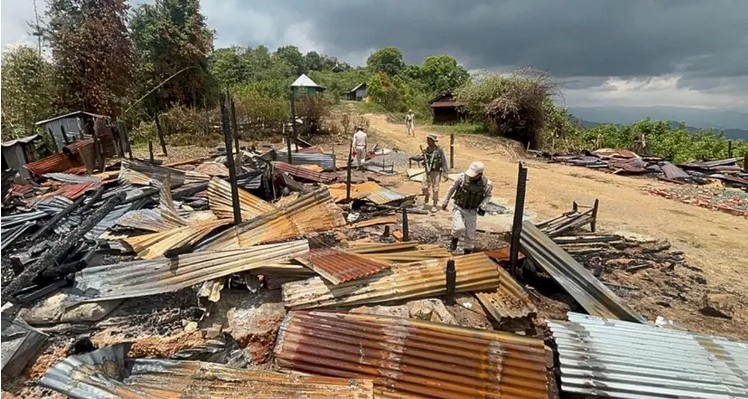
The urgency of such comparative learning is heightened by the complex challenges facing Manipur and Nagaland in 2025. Both states continue to wrestle with limited employment opportunities, poor industrial growth, weak fiscal bases, and the burdens of political instability. For Manipur, prolonged ethnic unrest has disrupted governance and undermined investor confidence, while Nagaland faces structural dependence on central transfers, limited avenues of internal revenue mobilisation, and political uncertainties related to its unresolved peace processes. In both cases, the absence of stable, transparent, and accountable governance structures has stalled the pace of development, while social trust deficits have reduced the effectiveness of reforms. Against this backdrop, reflecting on Sikkim’s policy successes can inspire a search for contextually appropriate strategies that place people at the centre of development.
One of the defining aspects of Sikkim’s transformation has been its emphasis on ecological sustainability as an economic driver rather than as a constraint. The decision to become the first fully organic state was not merely symbolic; it reoriented agricultural practices, created premium markets for produce, and positioned Sikkim as a leader in sustainable tourism. This strategy was grounded in a clear understanding of local strengths and global demands, and its success was facilitated by a state machinery that actively supported farmers through training, certification, and market linkages. Similarly, the promotion of eco-tourism and homestay models empowered rural households, distributed tourism revenues widely, and built pride around cultural and environmental preservation. For Manipur and Nagaland, where community ownership of land and resources remains central, such models can be particularly relevant. Encouraging cooperatives, community-led enterprises, and ecologically sensitive tourism initiatives could stimulate local economies while safeguarding fragile environments. However, this will require robust institutional support, credible certification systems, and infrastructure investment, without which such initiatives risk remaining fragmented.
A closer look at Sikkim also highlights the role of decentralisation and grassroots participation. Development in Sikkim has not been driven solely by top-down state policy but by strong engagement with panchayats, cooperatives, and local associations. By integrating communities into the planning process, the state fostered ownership of reforms and reduced alienation between the government and citizens. In contrast, Manipur and Nagaland suffer from deeply fragmented governance structures, where overlapping authorities between state governments, autonomous councils, village bodies, and customary institutions often create confusion and weaken accountability. In many hill districts, funds devolved through central schemes are captured by elite networks, with little trickle-down to households. This not only undermines service delivery but also fuels perceptions of exclusion, further deepening social divides. Therefore, reforms in these states must go beyond rhetoric about decentralisation and directly address issues of institutional design. Ensuring transparency in financial flows, empowering village-level development boards with statutory authority, and creating mechanisms of citizen oversight could help bridge the gap between state policy and grassroots realities.
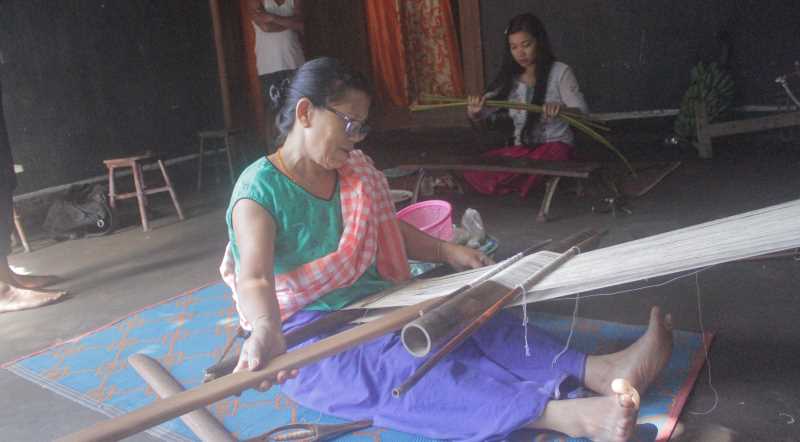
At the same time, the economic base of Manipur and Nagaland remains narrow and precarious. Agriculture continues to be dominated by subsistence practices, with low productivity, weak market access, and high vulnerability to climatic shifts. Industry is virtually absent, and private investment remains minimal due to poor connectivity, unstable law and order conditions, and inadequate regulatory clarity. Here again, Sikkim’s experience in developing niche high-value sectors holds relevance. By branding itself as a hub of organic produce, pharmaceutical investment, and eco-tourism, Sikkim diversified its economy despite its limitations. For Manipur and Nagaland, similar strategies could focus on promoting horticulture, floriculture, bamboo-based industries, and value-added handicrafts, sectors that align with local skills and cultural capital. However, such diversification must be accompanied by systematic investment in roads, storage facilities, digital platforms, and research institutions. Without this enabling ecosystem, efforts to promote high-value sectors risk collapsing under logistical and market constraints.
Fiscal dependency remains another major structural weakness in Manipur and Nagaland. Both states rely overwhelmingly on central transfers to finance their budgets, with very limited internal revenue generation. Sikkim, although small, has been relatively more successful in mobilising resources by tapping into tourism revenues, hydroelectric power, and targeted taxation. Manipur and Nagaland must therefore explore innovative ways of expanding their fiscal base. Introducing eco-tourism levies, improving tax administration in urban centres, encouraging regulated resource-based royalties, and promoting public-private partnerships for infrastructure development can help. At the same time, fiscal reform must also tackle leakages. In both states, widespread corruption, inefficient utilisation of central funds, and absence of robust audit mechanisms erode public trust. Addressing these issues requires not only technical measures such as digitalisation of transactions and real-time monitoring but also strong political commitment to accountability. Without restoring faith in the integrity of public finance, no reform can be sustained.
Socio-political realities in Manipur and Nagaland further complicate developmental strategies. Both states are deeply shaped by ethnic contestations, competing land rights regimes, and long histories of ethnic nationalism and negotiation with the Government of India. Development planning cannot ignore these fault lines. For instance, in Nagaland, land and resource ownership is largely vested in communities under customary law, making external investment in extractive sectors highly contentious. In Manipur, overlapping claims between valley and hill populations have created deep fissures, often spilling into violent conflict. These realities directly affect the scope of policy reform, as interventions perceived to benefit one community over another can trigger resistance. The lesson from Sikkim is not that such conflicts can be eliminated, but that inclusive planning and trust-building can mitigate their impact. By ensuring that all stakeholders see themselves reflected in the benefits of development, states can gradually shift the focus from zero-sum politics to shared growth. This requires transparent dialogue, participatory planning mechanisms, and confidence-building measures that extend beyond economic calculations.
Another critical dimension often overlooked is the intersection of climate change and border dynamics. Both Manipur and Nagaland lie in ecologically fragile zones, highly vulnerable to landslides, floods, and shifting weather patterns. Climate shocks not only devastate agriculture and infrastructure but also heighten the fragility of livelihoods, pushing communities into cycles of poverty and migration. Simultaneously, both states are strategically located along international borders with Myanmar, creating both opportunities for trade and risks of instability. Border trade, if effectively regulated and supported by modern infrastructure, can stimulate local economies. However, porous borders also exacerbate security concerns, smuggling, human trafficking and informal economies that weaken state authority. Therefore, policy frameworks must simultaneously integrate climate resilience with border management strategies, treating them not as separate concerns but as interconnected dimensions of sustainable development.
Drawing lessons from Sikkim, it is evident that success lies not merely in good ideas but in their sustained implementation through credible institutions. For Manipur and Nagaland, this means building strong state capacity, ensuring coordination between line departments, reducing bureaucratic delays, and nurturing partnerships with civil society and the private sector. It also requires investing in human capital. Sikkim’s focus on education and skill development, aligned with its chosen sectors, ensured that its youth could directly participate in the new economy. Manipur and Nagaland must similarly prioritise vocational training, entrepreneurship promotion, and digital literacy, enabling their young populations to drive growth rather than being forced into migration. Given that both states have some of the highest youth proportions in the country, investing in human capital is not only an economic necessity but also a political imperative.
Ultimately, the central lesson is that no single reform can transform Manipur and Nagaland overnight. Progress depends on a carefully sequenced, multi-dimensional approach that combines ecological sensitivity, economic diversification, fiscal responsibility, social inclusion, and institutional reform. The Government of India must play a supportive role, not by imposing uniform models, but by enabling flexibility, providing resources, and ensuring accountability. At the same time, state governments must show political will to rise above narrow interests, petty politics and place long-term development at the centre of governance. Civil society, traditional bodies, academic institutions, think tanks / research centres and local communities must be partners in this process, ensuring that reforms resonate with the lived realities of people rather than remaining abstract policy prescriptions.
The way forward demands courage, imagination, creativity and integrity. Manipur and Nagaland stand at a crossroads, where deepening crises coexist with new opportunities. Learning from Sikkim does not mean replicating its path, but adapting its spirit of innovation, sustainability, and participation to their own unique contexts. If the two states can harness their cultural richness, ecological assets, and youthful energy through accountable and visionary governance, they too can chart a course of transformation. The task is urgent, for delays will only deepen mistrust and erode resilience. But with deliberate planning, collaborative governance, and a clear commitment to equity and inclusion, Manipur and Nagaland can emerge not as perpetual recipients of aid but as dynamic contributors to India’s federal mosaic of social justice, public welfare, growth and stability.
The fate of Manipur and Nagaland hangs on the choices made today, for they will decide whether these lands rise in dignity and prosperity or remain shackled by the failures of the past. Manipur cannot achieve stability or prosperity if it continues to be consumed by mistrust and division, just as Nagaland cannot build a secure future if suspicion and neglect are allowed to persist. The corrosive “us versus them” narrative has been the most damaging obstacle, turning neighbours into rivals, turning friends into foes and shifting focus away from the urgent tasks of peace, social justice, livelihood, and development. Every time we choose to see each other as adversaries rather than partners, we do not defend our identity but diminish our collective strength, leaving both our present and our children’s future more fragile. In Manipur, the yearning for dignity, security, and reconciliation unites every family. In Nagaland, the aspiration for opportunity must also include justice for the long-neglected communities in its eastern frontier, whose exclusion has hindered the promise of inclusive growth for too long. These are not separate or competing demands but shared responsibilities, for the progress of one strengthens the foundation of the other. If Manipur embraces reconciliation and rebuilds unity, it can transform its diversity into a force for resilience and growth. If Nagaland addresses the injustice faced by those on its periphery, it can lay the foundation of a future where prosperity is shared by all. Division will only deepen despair, but unity will create a tomorrow marked by stability, justice, dignity, and the collective advancement of every household across these lands.

Dr. Aniruddha Babar is a senior academician, policy analyst, writer, and researcher currently serving in the Department of Political Science, St. Joseph College, Ukhrul, Manipur. He is also the Co-Founder and Deputy Director of the Centre for North-East Development and Policy Research (CNEDPR), St. Joseph College, Manipur